Paneles de madera natural de alta calidad Fabricantes y proveedores en China. Nosotros producto: Paneles acústicos de madera Paneles de PET
Evite que su consulta sea de respuesta tardía, por favor introduzca su WhatsApp/Skype junto con el mensaje, para que podamos ponernos en contacto con usted a la primera.
Le responderemos en un plazo de 24 horas. Si para el caso urgente, por favor agregue WhatsApp/WeChat: +86-13678899682 directamente.
A panel that is too wide, too tall, or blocked by outlets can ruin an otherwise great acoustic wall. That means wasted material, slower installation, and a messy finish. The good news is simple: most acoustic panel systems can be cut to size cleanly when you use the right tools, the right method, and the right material choice.
Yes, many acoustic panels can be cut to size. PET felt panels are often easy to cut with a sharp utility knife or suitable saw, while wood slat acoustic panels usually need a jigsaw or circular saw with a fine-tooth wood blade. The cleanest result depends on the panel structure, the backing, the visible side, and whether you need straight cuts or special cuts around corners, outlets, and light switches.
Can an acoustic panel really be cut to a custom size?
Which acoustic panel types are easiest to cut?
What tools do you need to cut acoustic panels cleanly?
Should you use a jigsaw, circular saw, or sharp utility knife?
How do you measure, mark, and cut along the line accurately?
How do you handle outlet holes, light switches, and other special cuts?
How do you prevent chip-out and keep a clean cut edge?
When should you order a custom size instead of cutting on site?
What should B2B buyers ask before fitting panels on a project?
What mistakes should you avoid during installation and trimming?
Yes. In real projects, we often need to cut an acoustic panel to fit a wall end, a ceiling edge, a column return, or a tight space around MEP details. That is normal. A good panel system should help you make custom adjustments without ruining the finish or the acoustics. BNPANEL’s own product pages show that both PET and wood systems are available in standard sizes and custom size options, which tells you field fitting and made-to-order sizing are already part of the market logic. PET felt products are listed with custom panel sizes and thicknesses, and wood systems are offered with custom panel size, thickness, and veneer finish options.
That said, not every panel cuts the same way. A soft polyester felt panel behaves very differently from a slatted wood acoustic panel with veneer, backing, and spacing between slats. So the first step is not to grab a saw. It is to understand what the panels made for your project are actually built from.
In general, PET felt systems are the most easy to cut on site. ReFelt says manual cutting of PET Felt can be done with a sharp knife and ruler, and that circular saws are also suitable when tested with the material first. BNPANEL’s PET products are 100% polyester-based, lightweight, and built for straightforward handling, which makes them a strong option for projects that expect trimming and fitting panels during installation.
Wood acoustic panel systems are also cuttable, but they demand more care. A wood slat panel may include veneer, MDF or fiber elements, and felt backing. That means the visible side matters. Chip-out on the veneer matters. The blade choice matters.
Here is a practical comparison:
| Tipo de panel | Composición típica | Best field cutting method | Mejor caso de uso |
|---|---|---|---|
| PET felt acoustic panel | fieltro de poliéster | sharp utility knife, track/circular saw, sometimes jigsaw | fast trimming, simple custom size fitting |
| Wood slat acoustic panel | veneer + slats + felt backing | jigsaw or circular saw with fine-tooth wood blade | straight cuts, outlet cutouts, premium feature walls |
| Decorative shaped PET tile | PET felt with texture or engraving | knife for simple trimming, factory digital cutting for special cuts | projects with repeated shapes or visible geometry |
This is why we usually tell buyers one simple truth: the more decorative the face, the more important clean technique becomes.
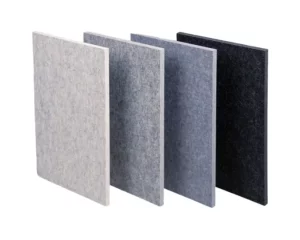
The right tools save time and prevent waste. For PET felt, a sharp utility knife, straightedge, pencil, and solid work surface often cover simple jobs. For wood slat systems, you usually need a jigsaw or circular saw, a fine-tooth saw blade, clamps, a drill, and sandpaper for touch-up. Planeo’s cutting guide recommends a hand drill, jigsaw with a fine-tooth wood blade, and optional hole saw for cut-outs.
A strong basic kit looks like this:
If the project includes repeated penetrations, logos, or highly visible geometry, factory processing may be smarter than site trimming. ReFelt notes that pure waterjet cutting is suitable for highly detailed PET felt cutouts, while manual cutting is best for simpler field work.
It depends on the panel and the cut. For a PET felt acoustic panel, a sharp utility knife often works well for straight trimming, especially if the panel is thin and the face has no fragile veneer. ReFelt specifically recommends a sharp knife and ruler for manual PET felt cutting. That is usually the most efficient path when the goal is a neat, quick cut acoustic adjustment on site.
For wood slat systems, the circular saw is often the best tool for long straight cuts, while a jigsaw is more flexible for openings, corners, and special cuts. Planeo says the best way to shorten acoustic panels is with a circular saw fitted with a fine-tooth wood blade, but also notes that a jigsaw can also work very well. For visible wood slat finishes, they advise cutting from the back for a cleaner visible face. 9Wood, by contrast, recommends face-up cuts with tape on some veneer plank systems to reduce chip-out. That difference is a good reminder to test one sample first, because backing, veneer, and upstroke behavior vary by product family.
My simple rule is this:
That is usually the safest way to cut acoustic panels cleanly without fighting the material.
Good cutting starts before the blade touches the panel. First, confirm the final dimension on the wall or ceiling. Then transfer that number onto the panel. BNPANEL’s installation guide says to plan the layout, prepare the surface, and mark the panel position before fixing the first piece. Planeo recommends marking on the back, using a soft pencil or chalk, and securing a cutting guide close to the cutting line.
A clean sequence works like this:
That “let the saw” principle matters more than many installers expect. If you push too hard, the blade can drift, heat the material, or tear the veneer. If you move too fast, the cut edge gets rough. A good clean cut is usually boring. Slow. Controlled. Repeatable.
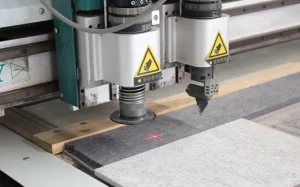
This is where a jigsaw earns its keep. For an outlet, light switches, or a rectangular service opening, you usually drill a starter hole and then cut along the marked shape. Planeo explains that for rectangular cut-outs, you can drill holes at the corners and then cut the sides with a jigsaw. For circular openings, a hole saw with the desired diameter can also work.
A practical method looks like this:
If the face is veneered, painter’s tape can help prevent scratches and reduce breakout. Wood specifically recommends taping the cutting area and using a reverse-cut blade on some veneer systems to reduce chip-out caused by the upstroke. That is very useful for premium visible slat faces.
The answer is part blade, part direction, part patience. A fine-tooth wood blade helps. Tape helps. Testing on scrap helps. Planeo recommends you use a fine-tooth wood blade and, for many slatted panels, cut from the back for a cleaner visible face. 9Wood, on some planks and tiles, recommends cutting from the face with tape and a reverse-cut blade. So the safest universal advice is to check the product build, then test one offcut before making the final visible cut.
For PET, edge quality is usually easier to manage. If you are using a knife, make multiple controlled passes instead of one deep pass. If you are using a saw on PET felt, ReFelt says speed and blade settings should be tested first. They also note that laser cutting can burn, harden, and discolor the PET felt edge, which is why they do not recommend it for standard exposed applications.
For wood systems, finish the cut edge with a light touch-up routine:
That extra minute can be the difference between “good enough” and professionally finished.
Field cutting is useful. Factory cutting is smarter when precision, repetition, or visible geometry matters. If you need many identical shapes, tight tolerances around joints, repeated tile layouts, or a premium veneer face with zero room for error, custom size manufacturing usually saves more than it costs.
This matters even more for B2B projects. A distributor may want standard sizes for stock. A contractor may want factory-ready panel packs by room. An architect may want irregular forms or a bevel detail. A brand owner may want private label packaging without paying an extra charge later for project-site fixes. When those needs stack up, it often makes more sense to make custom panels in the factory instead of forcing the installer to solve everything with a saw on site.
A good decision guide:
| Situation | Best choice |
|---|---|
| One or two wall-end trims | field cut |
| Many repeated outlet and socket locations | pre-cut or templated |
| Premium veneer feature wall | custom size or factory-processed |
| PET felt wall with simple end trimming | field cut |
| Large commercial rollout across many rooms | custom size plus room-by-room takeoff |
If you buy for resale, OEM, or large projects, do not ask only, “Can I cut it?” Ask five better questions:
BNPANEL’s product and service pages answer those questions well. The company offers Paneles acústicos de fieltro PET, paneles murales de listones de madera, and full customized service for global B2B clients, including size, thickness, shape, packaging, and OEM branding.
The most common mistakes are simple:
BNPANEL’s installation guide stresses layout planning, clean surfaces, and straight-edge setup before fixing panels. That is smart advice because bad prep leads to crooked joints, weak adhesive hold, and wasted material.
Another mistake is treating all acoustic products as if they behave the same. They do not. PET polyester felt, veneer-faced slat systems, and decorative acoustic products all respond differently to cutting, taping, sanding, and final touch-up. Use the material logic, use the right tools and techniques, and you will usually achieve a much better result with far less rework.
In our experience, distributors and contractors rarely lose money because an acoustic panel cannot be cut. They lose money because the cut plan was not discussed early enough. A hotel corridor with repeating ceiling breaks, wall returns, and service penetrations needs a different approach from one office feature wall. The first case may justify factory-precut kits. The second may only need a few careful field cuts.
That is why our advice to global B2B buyers is always the same: decide early where standard sizes work, where a custom size is smarter, and where installers will likely need to trim. That small consultation step can reduce waste, speed installation, and protect the premium look of the finished acoustics package. BNPANEL’s service page and application pages reflect that same project-based approach.
Can you cut acoustic panels with a jigsaw?
Yes. A jigsaw is one of the most useful tools for shaped openings, special cuts, and outlet cutouts, especially on wood slat acoustic panels. Use a fine-tooth wood blade and move slowly for more precise cuts.
Are PET acoustic panels easy to cut?
Usually, yes. PET felt panels are often easier to cut than veneered slat systems. ReFelt recommends manual cutting with a sharp knife and ruler, and BNPANEL’s PET products are lightweight and straightforward to handle.
Should you cut from the back or the visible side?
It depends on the panel build. Some slatted wood guides recommend cutting from the back for the cleanest visible finish, while some veneered plank systems recommend cutting from the face with tape and a reverse-cut blade. Always test a sample first.
Can you make outlet and light switch cutouts in an acoustic panel?
Yes. Mark the opening, drill a starter hole, and use a jigsaw or hole saw depending on the shape. Rectangular openings usually need corner drill holes before sawing.
When is a custom size better than site cutting?
Custom size production is usually better for premium visible walls, repeated room layouts, complex shapes, or large project rollouts where consistency matters more than on-site flexibility.
Do acoustic panels lose sound absorption if you trim them?
Trimming changes coverage area, but it does not automatically ruin sound absorption. The bigger risk is bad installation, open joints, or the wrong panel choice for the room. Placement and total treated area still matter most. BNPANEL’s application and installation guides both emphasize layout and system fit.
Yes, you can cut acoustic panels to size in many cases.
PET felt panels are usually easier to trim than veneered wood slat systems.
Use a sharp utility knife for simple PET trimming and a jigsaw or circular saw for wood slat panels.
Test one offcut first because the best cut direction depends on the face material and backing.
For premium or repeated project geometry, custom size factory production is often the smarter choice.
Natural internal links work best when they support the topic, not when they are forced.

 Spanish
  English
  French
  German
  Italian
  Arabic
  Russian
  Dutch
Dutch