Fabricants et fournisseurs de panneaux en bois naturel de haute qualité en Chine. Nous produisons : Panneaux acoustiques en bois Panneaux en PET
Si votre demande n'est pas traitée dans les plus brefs délais, veuillez indiquer votre adresse WhatsApp/Skype dans le message, afin que nous puissions vous contacter dès la première fois.
Nous vous répondrons dans les 24 heures. En cas d'urgence, veuillez ajouter WhatsApp/WeChat : +86-13678899682 directement.
A plain wall can make a space feel flat, noisy, and forgettable. That is the problem many buyers face. They want better design and better sound, but not every panel can deliver both. The good news is that wood slat wall panels can offer real value when you choose the right product and use it in the right setting.
Yes, wood slat wall panels are often worth it because they combine acoustic control, decorative appeal, and practical wall coverage in one product. They can improve the acoustics of a room, add architectural detail, and create a sleek and modern finish. Their value depends on the material, felt backing, veneer quality, installation method, and whether the space needs both form and function.
If you are a distributor, architect, contractor, or OEM/ODM buyer, this article is worth reading because the answer is not just about style. As a professional manufacturer in China specializing in high-quality PET and wood acoustic panels, we often help clients compare design, acoustic performance, material structure, and overall cost before making a final decision. In this guide, I will explain where wood slat systems really shine, where they may not fit, and how to judge whether they are worth it for your project.
What are wood slat wall panels?
Why do wood slat wall panels look so popular in modern interior design?
Are wood slat wall panels worth it for acoustics?
What materials are used in a wood slat panel?
Real wood veneer or MDF: which option is better?
Do wood slat panels work in every commercial space?
Vertical or horizontal: which slat wall layout looks better?
Are wood slat wall panels easy to install?
What are the real benefits of wood slat wall systems?
When are wood slat wall panels not worth it?
A wood slat panel is a decorative and functional wall system made from repeated wood slats fixed over a backing layer, often with felt backing for better acoustic performance. In many modern interiors, these wall panels are used to create a refined surface with rhythm, texture, and depth. Instead of a plain flat wall, the slat wall adds a more architectural look.
La plupart des panneaux muraux en lattes de bois are built with narrow strips of wood or veneered faces mounted on a black or colored felt base. This base can improve the acoustics by helping control reflected sound waves in the room. That is why these panels are designed not only for visual effect, but also for practical sound management.
In simple terms, a wood slat wall is a product that brings together decoration and function. It is used in offices, hotels, meeting spaces, showrooms, lobbies, studios, and premium residential interiors where clients want both style and better acoustics.
If you want to see product directions that match this article, you can explore our wood acoustic panels for project-oriented applications.
The biggest reason is visual effect. A slatted wood surface creates clean lines, shadow depth, and a more elegant finish than a standard painted wall. It helps make a room feel warmer, more finished, and more intentional. In today’s interior design market, that matters a lot.
Another reason is versatility. The look of wood slat systems works in many styles, from minimal office interiors to hospitality projects and premium retail settings. A feature wall made with vertical wooden or horizontal slats can become the strongest design point in the room without needing heavy decoration.
Designers also like the balance of aesthetics and acoustics. The product is not only beautiful. It can also support comfort and usability. That is why slat panels create such a strong appeal in modern commercial space design, where clients increasingly want surfaces that do more than look good.
Yes, in many projects they are. But the answer depends on product structure.
A wood slat wall panel with acoustic felt backing can help reduce echo and improve room comfort. The slats break up the wall surface visually, while the felt layer helps absorb part of the reflected sound. This does not mean every slat panel works the same way. The real acoustic performance depends on the spacing, the width of the slats, the depth, and the quality of the felt backing.
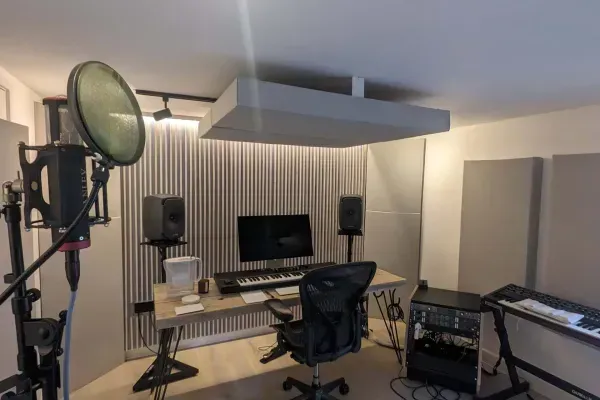
In many offices, conference areas, studios, lobbies, and education spaces, these acoustic wall panels can clearly improve speech comfort and reduce harsh reverberation. They help improve the acoustics without making the room look too technical. That is one of the strongest functional benefits of the system.
Still, buyers should be realistic. A decorative wood slat surface is not the same as a full technical acoustic treatment for every space. If a room has serious low-frequency issues or very complex sound control needs, additional acoustic panels or ceiling treatments may still be required. But for many daily-use interiors, wood slat systems absolutely add acoustic value.
For project references, our acoustic wall and ceiling systems show how these solutions are used in real spaces.

A typical wood slat panel often combines several layers. The visible slats may use real wood, wood veneer, or a decorative veneer over an engineered core. The core is often mdf, because mdf panels provide stability, consistency, and easier processing for repeated sizes and shapes. Behind that, the product may include a felt material or full felt backing for sound absorption support.
This layered structure is important because it helps balance cost, visual quality, and performance. Pure solid wood can be beautiful, but it is not always the most efficient option for every large project. A veneered MDF structure can create a similar look while improving manufacturing consistency and helping control the overall cost.
For commercial buyers, the right material choice depends on project goals. Some want the premium feel of natural wood. Others care more about price, stable supply, or easy customization. That is why a professional manufacturer should offer more than one construction route.
This is one of the most common buyer questions. The honest answer is that both can be good, but they serve different needs.
Real wood surfaces are often chosen when the client wants the strongest natural texture and the most authentic visual effect. They show the beauty of wood clearly and support premium interior positioning. For high-end hospitality, executive offices, and luxury feature spaces, this route can be very attractive.
MDF, on the other hand, is often more practical for large-scale commercial work. It provides stable dimensions, smoother production consistency, and easier conversion into repeated slat systems. When finished with wood veneer, MDF can create a strong decorative result while keeping the system efficient and scalable. That is why MDF-based wood slat systems are so common in modern production.
So which is better?
In many cases, MDF with veneer is the smart balance between appearance and practicality.
No. They work in many spaces, but not every space.
A slat wall works especially well in offices, lobbies, reception areas, a conference room, hotel corridors, retail environments, and a showroom. In these spaces, the panels add visual quality and can help improve sound comfort at the same time. They are especially effective where the design needs warmth, texture, and a more premium look.
But there are limits. In bathrooms or kitchens, moisture and maintenance conditions may require more careful material selection. Some wood systems panels are not suitable for wet or high-splash conditions unless they are specifically designed for that environment. That is why the installation area matters just as much as the panel style.
So yes, wood slat panels are worth it in many commercial space settings. But buyers should still judge the space honestly: does it need decorative warmth, acoustic help, and architectural finish? If yes, slat wall systems are often a strong answer.
Both can work. The better option depends on the room and the design effect you want.
A vertical or horizontal choice changes how the room feels. Vertical wood layouts often help a space feel taller and more architectural. That is why many projects use a floor to ceiling or floor-to-ceiling arrangement. It creates upward movement and a more premium visual rhythm. In narrow spaces, vertical slats can make a room feel more elegant and balanced.
Horizontal layouts can widen the look of a room and create a calmer visual flow. In some modern interiors, this can be a better match for long walls or lower spaces. The specific design goal should always guide the layout.
So there is no one correct rule. The best direction is the one that supports proportion, purpose, and design mood. This is exactly where a supplier’s project experience can help.
In many cases, yes. Compared with more complex custom-built woodworking, factory-made slat panels are relatively easy to install because the slats and backing are already assembled into a ready panel format. This reduces on-site labor and improves visual consistency.
A typical panel installation can be done with screws, mechanical fixings, or combined systems depending on the substrate. Some installers work with standard mounting methods and a defined number of screws per panel, while others combine hidden fastening and adhesive strategies for a cleaner result. The method depends on wall condition, panel size, and project finish level.
That said, easy does not mean careless. Good alignment, correct substrate preparation, and accurate layout still matter. If the wall is uneven or the spacing is poor, even a premium panel can look wrong. Proper installation is what helps the final system feel seamless and professional.
If you want product support beyond the article, our custom acoustic panels page is the right place to evaluate manufacturing and project capability.
The biggest benefits of wood slat systems come from their balance of form and function. A wood slat wall is not only decorative. It adds texture, rhythm, and a more advanced surface language to the room. At the same time, with the right backing and layout, it can also support meaningful acoustic improvement.
Here are the main benefits clearly:
better visual depth than a flat painted wall
stronger aesthetic appeal and visual appeal
warmer atmosphere through natural wood effect
useful sound-dampening properties in many interiors
easier project standardization through factory-made panel systems
strong impact as an accent wall or feature area
In other words, wall panels offer more than decoration when they are designed well. They can make a space feel more premium, more comfortable, and more complete. That is why so many architects use them to combine decorative elements with performance in one solution.
Our wood acoustic panels are built around exactly this idea: a better wall surface should improve both design and usability.
Wood slat systems may not be worth it when the space does not need the look, the acoustics, or the budget uplift. If a project only needs a very low-cost wall finish, a slat system may feel unnecessary. If the design language is extremely plain or industrial, other surfaces may fit better.
They may also be less suitable when the environment is too wet, too rough, or too maintenance-heavy for the chosen material construction. Some buyers also expect dramatic sound control from every slat system. That can lead to disappointment. These panels actually make a meaningful difference in many interiors, but they are not a universal cure for all sound problems.
So the question should not be “Are they worth it for everyone?”
The better question is “Are they worth it for this project?”
If the answer includes better acoustics, warmer design, stronger surface identity, and practical panel supply, then yes, they are often worth the investment.
For broader topic research, your readers can also continue through the site’s acoustic panels content section.
| Factor | Pourquoi c'est important |
|---|---|
| Design value | Adds texture, warmth, and architectural detail |
| Acoustic support | Helps improve speech comfort and room acoustics |
| Material flexibility | Available in MDF, veneer, and real wood options |
| Installation efficiency | Factory-made panels are faster than fully site-built woodworking |
| Project image | Helps modern interiors look more premium and intentional |
Wood slat wall panels are often worth it for:
They may be less suitable for:
Are wood slat wall panels worth it?
Yes, in many projects they are worth it because they improve both design and acoustic comfort. Their real value depends on material quality, felt backing, installation, and the needs of the space.
Do wood slat wall panels improve acoustics?
Yes. When built with felt backing or an acoustic support layer, they can help reduce echo and improve room comfort. The exact result depends on the panel structure and room conditions.
Are wood slat wall panels made from real wood?
Some are made from real wood surfaces, while many use MDF cores with wood veneer. Both options are common in commercial projects.
Are slat wall panels easy to install?
Factory-made slat wall panels are usually easier to install than building a slatted wood system from scratch on site. But correct alignment and wall preparation still matter.
Are wood slat panels suitable for bathrooms or kitchens?
Not always. Some panels are not suitable for wet or splash-heavy spaces unless they are specially designed for that use.
Should I choose vertical or horizontal wood slats?
Both can work. Vertical layouts often make a room feel taller, while horizontal layouts can make it feel wider. The best choice depends on the room and the design goal.
So, are wood slat wall panels worth it? In many commercial and premium interior projects, yes, they absolutely are.
They offer more than a decorative face. They help shape the room visually. They can improve the acoustics. They support modern design language. And when they are manufactured well, they bring reliable consistency to large-scale projects.
Of course, they are not the right answer for every budget or every space. But if your project needs warmth, structure, sound comfort, and a stronger architectural identity, wood slat wall panels are often one of the smartest choices available.
For B2B buyers, the real value is not just in the panel itself. It is in choosing the right structure, the right finish, and the right manufacturing partner.
Wood slat wall panels are often worth it in modern commercial interiors.
They combine decorative value with useful acoustic support.
MDF with veneer is often a practical and scalable option for large projects.
Real wood gives a more natural premium effect, but may cost more.
Wood slat systems work especially well in offices, hotels, showrooms, and meeting spaces.
Vertical and horizontal layouts create different visual effects.
Good installation is important for a seamless result.
The best slat wall panel is the one that matches the room, the style, and the project goal.

 French
  English
  German
  Italian
  Spanish
  Arabic
  Russian
  Dutch
Dutch