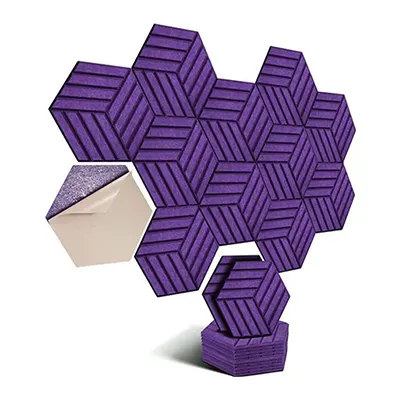
Paneles de madera natural de alta calidad Fabricantes y proveedores en China. Nosotros producto: Paneles acústicos de madera Paneles de PET
Evite que su consulta sea de respuesta tardía, por favor introduzca su WhatsApp/Skype junto con el mensaje, para que podamos ponernos en contacto con usted a la primera.
Le responderemos en un plazo de 24 horas. Si para el caso urgente, por favor agregue WhatsApp/WeChat: +86-13678899682 directamente.
A classroom-safe panel acústico is one built from low-formaldehyde-emission materials, finished to withstand daily wiping and repeated furniture contact, and backed by documentation a facilities buyer can actually verify. For schools, “safe” is a materials and maintenance question first, and an aesthetic one second.
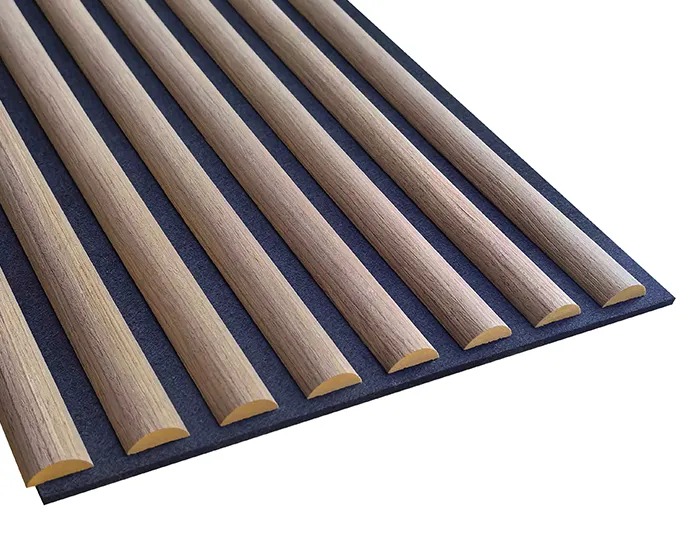
Most acoustic panel marketing leads with sound absorption numbers. In a school procurement file, that’s rarely the first question a facilities director or architect asks. The first questions are usually: what’s the raw material, does it off-gas, and will it survive a decade of hallway traffic and cleaning crews.
For wood-based acoustic panels, the material question centers on the MDF core and the adhesives used in it. This is where an E0-grade material policy matters — E0 is a formaldehyde-emission classification applied to the MDF substrate itself, separate from any fire-performance or acoustic-performance rating. BEIEN applies an E0-grade policy to the MDF used in its wood slat acoustic panel line for exactly this reason: schools, healthcare facilities, and other occupied public buildings are the projects where a buyer is most likely to ask for it by name.
For institutional projects, the relevant product is BEIEN’s Paneles acústicos de lamas de madera, sold under profile models BN-01 through BN-05. The published specifications:
| Atributo | Especificación |
|---|---|
| Standard Lengths | 2400 mm, 2700 mm, 3000 mm |
| Width | 605 mm |
| Espesor | 18 mm or 21 mm |
| Material del núcleo | MDF, approximately 760–800 kg/m³ density |
| Surface | Wood veneer or decorative surface, approximately 0.4–0.5 mm veneer thickness |
| Acoustic Backing | Polyester fiber (PET), produced in-house |
| Raw Material Policy | E0-grade MDF |
| Aplicación | Wall and ceiling installation |
Other dimensions are available through customization, but the sizes above are what’s currently listed in BEIEN’s catalog. One gap worth flagging to any buyer comparing sheets: no published NRC (noise reduction coefficient) figure exists for this specific wood slat series in the reviewed materials. If sound absorption performance is a hard requirement in your spec, ask for it in writing before ordering, rather than assuming it matches numbers published for a different product line.
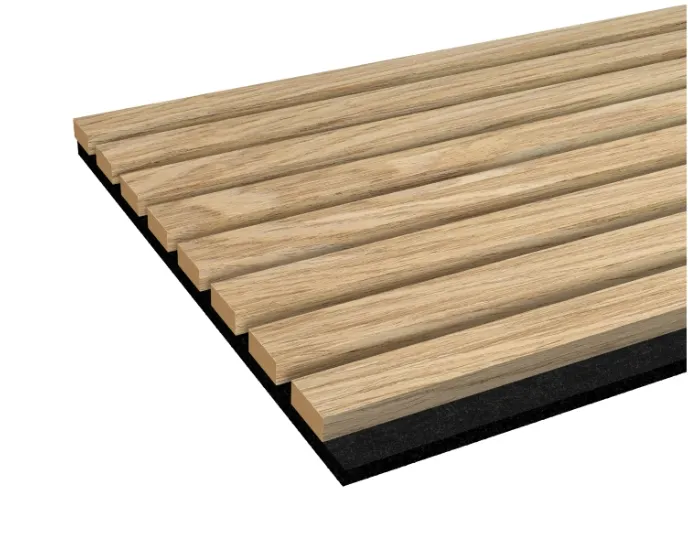
Here’s the mistake procurement teams make most often when comparing panel lines for cafeterias, gyms, or restrooms adjacent to classroom wings: assuming a wood veneer or MDF-core panel handles moisture the same way a PVC-surfaced panel does. It doesn’t. BEIEN’s separate PVC Surface Paneles acústicos de madera (PBW-01 through PBW-06) are the line built with a moisture-resistant, stain-resistant, easy-clean surface for exactly those higher-exposure areas. If a project includes both dry classrooms and a wet or high-splash zone, that’s typically two different product lines, not one panel spec’d across the whole building.
Three documents are relevant to sourcing wood acoustic panels for public buildings, and each has a scope that matters more than its existence:
Worth noting for anyone assuming every panel in the lineup carries the same fire classification: a separate SGS fire test (report SHFS2403000289FF, EN 13501-1:2018, result B-s2,d0) exists for a 100%-polyester PET acoustic board sample, not for the MDF-based wood slat series. That result shouldn’t be quoted for a wood slat classroom order without a fire test specific to that construction.
Wood slat panels installed in classrooms typically face three wear patterns: surface scuffing from furniture and equipment, dust accumulation in the acoustic backing, and repeated wipe-down cleaning by custodial staff. A few practical points:
1.Confirm the finish (veneer vs. decorative surface) with your supplier before specifying a cleaning protocol — abrasive cleaners suited to a painted MDF surface aren’t automatically suited to a natural veneer finish.
2.Check mounting method against the room’s use pattern. Screw-mount installation is more tamper-resistant for lower wall zones in active classrooms; hanger-mount systems suit ceiling or upper-wall placement where impact risk is lower.
3.If ceiling mounting is planned, get load-rating documentation for the hardware in writing. BEIEN’s Acoustic Panel Hangers (Single, Vertical, Horizontal configurations) are sold as compatible only with BEIEN wood acoustic panels, but no published load-capacity figure is currently available — this is a specification gap that needs direct supplier confirmation for any ceiling application, not just a formality.
Pricing for paneles acústicos de lamas de madera is quotation-based and depends on panel dimensions, thickness, surface finish, customization level, packaging, and order quantity — there isn’t a published price range to quote here, so build in time for a formal quote rather than budgeting off a placeholder figure. Standard production lead time is publicly stated at approximately 7–15 working days depending on order size and customization, though MOQ figures vary across BEIEN’s own materials (50 panels in some pages, 100 in others), so confirm the MOQ for your specific model and finish before finalizing a school procurement timeline.
E0 is a formaldehyde-emission classification applied to the MDF core material. It addresses material safety and indoor air quality, not fire performance or sound absorption — those are separate specifications.
A fire classification test (EN 13501-1:2018, result B-s2,d0) exists in BEIEN’s documentation for a PET acoustic board sample, not for the MDF-based wood slat series. Request a fire test specific to the wood slat construction before relying on any fire rating in a school specification.
Yes, the wood slat series is listed for both wall and ceiling applications. For ceiling installs, confirm hanger hardware load ratings directly with your supplier, since that figure isn’t currently published.
BEIEN’s own materials list MOQs of both 50 and 100 panels depending on the page and product, so this needs to be confirmed per model and finish rather than assumed.
For a project spanning multiple room types — dry classrooms plus a cafeteria or restroom zone — the next step is usually splitting the spec into two panel lines rather than forcing one product across every room, and getting written confirmation on the hardware and fire-documentation gaps above before finalizing drawings.

 Spanish
  English
  French
  German
  Italian
  Arabic
  Russian
  Dutch
Dutch