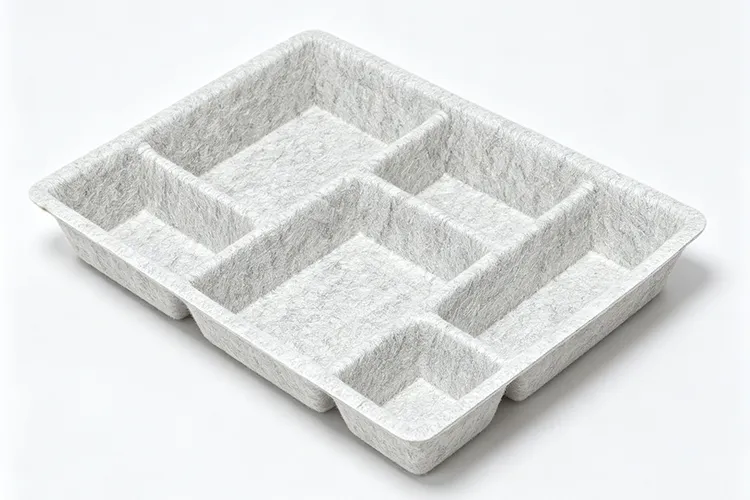
Hoogwaardige natuurlijke houten panelen fabrikanten en leveranciers in China. Wij product: Hout Akoestische panelen PET panelen
Als het antwoord op je vraag op zich laat wachten, voer dan je WhatsApp/Skype in samen met het bericht, zodat we meteen contact met je kunnen opnemen.
Je krijgt binnen 24 uur antwoord. In dringende gevallen kun je WhatsApp/WeChat toevoegen: +86-13678899682.
A noisy office drains focus fast. Voices bounce, meetings feel tiring, and even a well-designed room can sound messy. The good news is that the right acoustic panel placement can solve much of this problem without rebuilding the whole space.
The best way to place acoustic panels in an office is to treat the main reflection points on side walls, add coverage on the ceiling above work or meeting areas, and spread panels across the room instead of clustering them on one wall. In open offices, combine wall panels, ceiling clouds, and suspended elements. In private rooms, start with side walls and ceiling zones first.
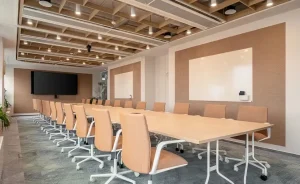
akoestische wandpanelen voor kantoren
If you are planning office acoustics for a commercial project, this topic matters because product choice alone is not enough. The same panel can perform very differently depending on where it is installed. In this guide, I will explain where to place acoustic panels in an office, how acoustic panels work, and how to balance walls, ceiling, and suspended treatments for better sound control and cleaner office design.
Why does acoustic panel placement matter in an office?
Where should you place acoustic panels on office walls?
Should you put acoustic panels on the ceiling?
How do acoustic panels work in an open office layout?
What is the best acoustic panel placement for a private office or conference room?
How many panels do you need to reduce echo?
Where should you not place acoustic panels?
Which type of acoustic panel works best for office walls and ceilings?
How do you balance acoustic treatment and office design?
What office acoustic strategy gives the best long-term results?
An acoustic panel only works when it is placed where sound waves actually travel and reflect. That is why acoustic panel placement matters so much. If you put panels in the wrong place, they may still improve the look of the room, but they will not do enough to reduce echo or improve speech clarity. Good placement helps the panel absorb reflected sound energy before it keeps bouncing around the room.
In most offices, the real problem is not just raw volume. It is the way sound waves bounce off hard surfaces such as glass, painted drywall, exposed concrete, and untreated ceiling areas. Those reflections create poor room sound, more fatigue, and weaker concentration. A good acoustic treatment plan focuses on reflection control first, not random decoration.
This is also where many people confuse geluiddicht with acoustic treatment. Acoustic panels help absorb sound, manage reflections, and improve comfort inside the room. They do not fully prevent sound transfer the way true structural soundproof construction does.
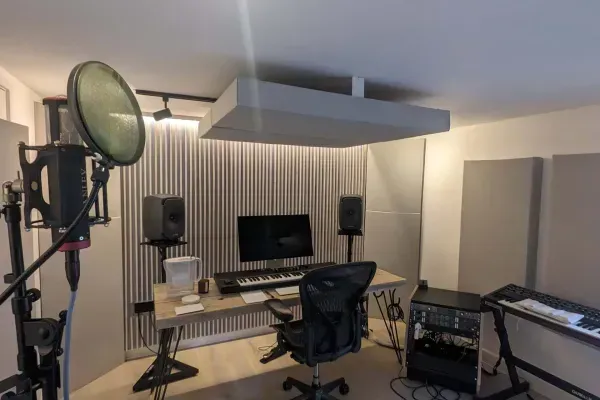
The best place to start is usually the side walls at first reflection points. When people speak in a room, part of the sound reaches listeners directly, but another part hits nearby walls and comes back as reflected sound. That delayed reflection creates echo, reduces clarity, and makes discussions feel less precise. So when you place acoustic panels, side walls are often the first high-value location.
A practical office wall strategy usually looks like this:
This last point matters. Many people place all wall panels on one decorative surface and expect strong acoustic results. That usually underperforms. Better panel placement means treating the places where reflections are strongest, not just the most visible wall.
Quick wall placement guide
| Office area | Best wall position |
|---|---|
| Small meeting room | Side walls + rear wall |
| Private office | Side walls near desk or seating zone |
| Reception space | Large reflective wall surfaces |
| Focus room | Side walls at seated height |
| Corridor workspace | Sections along parallel walls |
A simple rule helps: do not just decorate the wall. Place the acoustic panel where the sound waves reflect most.
Yes, very often. In many offices, the ceiling is one of the biggest reflective surfaces in the room. If it stays untreated, sound continues bouncing downward and across the room, especially in meeting spaces and open-plan work zones. That is why acoustic panels on the ceiling can make such a large difference.
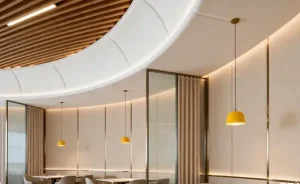
A good acoustic ceiling strategy might include direct-mounted panels, floating ceiling clouds, or products suspended from the plafond. The right format depends on room height, lighting, HVAC layout, and design goals. In open office areas, suspended elements often work especially well because they intercept overhead sound reflections more efficiently.
When ceiling treatment matters most
In many cases, a better ceiling plan improves the room more than adding more panels to one wall.
An open office layout is harder to control because the sound field is shared. There are fewer enclosed walls, more overlapping conversations, and longer reflection paths. In this situation, wall-only treatment is rarely enough. You usually need a layered system if you want acoustic panels to work well.
The most effective approach in an open office often includes:
This matters because open spaces produce different types of noise at the same time. Speech, footsteps, call zones, and collaboration tables all contribute to a noisy office. Panels can help, but only when the treatment is distributed properly. That is why open plans usually need more than one type of acoustic panel.
If your project needs a warmer finish in these areas, akoestische wandpanelen van hout voor kantoor are already positioned for meeting rooms, workspaces, schools, and premium interiors, with wall and ceiling acoustic use called out directly on the product page.
A private office or conference room is easier to tune because the space is defined and the conversation zone is clear. In these rooms, the best setup is usually side-wall treatment plus selective ceiling coverage over the table, seating area, or desk zone. If the room has lots of glass, a rear reflective wall, or a hard long table, you may need more coverage.
A practical order of treatment is:
This works because it targets the main reflection paths first. It also helps avoid overusing panels where they are less effective. In many meeting spaces, a few well-placed panels outperform a larger number installed in the wrong location.
The number of panels depends on room size, ceiling height, furniture, glazing, and how reflective the finishes are. There is no universal number that works everywhere. A furnished office with carpet and curtains may need fewer panels. A minimalist glass-heavy room may need much more treatment.
A sensible approach is to start with partial coverage, test the space, then expand only where needed. Existing office acoustic guidance on the linked article suggests beginning with moderate surface coverage and adjusting after you evaluate the room. That is a much better approach than buying too many panels before understanding how the room behaves.
A simple planning rule:
The goal is not to cover every surface. The goal is to control the reflection paths that matter most.
Some panel locations look attractive but do very little. The most common mistake is to place panels too high on the wall, far above the useful reflection zone for seated conversation. Another weak strategy is putting every panel on one decorative wall while ignoring the room’s actual sound path.
You should also avoid poor substrates or unstable installation areas. Good acoustic panel installation depends on wall condition, fixing method, and product type. If the mounting surface is uneven or weak, panels may not stay flat or perform properly over time.
Common weak placement choices
A panel helps most when it is placed where sound actually travels.
The right panel depends on the room and design goal. Lightweight felt products are often strong for ceilings, suspended elements, and flexible wall coverage.
If the space needs a warmer and more premium look, wood-based systems are often better. Wood acoustic office products already describe decorative veneer finishes, felt backing, office meeting room use, and wall-and-ceiling acoustic treatment for interior projects.
Product-direction summary
| Type paneel | Geschikt voor |
|---|---|
| Akoestische panelen van PET-vilt | Open offices, classrooms, flexible ceiling use |
| Decoratieve akoestische wandpanelen | Branded workspaces and modern interiors |
| Akoestische wandpanelen hout | Boardrooms, offices, premium rooms |
| Ceiling clouds / suspended panels | Large open areas and exposed ceilings |
| Hanging dividers / baffles | Desk zones and shared open-plan control |
This is why the best office projects often mix more than one product instead of relying on a single sound panel format.
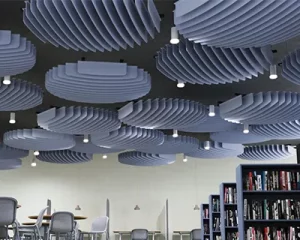
A good acoustic plan should not force you to choose between function and appearance. The strongest modern office projects use products that improve sound while still fitting the design language of the room. Decorative felt, slatted wood, shaped panels, and suspended acoustic elements can all help improve sound without making the room feel too technical.
A balanced strategy usually includes:
This approach helps make your office feel intentional, not overloaded. You do not need to sacrifice style for sound control if the product and placement strategy are planned together.
The best long-term strategy is a layered one. Start by understanding the room function, where people sit, and where sound waves reflect most strongly. Then choose a combination of wall, ceiling, and suspended treatment rather than relying on one surface alone.
For most office projects, the strongest long-term result comes from:
This gives better comfort, better design control, and better value. It also avoids one of the biggest mistakes in office acoustics: buying a large number of panels without a clear placement plan. Smart placement of acoustic panels usually matters as much as the panel material itself.
Start here
Avoid this
Where should I place acoustic panels in an office?
Start with side walls at first reflection points, then add coverage on the ceiling above desks or meeting areas. Add rear-wall treatment only if the room still has too much echo.
Do acoustic panels go on walls or ceiling?
Both. Wall panels catch early reflections, while the ceiling controls larger overhead reflections. In many offices, the best result comes from using both together.
How do acoustic panels work in an office?
They absorb part of the reflected sound energy so less sound keeps bouncing off walls and ceilings. That improves clarity and comfort, but it does not fully soundproof a room.
How many acoustic panels do I need in an office?
It depends on the room, but partial coverage is usually the best starting point. Add more only after you test the space and identify where reflections are still strong.
Do acoustic panels block sound from entering an office?
Not like true soundproof construction. Acoustic panels mostly control reflections inside the room rather than full sound blocking between rooms.
What panel type is best for office acoustics?
PET felt panels are useful for lightweight flexible applications, while wood acoustic panels are strong for premium meeting rooms and visible office interiors. The best choice depends on layout, design, and acoustic goals.
Start acoustic panel placement at side-wall reflection points.
Do not ignore the ceiling; it is often one of the biggest reflective surfaces.
In an open office layout, use layered treatment: walls, ceiling clouds, and baffles.
In a private office or conference room, side walls plus ceiling treatment usually works best.
The goal is to reduce reflections and echo, not just decorate one wall.
PET and wood office panels both work well, but they serve different design goals.
Smart panel placement usually matters as much as the panel itself.
For office acoustics, balanced wall-plus-ceiling treatment gives the most reliable long-term result.

 Dutch
Dutch  English
  French
  German
  Italian
  Spanish
  Arabic
  Russian