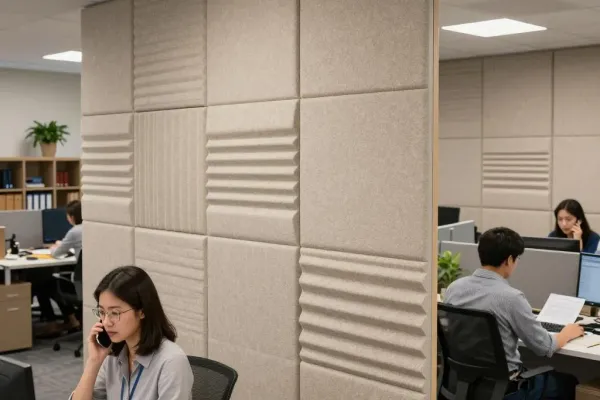
Paneles de madera natural de alta calidad Fabricantes y proveedores en China. Nosotros producto: Paneles acústicos de madera Paneles de PET
Evite que su consulta sea de respuesta tardía, por favor introduzca su WhatsApp/Skype junto con el mensaje, para que podamos ponernos en contacto con usted a la primera.
Le responderemos en un plazo de 24 horas. Si para el caso urgente, por favor agregue WhatsApp/WeChat: +86-13678899682 directamente.
Bad sound can ruin a beautiful room. It makes meetings tiring, music harsh, and restaurants loud. Worse, many buyers install the wrong acoustic panel and watch it degrade too soon. The fix is simple: choose the right acoustic materials, install them correctly, and maintain them like any other finish.
Most acoustic panels last 8–20 years in real projects. Foam often wears out faster (commonly 3–8 years), while PET panels, fabric-wrapped cores (like fiberglass or mineral wool), and wood slat acoustic panels can be a long-term investment when the space, installation, and cleaning plan are right.
paneles acústicos
What is the typical lifespan of acoustic panels (by material)?
Why do some acoustic panels degrade faster than others?
Foam panels: how long do foam panels last, and what causes foam to break down?
PET / polyester fiber acoustic panels: durability, UV, and long-term acoustic performance
Wood slat acoustic panels (MDF + felt): will MDF warp, and how long can they last?
Fabric-wrapped panels (fiberglass/mineral wool): how long do they stay clean and effective?
Environmental factors: humidity, UV, temperature swings, and high-traffic areas
Installation, adhesive, and mounting: how installation choices affect lifespan
How to extend the life of acoustic panels (simple maintenance checklist)
Long-term value & ROI: why high-quality acoustic panels are a cost-effective upgrade
When buyers ask us about lifespan, we start with a basic truth: an acoustic panel is both a performance product and a surface finish. So its durability depends on (1) how well it keeps sound absorption, and (2) how well it holds up visually.
Here’s a simple “buyer-ready” range you can use when planning a project. It matches what we see in B2B orders across offices, schools, hospitality, and public buildings—and it also aligns with many industry summaries (with variation by quality and use-case).
| Panel type | Core / build | Typical lifespan | Common failure mode |
|---|---|---|---|
| Paneles de espuma | polyurethane / melamine foam | 3–8 years | foam can degradar, crumble, discolor |
| Paneles PET | fibra de poliéster felt board | 8–15+ years | color fading in strong uv, surface scuffs |
| Paneles envueltos en tela | fibra de vidrio o lana mineral + fabric | 10–20 years | fabric staining, edge wear, dust load |
| Paneles acústicos de lamas de madera | slats + felt (often mdf slats) | 10–20+ years | slat finish wear, possible warp if wet |
| Techo acústico tiles | mineral fiber / fiberglass | 10–15+ years | sagging in high-humidity, stains |
If you want a strict, measurable way to judge acoustic performance, look for test standards like ASTM C423 (reverberation room testing for absorption). This doesn’t “guarantee lifespan,” but it does keep performance claims honest.
People often blame the product—when the real issue is the environment and how the panel is used.
In our factory projects (PET and wood acoustic products for global B2B buyers), the biggest “early failure” drivers look like this:
UV exposure (sunlight through windows): can fade fabric and some polyester colors over time.
High-humidity or wet cleaning: can harm finishes, weaken some adhesive, and raise mold risk in the wrong build.
Physical damage in high-traffic areas: chair backs, carts, school hallways, luggage bumps.
Poor installation: wrong anchors, bad wall prep, low-quality tape, or uneven mounting that causes sag.
Wrong product choice: using foam where impact resistance is required, or using non-sealed MDF in humid environments.
So yes—panels can last a long time. But you must match the types of acoustic panels to the room.
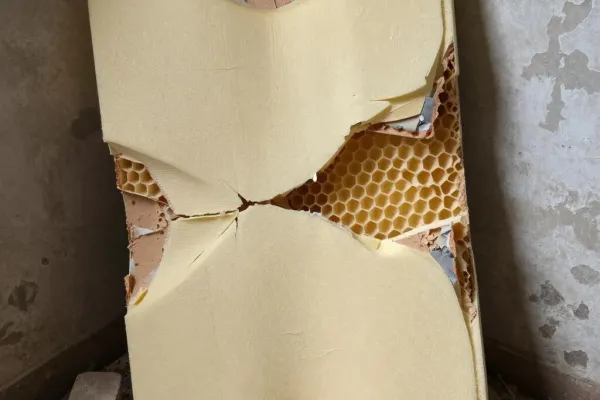
Let’s be direct: foam is popular because it’s easy and cheap. But foam panels are often the first to degrade.
In real facilities, we usually see foam panels look tired long before they “stop working.” The surface collects dust, edges fray, and UV or air oxidation can cause discoloration. Even if the sound absorption still exists, the space starts to look unprofessional.
Why foam degrades faster
Many foams are more sensitive to uv and air exposure than denser boards.
Some sites use spray adhesive that fails over time, especially on dusty paint or uneven drywall.
Foam can tear during cleaning, moving furniture, or minor impacts.
Where foam still makes sense
Temporary setups (short-term studios, rental rooms, pop-up booths)
Low-contact zones (panels at ear level are risky; higher placement helps)
Tight budgets where replacement is planned
If your customer is a distributor, designer, or contractor planning a 5–10 year project, foam is rarely the best long-term investment.
Paneles de espuma
Fabricamos Paneles PET because they solve a common B2B headache: buyers need a clean, modern look with stable acoustic results and strong durability.
Una buena Panel acústico de PET uses dense polyester fiber felt that stays dimensionally stable, resists sagging, and holds sound absorption for years. Many facilities choose PET for classrooms, open offices, corridors, and retail—places where impact resistance matters.
What helps PET panels last
Dense polyester structure (better “spring-back” after light bumps)
Cleanable surface (vacuum or light wiping)
Better edge strength than soft foam
What can shorten PET lifespan
Strong window sunlight (uv) on bright colors
Rough abrasion (bags, carts, tools)
Bad glue or tape selection for the wall finish
If your project has large windows, plan the layout to avoid exposure to direct sun, or choose darker colors and UV-stable finishes. Many suppliers note that PET can fade with prolonged UV exposure, so it’s smart to treat sunlight as a design input, not an afterthought.
Paneles acústicos de lamas de madera have become the “architect favorite” because they combine warmth with predictable acoustic treatment. Most systems use a felt backer (often PET) plus wood slats—commonly mdf with veneer or laminate.
When installed correctly in normal interiors, wood slat systems can last for decades as a finish—especially in offices, lobbies, boardrooms, and lounges.
What to watch with MDF
MDF can warp if it absorbs moisture repeatedly.
In humid environments (pools, seaside buildings, kitchens without HVAC), ask for moisture-aware solutions: sealed edges, better coatings, or alternative substrates.
Where wood slat panels shine
Premium interiors where sound quality and aesthetics both matter
Spaces that need good speech clarity (meeting rooms, lecture rooms)
Projects targeting a strong return on investment through “feel + function”
As a manufacturer, we typically recommend wood slat panels when clients want a “design-led” acoustic finish and can control environmental conditions.
For many designers and contractors, fabric-wrapped panels are the classic solution. The core is commonly fiberglass or mineral wool, and the fabric face protects the absorber and gives a clean look.
From a performance viewpoint, these are strong at sound absorption, and they can also help with some low-frequency control when thickness and air gaps are designed well.
The lifespan challenge is usually the fabric
Dust buildup can dull the look.
Stains can happen in public spaces.
Edges can wear if people brush against them.
The good news: many acoustic fabrics are designed for routine care, like vacuuming and approved spot cleaning.
If the project is a school, hospital, airport, or any “hands-on” building, we usually recommend:
harder edges / frames,
darker or textured fabrics,
and panel placement above heavy contact zones.
This section is where we see “hidden cost” in projects. The panel choice was fine—but the room conditions were not.
Humidity & leaks: repeated dampness can lead to mildew risk and can weaken adhesive and finishes.
High-humidity zones: consider moisture-aware designs and avoid vulnerable materials.
UV exposure: can fade some surfaces; plan around windows.
Temperature swings: can stress panel materials, especially if HVAC is unstable.
Physical damage: the number one issue in high-traffic areas like corridors and multipurpose rooms.
Here’s a quick “risk meter” we use with buyers:
Risk chart (higher = more risk to appearance and durability)
Foam panels: ████████ 8/10
Fabric-wrapped panels (public zones): ██████ 6/10
PET panels: ████ 4/10
Wood slat panels (stable interiors): ███ 3/10
Proper acoustic ceiling systems: ███ 3/10
This isn’t a lab chart. It’s project reality. If you tell us your room type, we can recommend the different acoustic panel build that fits.
Buyers often focus on the board—and forget the system.
Your installation environment and mounting method can decide whether panels stay flat, clean, and safe.
Mechanical fixing (clips, Z-clips, screws): best for heavy panels and long-term maintenance.
High-bond tape: fast, but depends on wall prep and heat/humidity.
Spray adhesive: risky for long-term, and hard to remove cleanly later.
If you’re working with drywall, paint quality matters. Dusty paint, textured walls, or weak primer can cause failures. In B2B projects, we typically recommend mechanical fixing whenever the client expects a long service cycle.
Also watch “panel geometry” decisions:
if you perforate decorative facings, you may improve absorption in specific designs—but you must protect edges and keep the structure stable.
placing panels at ear level improves perceived clarity but raises the chance of scuffs and impact.
If you want long-lasting results, treat acoustic surfaces like any other architectural finish. The goal is to protect performance and appearance.
Vacuum surfaces every 1–3 months (more often in dusty sites).
Spot clean with approved methods for your surface (fabric rules differ by textile).
Keep humidity stable; fix leaks fast.
Avoid harsh chemicals unless the supplier approves them.
Inspect mounting points yearly in public projects.
For fabric systems, many manufacturers recommend routine vacuuming to remove soil and dust.
Pro tip we share with contractors:
If the client needs frequent disinfection (healthcare, schools), choose surfaces and fabrics designed for it. That decision alone can extend the life by keeping the panels presentable without damage.
For architects, brand owners, and distributors, the best question is not “What’s the cheapest panel?” It’s:
“What is the return on investment of a quiet, comfortable space that looks great for 10+ years?”
A strong acoustic plan improves:
speech clarity and sound quality in offices and schools,
customer comfort in restaurants and retail,
productivity and reduced fatigue in open-plan environments.
And if you choose the right types of acoustic panels, you reduce replacements, callbacks, and complaints—making it more cost-effective over the project lifespan.
A quick ROI story (real B2B pattern we see)
A distributor supplies PET and wood slat panels to a chain of training centers. They avoid foam because foam gets damaged during room turnover. After the first year, site teams report fewer “noise complaints,” and the panels still look new. The brand renews orders for additional locations because the solution delivers predictable results and low maintenance.
That’s why many buyers treat acoustic upgrades as a long-term investment, not a decoration purchase.
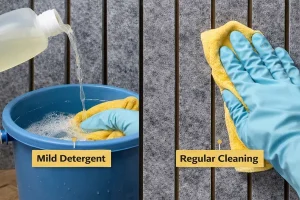
limpieza de paneles acústicos detergente suave y limpieza regular
How long do acoustic panels typically last in offices?
In most offices, a good acoustic panel lasts 8–20 years, depending on the panel materials, cleaning habits, and traffic. PET and fabric-wrapped systems usually outperform foam over time in appearance and durability.
Do acoustic panels lose acoustic performance over time?
Most quality panels keep acoustic performance for many years if they stay dry and clean. Dust loading can reduce sound absorption slightly, and physical damage can reduce effectiveness. Look for test-backed products (for example, ASTM C423 absorption testing).
What makes foam panels degrade faster?
Foam can degrade due to UV exposure, oxidation, dust buildup, and tearing. Also, spray adhesive failures are common on poorly prepared walls.
Are PET panels good for high-traffic areas?
Yes. PET panels made from dense polyester fiber are often more impact-tolerant than foam, making them a good fit for corridors, classrooms, and multipurpose rooms—especially when you need panels that stay neat.
Can wood slat acoustic panels warp?
They can warp if the slats (often mdf) absorb moisture repeatedly. In stable indoor conditions, wood slat acoustic panels can last a long time. In wet or coastal environments, use moisture-aware finishes and good HVAC control.
How do I clean fabric-wrapped panels without ruining them?
Start with vacuuming and follow the fabric’s care code. Many acoustic fabrics allow approved spot cleaning, but harsh scrubbing can damage fibers.
Most acoustic panels last 8–20 years; foam often needs replacement sooner because it can degrade.
PET panels (dense polyester fiber) offer strong durability and stable sound absorption for many B2B interiors.
Wood slat acoustic panels can be very long-lasting, but watch humidity—mdf can warp if repeatedly exposed to moisture.
Fabric-wrapped panels (often fiberglass or mineral wool) perform well; fabric cleanliness and edge protection decide how they age.
Environmental factors (UV, humidity, impacts) and installation choices (mounting vs adhesive) often matter more than the panel itself.
Choosing high-quality acoustic panels is usually a smarter long-term investment with better roi and fewer callbacks.

 Spanish
  English
  French
  German
  Italian
  Arabic
  Russian
  Dutch
Dutch