Paneles de madera natural de alta calidad Fabricantes y proveedores en China. Nosotros producto: Paneles acústicos de madera Paneles de PET
Evite que su consulta sea de respuesta tardía, por favor introduzca su WhatsApp/Skype junto con el mensaje, para que podamos ponernos en contacto con usted a la primera.
Le responderemos en un plazo de 24 horas. Si para el caso urgente, por favor agregue WhatsApp/WeChat: +86-13678899682 directamente.
Bad room acoustics can make a space feel noisy, tiring, and hard to use. At the same time, many buyers worry that adding acoustic panels might create a new problem by weakening internet access. The good news is simple: most acoustic panels improve sound control without causing meaningful WiFi trouble.
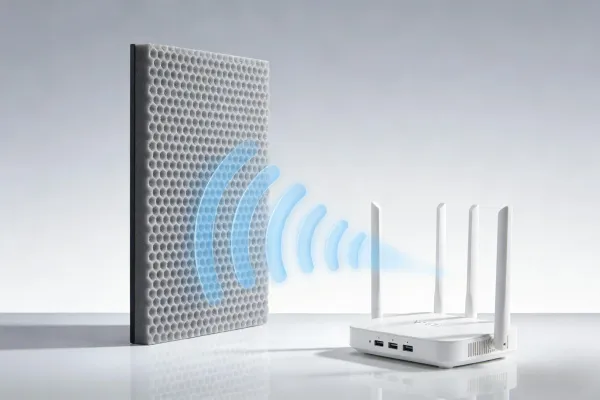
Yes, in most cases, acoustic panels do not block WiFi. Standard Paneles acústicos de PET and wood acoustic panel systems are mainly designed to absorb sound waves, reduce echo, and improve room comfort. WiFi travels as electromagnetic waves, so common non-metal acoustic materials usually have only a negligible effect on normal wireless connectivity. Dense building materials such as concrete, brick, steel, and large metal surfaces are much more likely to reduce a wifi signal than a typical acoustic panel.
acoustic panels do not block WiFi
If you work with interior products, commercial fit-outs, or branded acoustic solutions, this guide matters because buyers often ask the same thing: “Will these panels hurt my internet?” We hear that concern often from distributors, architects, and project contractors. As a professional acoustic panel manufacturer in China serving global B2B clients, we have seen that the real answer depends far more on panel material, room layout, and nearby construction than on the acoustic panel itself.
What is the difference between acoustic panels and soundproof materials?
Do acoustic panels block WiFi signal in real spaces?
How do wireless signals work around building materials?
Which materials are more likely to interfere with WiFi than acoustic panels?
Are PET and wood acoustic panels safe for wireless connectivity?
Can soundproofing interfere with wi-fi and phone signals?
Why are acoustic panels designed for sound absorption, not signal blocking?
What installation choices may affect signal quality the most?
Do acoustic panels help modern commercial spaces beyond reducing nois
Many people mix up acoustic treatment and soundproof construction. They sound related, but they do different jobs. An acoustic panel is usually made to manage sound inside a room. It helps reduce echo, soften harsh reflections, and improve sound quality. In contrast, true soundproof systems are meant to stop noise from passing from one space to another.
That difference matters when people ask whether panels can block wifi. Most acoustic panels are designed for sound absorption, not RF shielding. They are usually made from porous or fibrous materials that trap sound energy, not materials intended to block signals. So when buyers compare common soundproofing products with acoustic treatment, they should not assume the same effect on wireless signals. Dense wall assemblies, mass-loaded structures, metal layers, and thick concrete are much more relevant to WiFi performance than basic acoustical wall panels.
For project planning, this is a helpful rule: if the product is sold to improve room comfort, speech clarity, and reverberation, it is probably an acoustic treatment. If it is sold to create isolation between rooms, then it is closer to real soundproof construction.
In normal offices, conference rooms, classrooms, hotels, studios, and commercial interiors, the answer is usually no. A typical acoustic installation does not create the kind of barrier that seriously harms a wi-fi signal. WiFi depends on radio frequencies, and most PET fiber and wood-based acoustic products are not metal shields. That means their potential impact on wifi is low in most everyday settings.
The stronger causes of poor connectivity are often elsewhere: bad router placement, long distance from the access point, interference from other devices, or walls made from concrete, steel, brick, or insulated structures. Intel notes that building materials such as steel and drywall can shorten radio range, while Netgear also points to layout and materials like brick and concrete as common causes of weak WiFi.
So, do acoustic panels affect wifi? They can, but usually only in a very small way. In practical projects, the drop is often negligible compared with the effect of the building shell itself.
To understand the answer, it helps to know how signals work indoors. WiFi travels through electromagnetic waves, not through the same path as noise. Most WiFi systems use 2.4 ghz or 5 ghz, and newer systems may also use 6 GHz. These bands are essential to modern wireless networking.
As these signals like wi-fi move through a building, they lose strength whenever they pass through objects. This is called attenuation. NIST has studied how construction layers weaken RF transmission, and both NIST and FCC materials show that building elements can reduce signal passage depending on thickness, composition, and frequency.
This is why a room with open sight lines may perform better than a room with many dense partitions. It is not just about one panel. It is about the total path between the device and the wi-fi router.
Some materials are far more likely to interfere with wifi than PET felt, wood veneer slat systems, or other soft soundproofing material used for acoustic treatment. These include concrete, steel, metal framing, mirrors, brick, insulated walls, and large glass assemblies. Consumer networking guidance and technical RF studies consistently show that dense or reflective surfaces can reduce indoor signal strength.
Here is a simple comparison:
| Material / Element | Main Function | Likely impact on WiFi | Por qué |
|---|---|---|---|
| Panel acústico de PET | Absorción acústica | Bajo | Non-conductive material, porous, lightweight |
| Wood slat acoustic panel | Acoustical finish + absorption backing | Low to moderate | Mostly low, unless paired with metal systems |
| Drywall partition | Standard wall surface | Moderate | Adds distance and some attenuation |
| Brick wall | Structural / partition | Moderate to high | Denser than acoustic treatment |
| Thick concrete pared | Structural mass | Alta | Dense material causes greater attenuation |
| Large metal surface | Structural / finish | Alta | Metal can reflect or weaken RF paths |
| Glass with coatings / mirrors | Decorative / envelope | Moderate to high | Can alter RF performance depending on structure |
The short version is clear: materials like fiberglass, polyester fiber, and wood-finish absorbers are mainly about sound control. Materials like metal and concrete are more likely to interfere with signals.
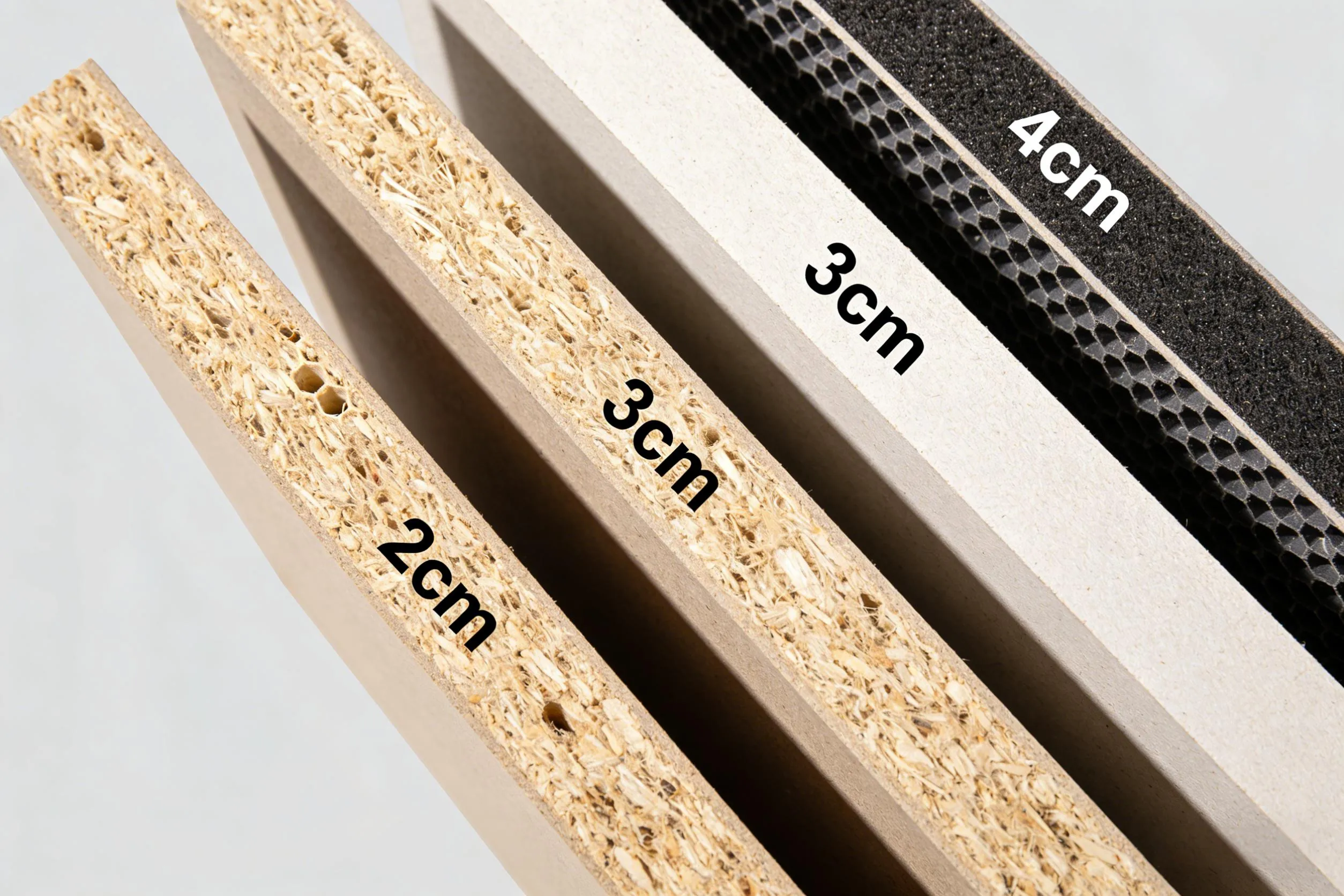
Yes. In most projects, PET and paneles acústicos de madera are safe choices for wireless connectivity. PET acoustic products are usually made from compressed polyester fiber. For example, commercial acoustic products from Autex describe polyester panels as lightweight, sound-absorbing systems, while Rockfon explains that porous fiber structures in materials such as fiberglass help with sound absorption. These are not RF-blocking products.
That is one reason many architects and fit-out contractors choose them for offices, classrooms, hospitality areas, and public spaces that need better acoustics without harming day-to-day digital use. When panels are made from PET felt, MDF slats, wood veneer finishes, or backing layers intended for effective sound absorption, they usually support better user comfort while leaving electronic signals largely unaffected.
As a manufacturer serving B2B buyers, we often recommend that clients focus on overall system design, not fear the panel itself. Good acoustic products are built to manage sound without blocking function.
This is where the question becomes more precise. Wi-fi and phone signals can be affected by some forms of heavy sound isolation, especially when the system includes dense layers, foil facings, steel framing, specialty membranes, or construction approaches meant to stop transmission between rooms. In that case, yes, soundproofing interfere concerns are more valid.
But that is not the same as asking whether decorative or absorptive wall panels interfere with wireless signals. A soft PET board, slatted wood wall with absorptive backing, or fabric-faced absorber is very different from a high-mass wall. So if someone asks whether soundproofing affect wi-fi, the best answer is: sometimes heavy isolation systems can, but normal acoustic wall and ceiling products usually do not.
This distinction is useful for specifiers. It helps avoid confusion during design reviews and buyer discussions.
The physics are different. Acoustic panels are designed to manage sound waves in air. They are designed to absorb sound waves by using porous surfaces and internal fiber structures that convert some sound motion into heat. Armstrong explains absorption as the conversion of sound energy instead of reflection, and multiple acoustical product makers describe high-performance panels in these terms.
WiFi, on the other hand, moves as radio waves in the RF spectrum. The panel does not “hear” or “catch” the signal the way it handles echo. Unless the product includes conductive barriers or unusually dense materials, the impact on wireless performance is limited. This is why many high-quality acoustic panels are installed in offices full of laptops, phones, smart displays, and cloud-based meeting systems without causing a major networking issue.
So, from a design point of view, a good panel can improve the room’s listening environment while still letting daily wireless signals pass normally.
Installation still matters. While the panel itself may not be the problem, the room layout can change how people perceive the network. Large decorative wall systems, deep ceiling features, and new partitions can alter the path between devices and the router. That does not mean the panel is harmful. It means the space is changing.
Here are a few practical design tips:
Keep the wi-fi router in an open and central location.
Avoid placing panels directly in a way that hides or encloses access points.
Review the full wall build-up, especially if there is metal framing or foil backing.
Test signal after installation in large commercial rooms.
In deep spaces, an extender can help boost coverage.
These steps matter more than worrying about whether a single PET wall panel will affect signal strength. In real projects, good placement solves most complaints about signal quality and day-to-day connectivity.
Absolutely. Buyers do not choose acoustic solutions only to make a room quieter. They choose them because people work, learn, talk, and sell better in balanced spaces. Sound comfort helps open offices, hospitality projects, schools, studios, public buildings, and branded interiors feel more usable. Better room treatment supports privacy, speech clarity, focus, and a more professional finish.
For distributors, importers, architects, and OEM/ODM brands, this creates a stronger value story. You are not simply buying panels. You are choosing a finish system that improves interior experience, adds visual design value, and helps manage noise levels while maintaining normal wireless connectivity.
From our experience as a Chinese manufacturer of PET and wood acoustic panels, global B2B buyers care about four things most:
Stable product quality
Custom size, color, and finish options
Reliable production and export support
Products that solve real project problems without creating new ones
That is exactly why the WiFi question matters. Buyers want reassurance before specifying at scale.
One of the most common concerns comes from office projects. A client may say, “We need better sound control in meeting rooms, but we cannot risk poor internet during video calls.” That is a fair concern. The answer is usually to combine PET wall panels with smart access-point placement.
In a typical open-plan office, we often see three issues at once: echo from hard surfaces, speech spill from nearby zones, and uneven WiFi because the router sits in the wrong corner. When PET or wood slat acoustic systems are added, the room becomes calmer and more comfortable. If the access point is also repositioned, the result is often better overall performance: better meetings, better voice clarity, and no meaningful change in internet use.
Practical takeaway chart
| Project Goal | Recommended move | Result |
|---|---|---|
| Reducir el eco | Add PET wall or ceiling absorbers | Better comfort, less reverberation |
| Keep good WiFi | Keep access points open and central | Stable coverage |
| Upgrade aesthetics | Use wood slat or OEM-finish panels | Better visual value |
| Improve meeting rooms | Combine acoustical treatment + network check | Better calls and room usability |
This is why we tell clients to look at the whole environment, not just one product label.You can also review our real project case studies to see how acoustic panels are applied in commercial and public interior spaces.
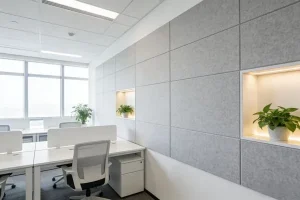
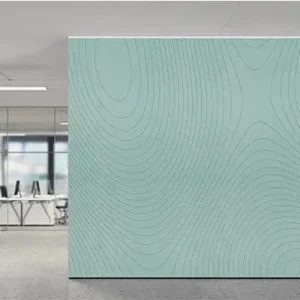
office fit-out with PET acoustic panels
Start with the product structure. Ask what the materials used are. If the system is made from PET fiber, MDF slats, felt backing, or similar non-metal components, the impact on signals is usually small. If the full assembly includes foil layers, metal substrates, or enclosed service boxes, then the review should be more detailed.
Next, think about the project type. A hotel corridor, school classroom, office meeting room, and cinema lounge all use acoustical products differently. The buyer should match the right panel to the right function. A good supplier will explain finish, fire performance, dimensions, backing, mounting, and application range in a clear way.
Do acoustic panels interfere with WiFi?
Usually no. Most acoustic panels use porous, non-metal materials and have very little effect on normal home or office WiFi. Concrete, brick, steel, and poor router placement are more common causes of weak internet.
Can wood acoustic panels block wi-fi signals?
In normal use, wood acoustic panels do not usually block wi-fi signals. A wood finish with acoustic backing may cause a very small change depending on acoustic panel thickness and mounting, but the effect is typically much lower than dense structural walls or metal surfaces.
Are PET acoustic panels better for wireless environments?
PET acoustic panels are a strong choice for spaces that need sound comfort and modern design. Because they are lightweight and usually based on polyester fiber, they are generally compatible with normal wireless use.
What affects WiFi more than an acoustic panel?
Concrete, brick, steel, mirrors, insulated walls, poor access-point placement, and distance from the router usually affect WiFi more than an acoustic panel.
Should I worry about wi-fi and phone signals in a large project?
You should review the whole room build-up, not just the panel. Most problems come from the building envelope, service routing, or access-point location. In large projects, a quick network check after installation is a smart step.
Can acoustic panels improve a room without hurting connectivity?
Yes. In most cases, acoustic panels improve speech comfort, reduce echo, and support better room function while preserving normal wireless connectivity.
Acoustic panels do not usually block WiFi.
Most PET and wood acoustic systems have a negligible effect on normal internet use.
WiFi problems are more often caused by concrete, steel, brick, distance, or bad router placement.
Acoustic treatment and true soundproof construction are not the same thing.
PET and wood acoustic products are typically safe for modern commercial interiors with heavy digital use.
Smart installation and access-point placement matter more than panel fear.
For B2B projects, the best result comes from balancing acoustics, design, and connectivity together.

 Spanish
  English
  French
  German
  Italian
  Arabic
  Russian
  Dutch
Dutch