Hoogwaardige natuurlijke houten panelen fabrikanten en leveranciers in China. Wij product: Hout Akoestische panelen PET panelen
Als het antwoord op je vraag op zich laat wachten, voer dan je WhatsApp/Skype in samen met het bericht, zodat we meteen contact met je kunnen opnemen.
Je krijgt binnen 24 uur antwoord. In dringende gevallen kun je WhatsApp/WeChat toevoegen: +86-13678899682.
Bad echo can make a beautiful room feel cheap, noisy, and tiring. That is the real problem. It hurts comfort, focus, and even brand image. The good news is simple: the right acoustic panel materials can absorb unwanted noise and turn hard spaces into calm, useful places.
Acoustic panels are usually made from sound absorbing core materials such as polyester fiber, fiberglass, mineral wool, foam, or wood-based structures paired with an acoustic fabric finish. The best material depends on the room, target frequency range, design needs, fire rating, and installation method. For many commercial interiors, PET and wood acoustic panels offer a strong balance of sound absorption, durability, and visual appeal.
When buyers ask us what material is used for an acoustic panel, they are usually asking a bigger question: Which solution will actually work in a real project? As a professional manufacturer in China specializing in high-quality PET and wood acoustic panels, we help global B2B clients compare performance, appearance, and customization so they can choose the right system with confidence.
What is an acoustic panel and how does it absorb sound?
What core materials are commonly used in acoustic panel products?
Is polyester fiber a good sound absorbing material for modern interiors?
How do fiberglass and mineral wool compare with PET acoustic panel options?
Are foam and acoustic foam panels still a good choice?
Why does fabric for acoustic panels matter so much?
What role do wood wall panels play in acoustics and design?
Which panel works best for offices, schools, hotels, and public spaces?
What should distributors, architects, and contractors check before buying?
Can diy acoustic panel ideas work for commercial projects?
How do you choose the right acoustic panel supplier for OEM and ODM needs?
An acoustic panel is a building product designed to reduce unwanted noise inside a room. Its job is not to block all sound like a heavy wall. Its main job is to absorb airborne sound energy and reduce echo, reverb, and harsh reflection. When sound enters a soft or porous surface, part of that energy turns into a small amount of heat instead of bouncing back into the room.
In simple terms, a good panel helps control sound waves. That matters in open offices, meeting rooms, schools, restaurants, hotel lobbies, studios, and public buildings. If you want good acoustic performance, you need to think about where the noise comes from, how long the reverberation lasts, and which frequency range needs treatment most.
Many buyers confuse insulation with sound absorption. They are related, but not the same. Insulation often focuses on stopping sound transfer from one room to another. Acoustic wall and ceiling treatments focus on controlling sound within the room. That is why an absorber panel is so important for indoor sound control.
The most commonly used materials in a modern acoustic panel include polyester, fiberglass, mineral wool, foam, wood slats with acoustic backing, and specialty absorption material products such as melamine-based boards. Each panel type has a different structure, density, visual style, safety profile, and application range.
Here is a simple comparison table:
| Materiaal | Main Benefit | Typisch gebruik | Key Limitation |
|---|---|---|---|
| Polyester | Clean, durable, easy to customize | Kantoren, scholen, horeca | May need thickness tuning for low frequency |
| Glasvezel | Strong broadband absorption | Studios, technical spaces | Needs proper wrapping and handling |
| Mineral wool / rock wool | Good thermal and acoustic value | Commercial walls and ceilings | Heavier and less design-friendly without finish |
| Akoestisch schuim | Fast and lightweight | Small rooms, temporary treatment | Less premium look, lower durability |
| Wood slat + acoustic backing | Decorative and functional | High-end interiors, feature walls | Usually part reflective, part absorptive |
| Melamine foam | Lightweight, fire-conscious uses | Specialty acoustical needs | Can cost more |
For B2B projects, material choice is never only about lab performance. Importers, architects, and contractors also care about lead time, color options, OEM design, maintenance, and whether the panel looks aesthetically pleasing in real spaces.
That is why PET and wood systems have become popular. They combine acoustic value with finish flexibility, branding options, and reliable mass production for wall panels and ceiling systems.
Yes. In many commercial interiors, polyester is one of the most practical forms of sound absorbing material. PET fiber products are lightweight, clean-looking, easy to cut, and simple to install. They are widely used in office partitions, decorative baffles, hanging clouds, wall cladding, and custom fabric panels alternatives.
A polyester panel works by letting sound move into the fibrous body where the structure helps dampen echo. The thicker the product and the more open the face design, the better it can often absorb sound across broader ranges. For mid and higher frequency noise, PET can deliver reliable absorption while keeping the project visually modern.
From our experience as a China-based manufacturer serving global B2B buyers, PET solutions are especially attractive for projects that need:
PET also works well as a decorative wall covering. That gives designers more freedom than old-school technical materials. When a client wants both acoustic value and style, polyester is often a smart first option.
Fiberglass and mineral wool have long been the industry standard for serious acoustic treatment. Many studio and commercial acoustic products use rigid fiberglass, rock wool, or mineral wool because they offer strong absorption across a wide range of frequencies. You may also see references to 703, corning 703, or similar rigid board materials in technical specifications.
These materials are effective because their fibrous structure can trap air motion and help absorb the sound. They are often used behind stretched fabric systems, in hidden cavities, or inside framed sound absorption panels. For technical spaces like a recording studio, they remain popular because they can help with bass trapping, first reflections, and broadband control.
Still, PET has advantages in many architecture-led projects:
If you are comparing two panels for a real project, the question should not be “Which material is best in general?” It should be “Which panel is best for this room, this budget, and this finish standard?” That is the right commercial question.
Yes, but only in the right context. Acoustic foam and polyurethane foam products are still used for reducing echo and controlling short reflections in smaller rooms. Their surface forms, such as wedge or pyramid patterns, increase exposed area and help with effective absorption area. They are light, easy to install, and useful for entry-level projects.
But foam is not always the best long-term choice. In premium interiors, it may not look refined enough. It also does not always support the same design language as PET or wood-based systems. For commercial buyers, durability, cleaning, and appearance matter just as much as NRC-style performance numbers.
There are also specialty forms like melamine foam, which can offer good acoustical properties in light-weight applications. Still, when architects want an elegant, branded finish, they often move toward wrapped systems, slatted wood designs, or custom-cut PET panel products instead of exposed acoustic foam.
In other words, foam is useful, but it is not the full story. It works best when aesthetics are less critical or where quick installation matters most.
The outer finish is not just decoration. The right fabric for acoustic panels affects both appearance and performance. If the fabric is too dense or sealed, it may stop sound from entering the core. A good acoustic fabric should be acoustically transparent, which means it lets sound to pass into the absorber while still giving the panel a clean look.
Popular choices include polyester textiles, linen, burlap, muslin, and professional contract-grade options like guilford of maine. Some designers also look for transparent fabric or technical textile faces for modern interiors. The correct finish depends on durability, fire performance, color demand, and project style.
Here is a helpful guide:
| Type stof | Why It’s Used | Beste voor |
|---|---|---|
| Polyester acoustic fabric | Durable, color range, stable | Offices, schools, public spaces |
| Burlap | Budget-friendly, breathable | Rustic or low-cost applications |
| Linen | Premium natural look | Hospitality, design-led spaces |
| Muslin | Simple and light | Hidden or utility use |
| Nylon blends | Tougher wear resistance | High-traffic areas |
| Guilford van Maine | Recognized contract finish | Premium commercial projects |
A good fabric for acoustic use should not act like heavy upholstery unless it has been tested for acoustic application. The goal is to combine appearance and function, not to choke the absorber. This is why fabric selection is so important in fabric for akoestische panelen design.
Wood products are often chosen because they look warm, premium, and architectural. But wood alone does not always absorb much sound. Many wood acoustic systems work through a hybrid design: slats or perforated wood surfaces on the face, with PET felt or other sound-absorbing backing behind them. This combines controlled reflection with useful absorption.
That is why wood wall panels are so popular in modern offices, auditoriums, hotels, reception spaces, and public buildings. They create a strong visual statement while improving room comfort. Instead of making the room feel dead, they shape the balance between liveliness and control.
For architects and contractors, wood acoustic systems also solve another challenge: they hide acoustic function inside an attractive finish. The client sees beautiful slatted surfaces. The room feels calmer. Everyone wins.
We often recommend wood-based systems where branding, interior quality, and acoustic comfort all matter. They are especially effective on long corridor walls, conference spaces, hospitality lounges, and feature ceiling areas.
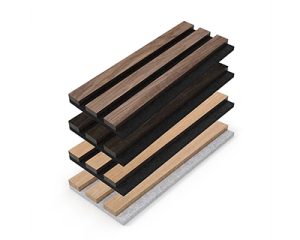
Wood Acoustic Panels 04
There is no universal answer, but there is a practical way to choose. Start with the room type, noise pattern, maintenance level, and design goals. Then select the panel structure that fits.
Typical material matching by project type
| Space Type | Recommended Panel Direction | Waarom |
|---|---|---|
| Open kantoor | PET panel, desk screens, ceiling baffles | Controls voice echo and improves comfort |
| School / classroom | PET or wrapped absorber panels | Better speech clarity and lower fatigue |
| Hotel lobby | Wood acoustic panels + soft absorbers | Premium look with controlled reverb |
| Auditorium | Mixed absorbers and diffusion strategy | Balances clarity and spaciousness |
| Restaurant | Decorative wall and ceiling acoustic treatments | Reduces harsh conversation build-up |
| Public building | Fire-conscious, durable modular systems | Easy maintenance and large-area coverage |
For example, an office usually needs broad speech control. A hotel needs design plus calm. A school needs strong noise control with simple maintenance. A hall may need not only absorption, but also diffusion so the room does not feel too flat.
This is where expert support matters. A reliable supplier should help you match material, thickness, mounting, and finish to the project goal, not just sell a generic panel.
Professional buyers should look beyond simple product photos. The real checklist includes acoustic data, thickness, fire class, raw material quality, installation method, customization ability, and production stability. A low-cost panel that ships fast but fails in the field is not a bargain.
Here are the essentials:
For distributors and importers, catalog flexibility matters. For architects, finish precision matters. For contractors, easy installation and schedule reliability matter. For brand owners, consistency and private-label service matter.
As a manufacturer focused on global B2B customers, we see one clear pattern: the best long-term partners are the ones who think beyond a single order. They want clear communication, dependable lead times, strong technical support, and a factory that understands real project delivery.
A small diy acoustic project can work for home offices, hobby rooms, or basic prototypes. People often build frames, fill them with rigid fiberglass, wool, or polyester, then wrap them in burlap, muslin, or another breathable cloth. This can be a useful way to learn how a panel works.
But large commercial jobs are different. A diy method may not meet fire, finish, consistency, or installation requirements. It may also create problems in shipping, surface quality, or long-term durability. That is why commercial buyers usually move to engineered systems rather than handmade boards.
Still, the logic of diy acoustic ideas teaches one important lesson: a panel must let sound enter the face, move into the core, and lose energy inside the structure. Whether the core is polyester, fiberglass, or mineral wool, the principle is the same. You want the material to trap air movement and reduce bounce at key reflection points such as the first reflection zone on side walls or ceilings.
When you source at scale, the product is only one part of the decision. You also need the right factory. A strong supplier should offer material knowledge, customization support, production control, packaging experience, and clear communication for international projects.
Here is what experienced B2B buyers usually expect:
If you are a distributor, architect, contractor, or private-label brand, a supplier should help you reduce risk, not create it. That means answering questions quickly, offering honest advice about what will and will not work, and supporting repeat orders with the same quality level.
As a professional manufacturer in China specializing in high-quality PET and wood acoustic panels, we work with global B2B clients who need more than a standard catalog. Many want tailored dimensions, colors, patterns, logos, packaging, or complete OEM/ODM acoustic panel solutions. In those cases, manufacturing flexibility becomes just as important as acoustic performance.
What material is best for an acoustic panel?
The best material depends on the room and project goal. Polyester is practical for many commercial interiors. Fiberglass and mineral wool are strong technical absorbers. Wood-faced systems are ideal when appearance matters as much as performance.
Do acoustic panels absorb all sound?
No. An acoustic panel mainly reduces echo and controls indoor reflections. It helps absorb sound inside the room. It does not fully replace heavy soundproof construction.
Is acoustic foam better than polyester panel products?
Not always. Acoustic foam is useful for simple applications, but polyester panel systems often offer better durability, easier customization, and a more professional finish for commercial interiors.
Why is acoustic fabric important?
A face fabric must be breathable enough to let sound enter the core. A poor fabric can reduce performance. A proper acoustic fabric helps keep the product attractive without blocking absorption.
Are wood acoustic panels really sound absorbing?
Yes, when designed correctly. Many wood systems use slats or perforations with a felt or fiber backing. This lets the system combine design value with acoustic control.
Can one panel type handle low end and high frequencies?
Usually not perfectly by itself. Thin products are better for high frequencies, while deeper systems perform better at the low end. Some rooms need a mix of thin decorative panels and deeper bass trapping solutions.
If you are asking what material is used for acoustic panels, the real answer is this: there is no single best material for every project. The right panel depends on sound behavior, room use, design goals, and installation needs. In modern B2B interiors, PET and wood systems stand out because they balance performance, style, and customization.
For global buyers, that balance matters. You do not just need a product that performs in a lab. You need one that ships well, installs well, looks right, and supports your market.
Acoustic panels usually use polyester, fiberglass, mineral wool, foam, or wood-based hybrid structures.
A panel works by helping absorption and reducing echo, not by fully soundproofing a room.
PET products are a strong choice for many commercial interiors because they are clean, flexible, and easy to customize.
Fiberglass and mineral wool remain strong technical options, especially where deeper broadband performance is needed.
The right fabric for acoustic panels must be breathable and acoustically transparent.
Wood systems often combine design appeal with hidden acoustic backing for a premium result.
Buyers should compare performance, finish, fire requirements, customization, and factory reliability together.
For OEM/ODM projects, choosing the right manufacturing partner is as important as choosing the right material.

 Dutch
Dutch  English
  French
  German
  Italian
  Spanish
  Arabic
  Russian