Hoogwaardige natuurlijke houten panelen fabrikanten en leveranciers in China. Wij product: Hout Akoestische panelen PET panelen
Als het antwoord op je vraag op zich laat wachten, voer dan je WhatsApp/Skype in samen met het bericht, zodat we meteen contact met je kunnen opnemen.
Je krijgt binnen 24 uur antwoord. In dringende gevallen kun je WhatsApp/WeChat toevoegen: +86-13678899682.
Thin panels in the wrong room can leave echo, muddy speech, and weak low-end control. That means wasted budget, disappointing results, and unhappy clients. The solution is simple: match acoustic panel thickness to the room, the target frequency, and the real acoustic goal.
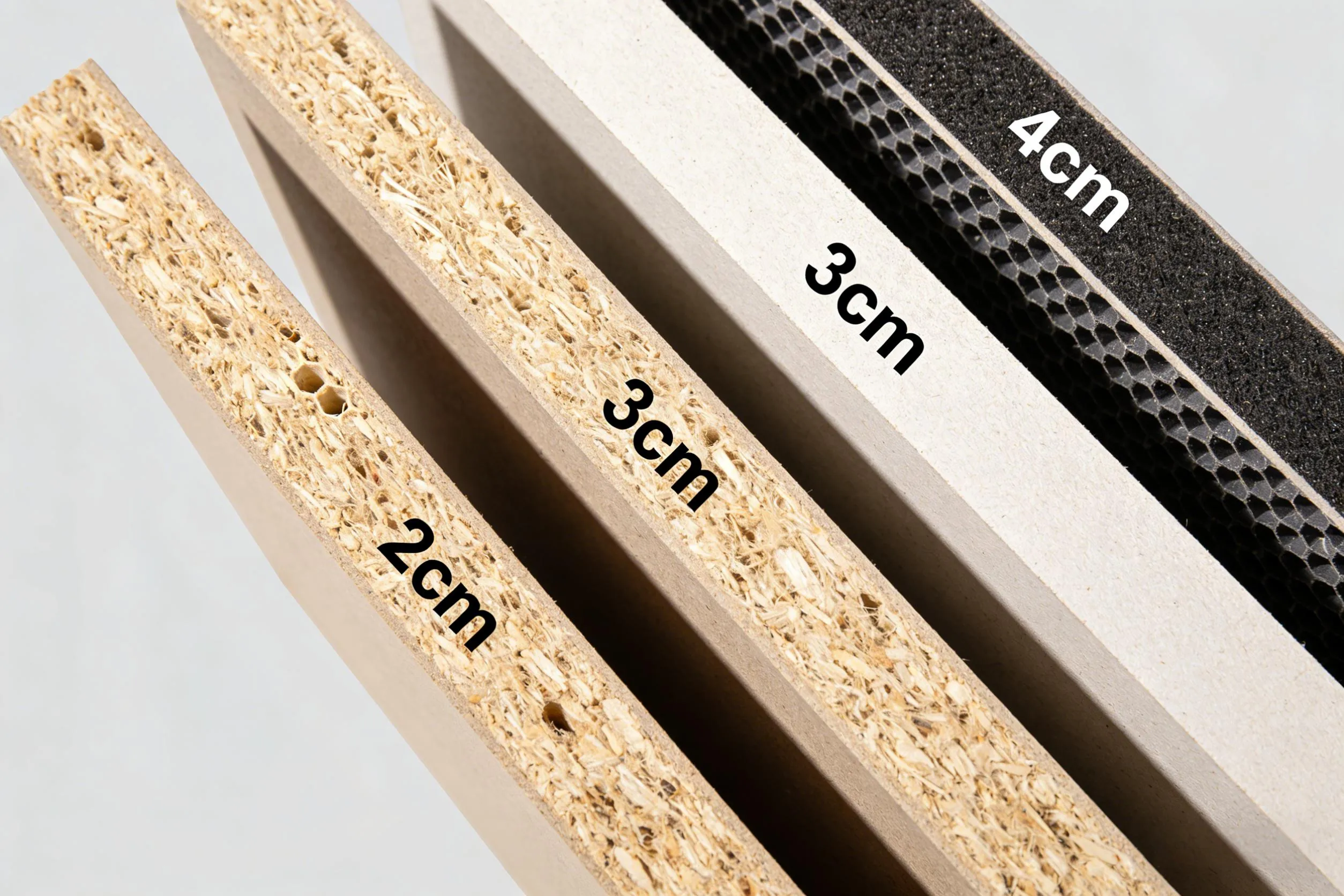
Yes, the thickness of acoustic panels matters. In general, thicker panels improve absorption, especially at lower frequencies, while thinner panels are more effective at mid and high frequencies. The best acoustic panel thickness depends on room type, installation method, material, and whether you want better speech clarity, music control, or broader sound absorption. Industry testing commonly uses ASTM C423 and reports performance with NRC values.

acoustic panel thickness
What does acoustic panel thickness really do?
Why does thickness matter in acoustics?
Do thicker panels absorb more sound?
What frequencies do thin and thick panels handle best?
Is 2 inches the ideal thickness for acoustic panels?
When should you use 100mm or thicker panels?
Does an air gap change acoustic performance?
What materials affect absorption besides thickness?
How do you choose the right acoustic treatment for each space?
What should B2B buyers ask an acoustic panel supplier?
An acoustic panel works by taking part of the incoming sound energy and turning it into a small amount of heat inside the panel structure instead of letting that energy bounce back into the room. That is why acoustic panels are designed to absorb sound rather than block it. In simple terms, they help manage reflections, reduce echo, and improve room clarity. Primacoustic explains that absorption panels reduce reflections and reverberation within a room by effectively absorbing sound waves.
The thickness of the panel affects how deep into the material those waves can travel before reflecting. A thicker absorber usually handles a wider range of frequencies, especially bass and other lower frequencies. A thinner absorber may still perform well, but it is more focused on the upper part of the spectrum. That is the core reason thickness matter discussions are so important in real acoustics design.
For B2B buyers, this matters because product success is not only about appearance. Architects, contractors, and distributors need panels that fit the room’s actual acoustic needs, whether the goal is better speech, cleaner music playback, or lower ambient noise in a commercial setting.
In understanding acoustics, one basic rule stands out: the lower the frequency, the longer the wavelength. Longer waves are harder for thin absorbers to control. That is why thicker panels are usually better when you want to absorb lower frequencies or manage fuller-spectrum room reflections.
This is also why a very thin decorative panel may improve flutter echo but still leave bass buildup and poor room balance. A panel can look good and still underperform if its panel thickness does not match the target room. In listening rooms and treatment guides, bass control is often handled with deeper absorbers or bass traps, especially in corners where low-frequency energy builds up. Primacoustic specifically notes that low frequencies tend to accumulate in corners and recommends bass trapping there.
So when people ask whether the thickness of acoustic panels matters, the practical answer is yes—because room problems happen at different frequencies, and those frequencies do not all respond the same way to the same panel depth.
Usually, yes. Thicker absorbers tend to deliver better geluidsabsorptie capabilities, especially over a wider range of frequencies. Thinner absorbers can still perform well for upper mids and treble, but deeper products are generally better for lower-frequency control. Multiple acoustic treatment guides state this clearly: thin foam or thin absorbers handle higher frequencies more easily, while thicker products extend performance downward.
That does not mean “thicker is always better” in every situation. If the room problem is mainly speech reflection or bright slap echo, a standard wall panel may be enough. But if the client wants smoother music playback, cinema use, or better full-spectrum comfort, a thick panel often gives more complete results. In those cases, panels absorb more useful energy across a broader band.
A simple way to think about it:
| Panel depth | Common strength | Typisch gebruik |
|---|---|---|
| Thin / thinner acoustic paneel | Better for higher frequencies | Speech rooms, light echo control |
| 2 inches | Gewoon standaard akoestisch keuze | Offices, meeting rooms, many wall treatments |
| 4 inches / 100mm | Better for lage frequenties and mixed control | Music studio, thuisbioscoop, deeper treatment zones |
The exact result still depends on mounting method, material, and placement, but acoustic panel’s thickness is one of the most important design variables.
Thin panels are more effective at shorter-wavelength content, which means upper mids and higher frequencies. That can include part of human speech, office reflections, and bright room ring. If the goal is to reduce echo in a conference room or classroom, thinner panels may already help a lot.
Thicker absorbers perform better as you move downward into low frequencies and lower-frequency sounds. That is why deeper panels are often recommended for studios, cinema rooms, and high-performance media spaces. SoundAssured’s treatment guidance notes that thicker acoustic foam can absorb from around 125 hz and up more effectively than thinner foam, which illustrates why depth matters more as frequency drops.
This is also where buyers should avoid confusion between “sound control” and “soundproof.” A thicker absorber helps manage reflections inside a room. It does not automatically stop sound transmission through a wall. Absorption and isolation are related but different acoustical goals. ASTM C423 and NRC data address absorption, not full wall isolation.

For many general projects, 2 inches is a very practical starting point. It often balances cost, appearance, installation ease, and usable absorption for speech and upper-mid reflection control. In offices, classrooms, lobbies, meeting rooms, and many hospitality spaces, 2-inch fabric-wrapped panels or PET-panelen can be an effective standard solution.
But it is not always the ideal thickness. If the room has strong bass buildup, media playback, or high-performance listening needs, 2 inches may not be enough. In those cases, 4-inch or 100mm absorbers may be more suitable because they handle a wider range of the problem spectrum.
So if a client asks, “How thick should acoustic panels be?” the honest answer is: it depends on the room target. For speech spaces, 2 inches is often fine. For full-range control, thicker may be smarter.
Use 100mm or similar deep absorbers when the project needs stronger low-end control or broader bandwidth treatment. That includes a home theater, music studio, podcast room, serious home audio room, or any environment where bass buildup is part of the acoustic problem. In those spaces, thicker treatment is often more effective than simply adding more thin panels.
A deeper absorber is also useful at first reflection zones when the room is large or highly reflective, or when the client wants more premium acoustic quality. For example, in restaurants, auditoriums, or public interiors with hard finishes, deeper absorbers can improve comfort more quickly than decorative-only treatment.
This is why a good supplier should offer a range of acoustic panels instead of only one format. Different projects need different depths, finishes, and mounting details.
Yes. An air gap behind the panel often improves low-frequency effectiveness. By moving the absorber away from the hard boundary, you increase its ability to interact with the sound field more efficiently at lower frequencies. In practical terms, a 2-inch panel with a useful air gap can perform closer to a deeper fixed-mounted absorber than the same panel pressed flat to the wall.
This is one reason ceiling clouds and spaced wall panels can work so well. The mounting method changes the result. So when buyers compare products, they should not look only at raw thickness and density. They should also ask how the panel is installed and whether an air space is part of the tested system. NRC values are test results under specific conditions, and those conditions matter. ASTM C423 is the commonly referenced method for measuring these sound absorption coefficients and deriving noise reduction coefficient values.
For architects and contractors, this means you can often improve performance without making every panel much thicker. Good detailing matters.
The material being used matters a lot. PET fiber, fiberglass, mineral wool, and acoustic foam all behave differently. Primacoustic notes that foam is common and inexpensive, but its efficacy is more limited compared with stronger absorptive materials such as glass wool and PET-based panels.
For many commercial and architectural projects, PET and wood-slat-backed acoustic systems are popular because they combine sound control with appearance, durability, and easier integration into interior design. When a face layer is acoustically transparent, the core material can still do the acoustic work behind the visible surface. That is one reason PET felt and fabric-faced cores are common in architectural treatment.
So while acoustic panel thickness is critical, it is not the only factor. The right answer depends on thickness, core type, finish layer, installation detail, and the target specific acoustic problem.

Start with the room purpose. A meeting room focused on human speech needs different treatment than a cinema room or studio. A restaurant may need broad noise reduction and comfort. A school corridor may need impact durability and surface cleanability alongside absorption. The “right acoustic” solution begins with function, not with a random product thickness.
Then do a simple room analysis. Where are the main reflection points? Are there hard side walls and ceiling surfaces? Is the problem flutter echo, long reverberation, or bass buildup? Once you know that, you can choose a recommended thickness, panel area, and placement strategy with much better confidence.
A practical selection guide:
Speech-focused office or classroom: 2-inch PET or fabric-wrapped panels
Retail or lobby comfort upgrade: slim decorative panels plus ceiling treatment
Home theater or media room: 4-inch wall absorbers plus bass traps
Music studio: deeper broadband treatment, corners, clouds, and reflection control
Public/commercial interiors: PET or akoestische panelen van hout matched to aesthetics and fire/safety needs
As a manufacturer in China specializing in PET and wood acoustic panels, we usually advise clients to combine product selection with room purpose, finish requirements, and installation details—not just ask for the cheapest board.
B2B buyers should ask about more than price. They should ask how the product was tested, what the nrc rating represents, what mounting assumptions were used, and which range of frequencies the panel is intended to address. NRC is useful, but it is still a summary metric. It does not tell the full story by itself. ASTM C423 explains how absorption is measured in reverberation rooms, which is why test conditions matter so much.
For real projects, buyers should also ask about:
Thickness options and recommended thickness
Core material: PET, foam or fiberglass, mineral wool
Fire rating and public-project compliance
Surface finish and whether it is acoustically transparent
Cut size, installation method, and possible air gap
Custom color, OEM/ODM, and lead time
Tested NRC or other acoustic data
As a professional manufacturer of PET and wood acoustic panels, we know global B2B clients usually want three things at once: stable quality, reliable acoustic data, and strong customization. That is exactly why custom solutions matter for distributors, architects, contractors, and brand owners.
Many buyers compare only one number: NRC. That is helpful, but it is not enough by itself. NRC is a weighted average based on measured absorption values; it does not fully explain low-frequency behavior or room-specific outcomes. ASTM C423 is the basis for many published absorption and NRC figures.
Here is a simple comparison mindset:
| What to compare | Waarom het belangrijk is |
|---|---|
| NRC / ruisonderdrukkingscoëfficiënt | Quick summary of average absorption |
| Dikte | Strong effect on bass and broad-band control |
| Material core | Affects absorption capabilities and product use |
| Mounting method | Flat mount vs luchtspleet changes results |
| Application area | Office, cinema, classroom, studio all differ |
That is the smarter way to evaluate akoestische behandeling for real projects.
Does acoustic panel thickness matter?
Yes. Thickness changes how well a panel works across different frequencies. Thicker panels usually improve performance at lower frequencies, while thinner ones are more focused on mids and highs.
Are thicker acoustic panels always better?
Not always. Thicker panels often improve broad-band absorption, but the best choice depends on room use, placement, material, and budget. A speech room may not need the same depth as a studio or home theater.
Is 2 inches enough for acoustic panels?
Often yes, for general echo control and speech-focused spaces. But for low-frequency issues or higher-performance rooms, thicker panels or added bass traps may work better.
What is the ideal thickness for acoustic panels?
There is no single ideal thickness for every room. Many commercial spaces perform well with 2-inch panels, while 4-inch or 100mm products are often better for full-range music or cinema treatment.
Does an air gap help acoustic panels work better?
Yes. An air gap behind the panel can improve effectiveness, especially at lower frequencies.
Is NRC enough to choose the right acoustic panel?
No. NRC is useful, but buyers should also compare thickness, material, mounting, and the target frequency range. ASTM C423 explains how the underlying measurements are taken.
Yes, the thickness of acoustic panels matters.
Thicker panels usually improve absorption at lower frequencies.
Thinner panels can still work well for speech clarity and higher frequencies.
2 inches is a common starting point, but 100mm or deeper panels are often better for studio and cinema use.
An air gap can boost performance without changing the visible panel depth too much.
Material choice matters too: PET, fiberglass, mineral wool, and acoustic foam do not perform identically.
NRC is useful, but it should not be the only buying criterion.
The best acoustic solution comes from matching room purpose, placement, thickness, and tested product data.

 Dutch
Dutch  English
  French
  German
  Italian
  Spanish
  Arabic
  Russian