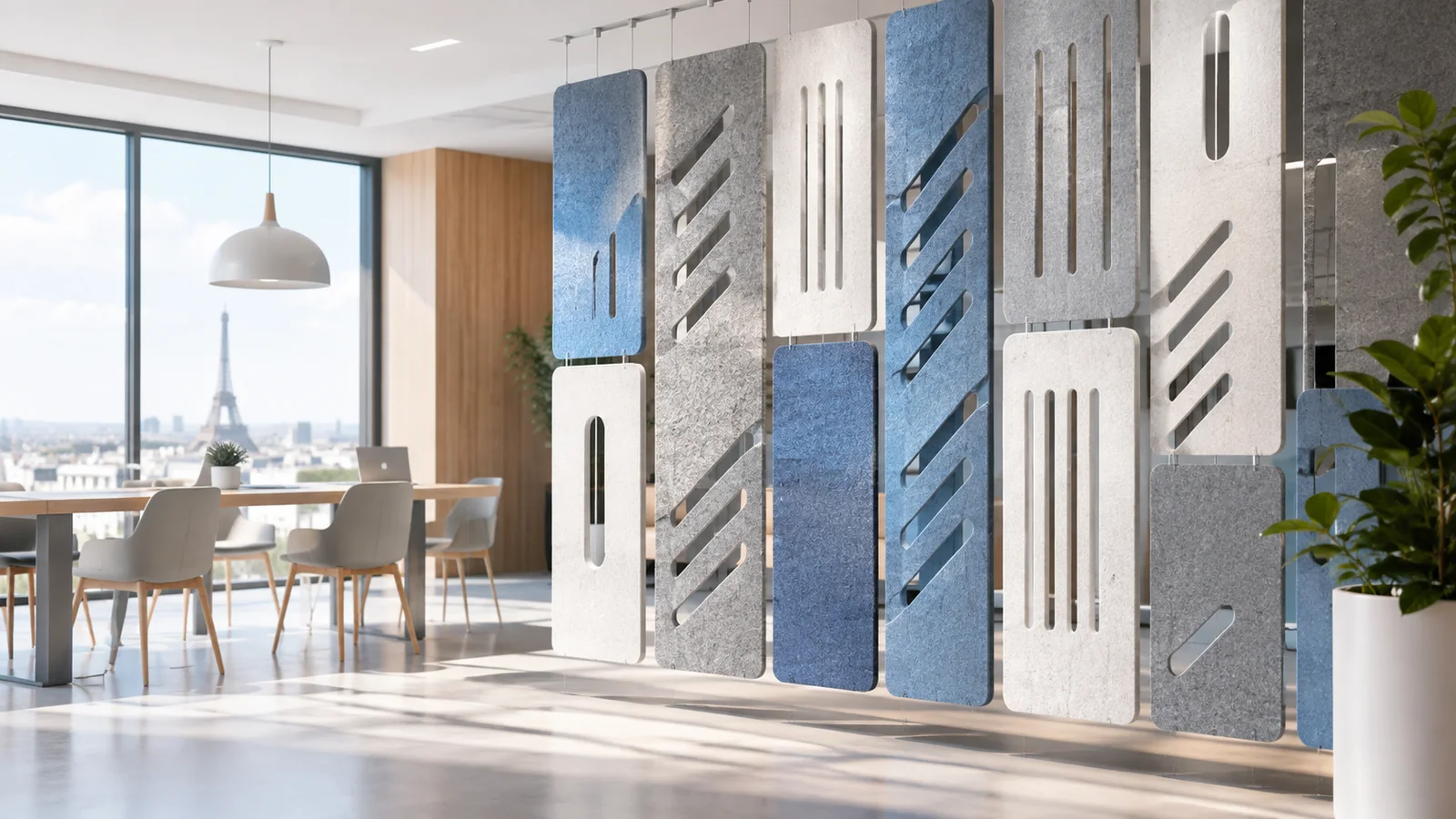
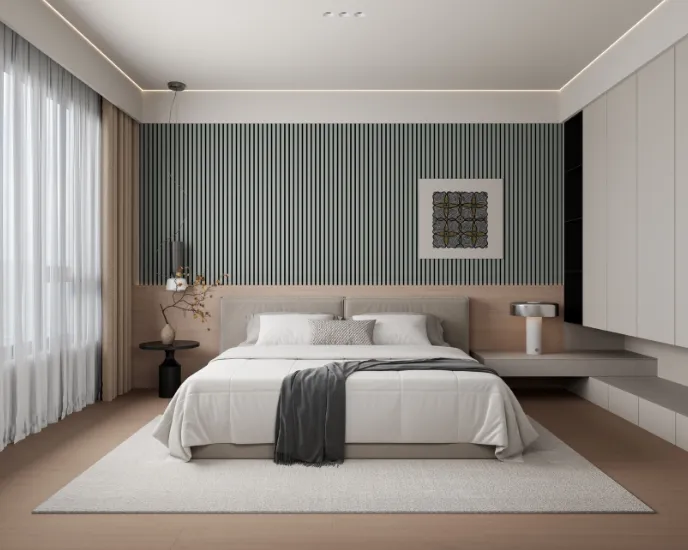
ألواح الخشب الطبيعي عالية الجودة مصنعي وموردي ألواح الخشب الطبيعي في الصين. نحن المنتج: الألواح الخشبية الصوتية ألواح الخشب الصوتي ألواح PET
تجنب تأخير الرد على استفسارك، يُرجى إدخال واتساب/سكايب الخاص بك مع الرسالة، حتى نتمكن من الاتصال بك في المرة الأولى.
سنرد عليك في غضون 24 ساعة. إذا كانت الحالة عاجلة، يُرجى إضافة واتساب/وي تشات: +86-13678899682 مباشرة.
PET acoustic panels are rigid or semi-rigid boards made from polyester fiber that absorb mid-to-high frequency reflections inside a room. For a recording or mixing space, they reduce flutter echo and comb filtering — they do not block sound from leaving or entering the room.
الألواح الصوتية PET are pressed sheets of 100% polyester fiber, sold in flat boards that get mounted to walls or ceilings, cut into shapes, or engraved with decorative patterns. Unlike open-cell foam wedges, PET material is a compressed fiber mat — closer in feel to dense felt than to the springy foam sold in most studio starter kits. The fiber structure traps sound energy as it passes through the board, converting it to a small amount of heat through friction, which is what “absorption” actually means at the material level.
Because the fiber is thermally bonded rather than glued or resin-cast, PET panels also don’t off-gas or degrade the way some foam products do over several years of use, though BEIEN’s documentation does not include long-term degradation test data, so that’s a claim we can’t make with a number behind it.
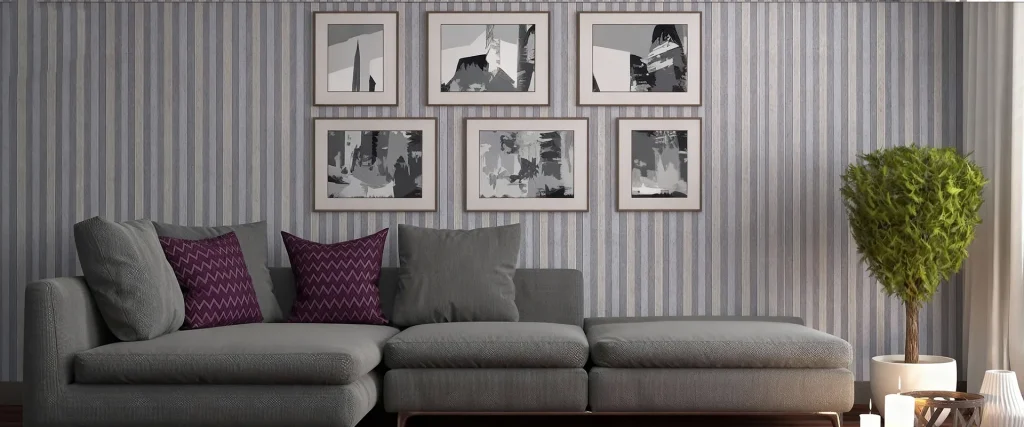
This is the misconception that causes the most wasted budget in studio builds. Acoustic panels — PET, foam, or mineral wool — absorb sound energy already inside the room. They do nothing to stop sound from traveling through walls, floors, or doors into neighboring rooms.
Isolation (keeping sound in or out) requires mass, decoupling, and sealed air gaps: double-layer drywall, resilient channel, mass-loaded vinyl, sealed doors. A wall covered edge-to-edge in acoustic panels can still leak sound freely to the apartment next door, because the panels are treating reflections, not blocking transmission.
A practical way to separate the two questions before buying anything:
Compared with the wedge-foam kits that dominate current search results for this keyword, ألواح PET sit in a different category on durability, fire behavior, and finish options — though foam remains cheaper for a first small-room treatment pass.
| السمة | الألواح الصوتية المصنوعة من البولي إيثيلين تيريفثاليت | Open-Cell Foam Panels | Mineral Wool Panels |
| Base material | 100% ألياف بوليستر 100% | Polyurethane foam | Mineral/rock fiber |
| Typical rigidity | Semi-rigid, holds shape | Soft, compresses easily | Semi-rigid to rigid |
| Fire behavior | Varies by product; must be verified per report | Generally combustible unless treated | Generally non-combustible |
| Surface finish options | CNC-cut shapes, engraving, 40+ standard colors | Flat or wedge texture, limited colors | Fabric-wrapped, limited shapes |
| Common studio use | Walls, ceilings, decorative acoustic art | Budget vocal booths, small rooms | Commercial/institutional walls |
This table compares material categories in general, not specific brands, since no independent side-by-side test data is on file for named competitor products.
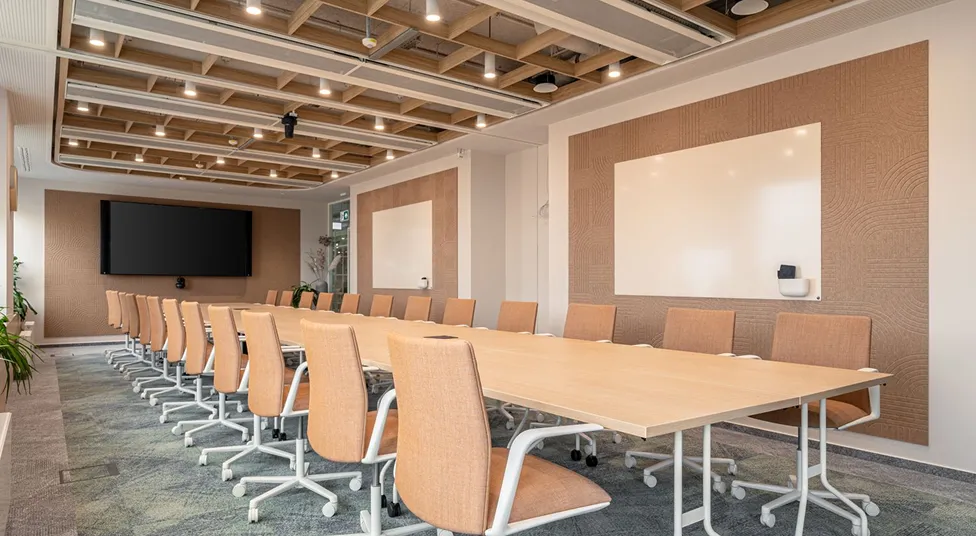
Here’s what’s documented for BEIEN’s standard PET acoustic panel sheet line, before any customization:
| Parameter | المواصفات |
| المواد | 100% ألياف بوليستر 100% |
| Standard sheet size | 1220 × 2420 mm (catalog); some product pages list 1220 × 2440 mm — confirm the exact figure with your sales contact before ordering |
| Thickness options | 9, 12, 15, 24 mm |
| Color range | BP-01 through BP-54 (40+ standard colors), plus Pantone/RAL color matching |
| Customization | Custom sizes, custom thicknesses, CNC-cut shapes, engraving, private-label packaging, custom logos |
| Production | تصنيع المعدات الأصلية/التصنيع حسب الطلب |
Two things aren’t in the documentation and shouldn’t be assumed: there’s no published NRC (Noise Reduction Coefficient) figure for this panel line, and no verified recycled-content percentage. If your project spec sheet requires either number, ask for it in writing before quoting — don’t rely on marketing copy that states “100% recycled” without a supporting test.
The general sequence, regardless of supplier:
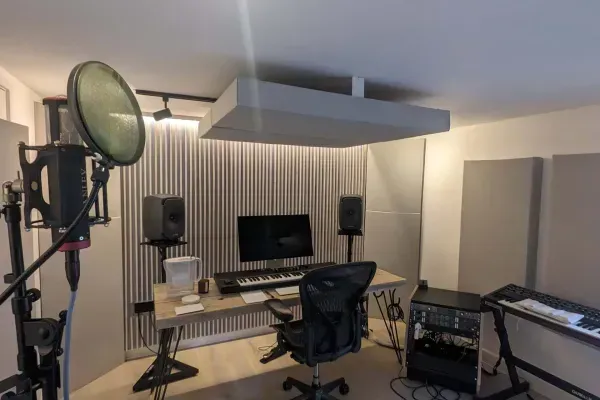
Where PET panels hold up well: they come in CNC-cut shapes and 40+ colors, which lets a studio treat a room without it looking like a server closet — a real consideration if the space doubles as a client-facing room. They’re also moisture-stable compared with some foam products.
بيين‘s pricing is quotation-based and depends on panel thickness, surface finish, customization level, order quantity, and shipping terms — there’s no published price list to quote a range from. Minimum order quantity is also inconsistent across BEIEN’s own documentation: company-level pages state 50 panels, while individual product pages state 100 panels. Confirm the MOQ for the specific PET panel color and thickness you want before assuming either figure applies.
No. Panels absorb reflections inside the room; they don’t add mass or seal air gaps, which is what actually blocks sound transmission between rooms.
No NRC figure is published in BEIEN’s current documentation for the standard PET acoustic panel sheet line. Request test data directly if your project spec requires a number.
BEIEN holds an EN 13501-1:2018 test report showing B-s2,d0, but that result is specific to one tested sample (9 mm, model BN-002). Confirm the tested thickness and finish match what you’re ordering.
This depends on room dimensions, reflection points, and target absorption — no standard coverage ratio applies universally. A reflection-point walkthrough (see installation steps above) is the starting point before ordering quantity.

 Arabic
  English
  French
  German
  Italian
  Spanish
  Russian
  Dutch
Dutch