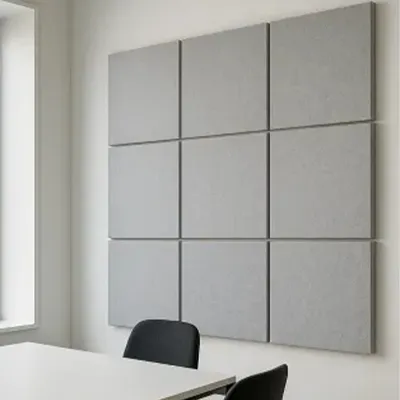
Высококачественные панели из натурального дерева производители и поставщики в Китае. Мы продукт: Дерево акустические панели ПЭТ панели
Чтобы избежать задержки ответа на ваш запрос, пожалуйста, введите ваш WhatsApp/Skype вместе с сообщением, чтобы мы могли связаться с вами в первый же раз.
Мы ответим вам в течение 24 часов. Если для срочного случая, пожалуйста, добавьте WhatsApp/WeChat: +86-13678899682 непосредственно.
Is your room loud? Does it have a bad echo? Sound can bounce off walls. This makes it hard to hear. It is a big problem.
You want a room that sounds good. You want to hear people talk. You want your music to sound clear. Bad sound makes people tired and upset. It can make a room feel cheap. You need to fix it. But how?
The answer is акустические панели. These panels stop the echo. They make rooms quiet. But buying panels can be hard. There are many kinds. How do you pick the right one? This guide will show you. We will make it simple. You will learn what to look for when buying акустические панели. You will learn about ratings, tests, materials, and how to make your room sound great.
First, what is your sound problem? This is the most important question.
Echo is sound bouncing in a room. This is called реверберация. It makes talk hard to understand. It makes music sound muddy. This is a common problem in an open plan office or a big lecture hall.
To fix this, you need room acoustics treatment. You need panels that soak up sound. This is called звукопоглощение. The panel’s grade for this is its NRC rating acoustic panels. NRC stands for Noise Reduction Coefficient. A high Рейтинг NRC is good. It means the panel is great at stopping echo. This is key for speech intelligibility improvement.
If You Want Less Echo, You Need Good Absorption
What if the noise comes from the next room? Or from the street? This is a different problem. A panel on your wall will not block this noise. This is the big absorption vs soundproofing difference.
To block noise, you need to build walls differently. You might need mass loaded vinyl (MLV) или resilient channel. Simple акустические панели из пенопласта will not work. That is not what they are made for.
Do not trust marketing words. Ask for real numbers. Real numbers tell you if a panel works.
Сайт Коэффициент шумоподавления (NRC) is a simple grade. It is an average. It tells you how much sound a panel soaks up. An NRC of 0 means it reflects all sound. An NRC of 1 means it absorbs all sound.
But this number is just an average. It looks at four sound frequencies: 250 Hz, 500 Hz, 1000 Hz, and 2000 Hz. This is the mid high frequency absorption range, where most human speech is.
For a better picture, ask for the full frequency absorption chart. This chart shows the коэффициент звукопоглощения at many different frequencies, from low to high. It might show data in octave band or 1/3 octave bands. This chart is much better than one single number. It tells you if a panel works for deep sounds (bass) or high sounds (voices). The Sabine equation, created by Wallace Sabine, is used to calculate the reverberation time RT60 in a room, and good absorption data is key to this.
Who gave the panel its grade? This is very important. Any company can print a number. You need to see a real test report.
Ask the seller for a test report from a real lab, like one from Intertek or another accredited acoustic lab. The test should follow a rule. The rule for absorption is ASTM C423 или ISO 354. These tests are done in a special reverberation room. If a seller will not show you a test report, do not buy from them. A real OEM acoustic panel supplier will always have this data.
What sound are you trying to fix?
Panels are made from different things. Each one is good for certain jobs.
These are the most common panels. They use fiberglass board или минеральная вата (например Rockwool) inside. A special breathable fabric for panels goes on the outside. These are great all-around пористые абсорбирующие материалы. They are a top choice for a домашний кинотеатр or a professional space.
These panels are made from recycled PET fiber. They are strong and easy to clean. Акустические панели из полиэтиленового войлока are perfect for busy places like schools and offices. They come in many colors and shapes, like hexagon acoustic panels или 3D acoustic wall panels. Because they are made from recycled PET, they are a green choice and help with LEED contribution materials. We offer a wide selection of durable and stylish Акустические панели из полиэтиленового войлока that are perfect for these high-traffic areas.
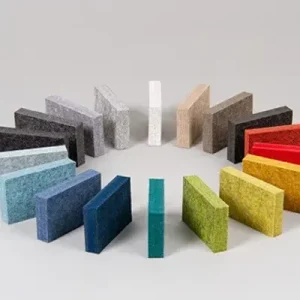
Акустические панели из войлока ПЭТ
Акустические панели из деревянных реек are very popular. They look beautiful. A деревянная рейка стеновая панель has strips of wood, like a natural veneer или технический шпон, on a soft backing. That backing is usually a Войлок ПЭТ material. The sound goes through the slats and the soft backing absorbs it. When you buy a акустические панели из деревянного шпона, always ask for the sound test data. The look is great, but the performance is what matters. Check that the wood is FSC certified wood slats if sustainability is important.
Акустический поролон is made from melamine foam или polyurethane foam. It is light and often cheap. An acoustic foam wedge is a common sight in a домашняя студия. Foam is okay for light flutter echo control and taming high-frequency sounds. But it is not very good at absorbing low-frequency sounds. It is also not as durable as other panels.
If your room has a problem with “boomy” bass, you need басовые ловушки. These are very thick panels, often placed in corners. They are a form of low frequency absorption. A standard 1-inch panel will not do this job. You need special tools for bass trap panels и standing waves treatment.
Sometimes, a room can feel “dead” if you use too many absorption panels. You can reduce echo in room too much. The sound becomes flat and unnatural. The solution is диффузия. An акустический диффузор scatters sound instead of absorbing it. This keeps the room sounding lively but controlled. Good room design uses both diffusion vs absorption.
How thick should a panel be? And should you leave a space behind it?
A thicker panel can absorb lower sounds. A thin panel mostly absorbs high sounds.
Look at this table. It shows how a thicker panel absorbs more sound, especially at low frequencies.
| What you’re evaluating | Useful benchmark / data point | Why it matters when buying | Источник |
| Example absorption curve (1″ vs 2″ fiberglass) | 2″ shows much stronger mid-band absorption (e.g., at 250 Hz: 0.27 → 0.81) and higher NRC (0.85 vs 1.15) | Reinforces why thickness/frequency data matters more than “looks” | (Acoustics America) |
Хороший panel thickness selection is key. A 1-inch panel is good for an office to improve разборчивость речи. A 2-inch or thicker panel is better for a music room.
You can make a panel work even better for low sounds. Just leave a space behind it. An air gap behind panels can make a 1-inch panel perform like a thicker one. This is a smart trick for panel mounting with air gap. This can improve low frequency absorption without buying thicker, more expensive panels.
The best panel in the world will not work if you put it in the wrong place.
Sound acts like a ball bouncing off a wall. The first places it hits are called first reflection points. These are the most important spots to put panels. You can find these spots on the walls and ceiling between you and your speakers. Treating early reflections control is the fastest way to improve sound clarity. You should also treat parallel walls to prevent flutter echo control.
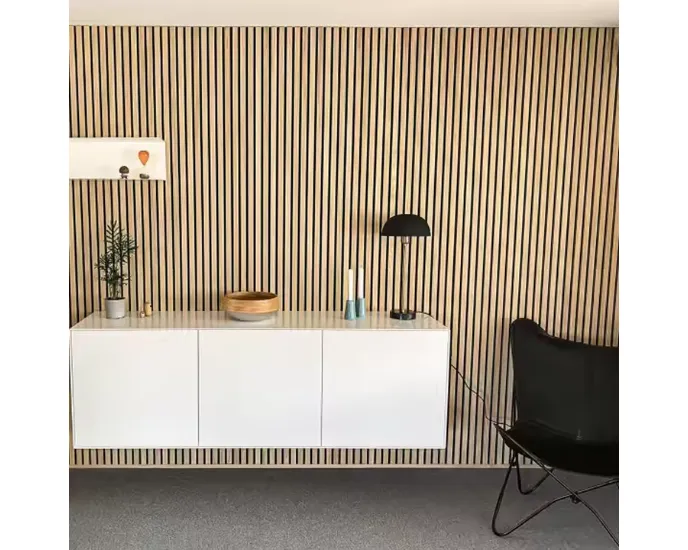
Where to Put Your Panels
There is no single answer. It depends on:
A good start is to cover 15% to 25% of your wall space. You can use an acoustic treatment calculator online to get a better idea. But remember, a few panels in the right spots are better than many panels in the wrong spots.
For any public or commercial space, safety is number one. You cannot just buy any panel.
Fire safety is critical. Building codes, like the IBC (International Building Code), demand it. Fire rated acoustic panels are tested to see how they burn. In the USA, the test is ASTM E84. This test gives two numbers:
Class A fire performance is the best rating. A Class A fire rated acoustic panels has very low flame spread and smoke. For most public buildings, this is the law. In Europe, the rule is Euroclass EN 13501. A good rating is Euroclass B-s1,d0. The “s1” means very little smoke, and “d0” means no flaming droplets.
Just like the sound test, ask for the fire test report. It should be from a known lab like UL Solutions или SGS. The report proves the panel is safe. Do not take a company’s word for it. When you work with an experienced manufacturer, you get products that meet these codes. Our panels are certified by CE, FSC, и SGS, ensuring they meet strict international standards for safety and quality.
A panel should not just work well; it should also look good for a long time.
In a school, office, or public lobby, panels can get bumped. You need ударопрочные акустические панели. Look for strong edges and a tough fabric. Акустические панели из полиэтиленового войлока are very durable.
Can you clean the panels? If they are in a restaurant or a school, they will get dirty. Ask if the fabric is a cleanable washable fabric или stain resistant acoustic fabric.
For a pool or spa area, you need moisture resistant acoustic panels. Normal panels can get damaged by water. You also want mold resistant acoustic panels to keep the air healthy.
Panels are a part of your room’s design. They should look great.
The fabric on a panel must be acoustically transparent. This means sound can pass through it to the core inside. A thick, painted, or vinyl fabric will reflect sound and ruin the panel’s performance.
You can get panels in any color. You can even get printed acoustic panels with photos or art. Many companies offer custom logo acoustic panels или color matched acoustic panels. We specialize in this kind of Настройка OEM/ODM. With our 20,000㎡ production base, we can create custom size acoustic panels, unique shapes like hexagon panel designs, and special finishes to match your vision perfectly. Whether you need декоративные акустические деревянные панели или акустические стеновые панели, we can make it.
Use panels to make your room look better.
The hardware you use to hang your panels matters.
Правильный installation spacing layout is crucial for both looks and performance. Our range of акустические стеновые панели can be installed using various methods to suit your specific needs.
Do you need to get to wires behind the panel? Will you change the room layout later? If so, choose a removable mounting system like Z-clips.
The cheapest panel is not always the best deal.
Do not just look at the price per panel. A cheap panel with a low NRC is not a good deal. You will just have to buy more of them.
When you get quotes, compare:
Working directly with a manufacturer with a one-stop production system can provide competitive factory-direct pricing without sacrificing quality or verified performance.
Copy and paste this list when you talk to a seller.

 Russian
  English
  French
  German
  Italian
  Spanish
  Arabic
  Dutch
Dutch