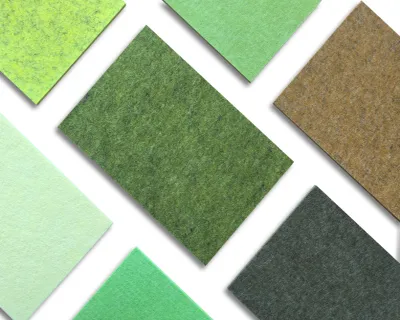
Высококачественные панели из натурального дерева производители и поставщики в Китае. Мы продукт: Дерево акустические панели ПЭТ панели
Чтобы избежать задержки ответа на ваш запрос, пожалуйста, введите ваш WhatsApp/Skype вместе с сообщением, чтобы мы могли связаться с вами в первый же раз.
Мы ответим вам в течение 24 часов. Если для срочного случая, пожалуйста, добавьте WhatsApp/WeChat: +86-13678899682 непосредственно.
Custom акустические панели are standard panel constructions modified to a buyer’s specification: color, dimension, thickness, slat profile, veneer, CNC-cut shape, logo, label and packaging. OEM means building to your drawing; ODM means adapting an existing factory design. What separates suppliers is rarely capability, it is where the quantity threshold sits.
The two terms get used as a single bullet on most manufacturer pages, and that vagueness costs buyers time during the first quotation round.
| Comparison Item | ODM | OEM |
|---|---|---|
| Starting Point | Factory’s existing profile/catalog model | Your drawing or physical reference sample |
| Typical Buyer Change | Color, felt color, panel length, packaging, logo | Slat spacing, slat depth, panel width, custom profile, non-standard thickness |
| Tooling Required | Usually none | Often required, depending on the profile |
| Sampling Cycle | Short—existing profile with a new finish | Longer—a physical proof must be cut and approved first |
| Certification Handling | Existing test scope may still apply if the material and thickness remain unchanged | The configuration has changed, so the tested scope must be re-checked |
| Лучшее для | New distributors, first private-label ranges, and trial orders | Brands with an established range and repeat order volume |
Most private-label programs that start as “fully custom” end up as ODM with custom color and custom packaging, because that combination protects the certification scope and keeps the quantity threshold low. That is not a downgrade. It is usually the faster route to a sellable range.
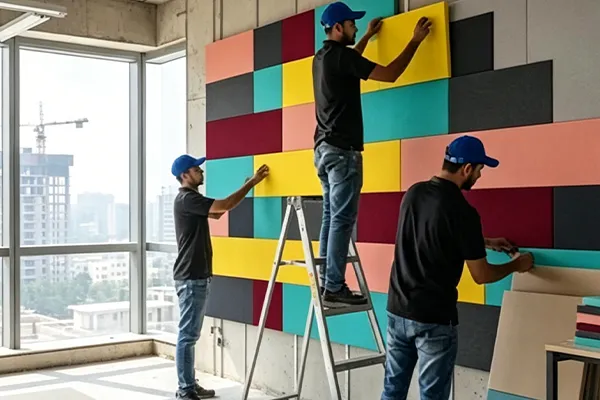
BEIEN’s customization list runs across five layers, and each one carries a different cost and lead-time consequence.
Color and surface. PET panels are shown in the 2026 catalog as BP-01 through BP-54, with more than 40 standard colors and Pantone or RAL matching for anything outside that set. Wood panels can be specified with natural veneer (oak, walnut, ash, teak, maple, zebra wood, smoke oak), technical veneer across the TBW-01 to TBW-11 range, or a PVC decorative surface (PBW-01 to PBW-06) where moisture and cleaning matter more than grain authenticity. Acoustic felt behind the slats is normally black or grey, and can be changed.
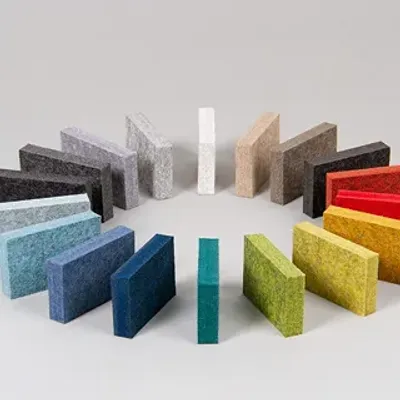
Dimension and thickness. Standard PET sheets are listed at 1220 × 2420 mm in 9, 12, 15 and 24 mm. Wood slat panels run 2400, 2700 and 3000 mm long × 605 mm wide at 18 or 21 mm. Cutting outside those figures is possible, but it changes yield per sheet, and yield is what moves your unit price more than the customization fee itself.
Shape and CNC processing. Engraved V-slot patterns, irregular and circular formats, wave profiles, perforated decorative panels and hexagon formats (roughly 565 × 489 mm at about 24 mm) are all cut in-house. Stated CNC cutting tolerance is ±0.3 mm, which is the number worth writing into your purchase specification, because “precision cutting” on its own is not a checkable term.
Branding. Logos, labels, private-label cartons and full packaging design. This is the layer with the shortest lead time and the lowest technical risk, and it is where a first-time private-label buyer should start.
Accessories. Panel-groove LED strips (3000K, 4000K, 6000K; 10 W/m; 120° beam; CRI ≥80; IP67; 24 V; 2400 or 3000 mm lengths), carbon-steel shelves and single, vertical or horizontal hangers. Compatibility for these is stated only with BEIEN panels, so if you are mixing suppliers, treat accessories as a separate sourcing line.
Panel families and the parameters you can customize against
| Family | Catalog Models | Standard Size | Толщина | Core Material Data |
|---|---|---|---|---|
| PET Acoustic Sheets | BP-01–BP-54 (colors) | 1220 × 2420 mm | 9 / 12 / 15 / 24 mm | 100% полиэфирное волокно |
| Wood Slat Panels | BN-01–BN-05 | 2400 / 2700 / 3000 × 605 mm | 18 / 21 mm | MDF approx. 760–800 kg/m³, veneer approx. 0.4–0.5 mm, E0-grade material policy |
| Natural Veneer Panels | NBW-01–NBW-05 | 600 / 2400 / 2700 / 3000 × approx. 605 mm | 21 mm | Natural veneer over PET backing |
| Technical Veneer Panels | TBW-01–TBW-11 | Slat configuration to order | To order | One-side or three-side veneer coverage |
| PVC Surface Panels | PBW-01–PBW-06 | To order | To order | PVC decorative surface on slat structure |
| Шестигранные панели | Geometric format | Approx. 565 × 489 mm | Approx. 24 mm | Veneer face, PET core |
One honest note on that table: PET sheet width and length appear as 1220 × 2420 mm in the catalog and as 1220 × 2440 mm on some product pages, and the PET slat panel range is published with two different specification sets. Ask for the current production drawing rather than quoting a website figure into your own datasheet.
A fire classification belongs to a tested sample, not to a product line. This is the single most common failure point in private-label acoustic panel programs, and it usually surfaces after the goods have shipped.
BEIEN‘s PET fire classification comes from SGS-CSTC Standards Technical Services (Shanghai) Co., Ltd., test report SHFS2403000289FF, tested to EN 13501-1:2018, result B-s2,d0. The tested article was a polyester sound-absorbing board, sample BN-002, 100% polyester fiber, 1700 g/m² density, 9 mm thick, 2420 × 1220 mm.
Read that list again as a customization checklist. Change the thickness to 12 mm, change the felt density, laminate a veneer onto the face, or engrave a deep V-slot pattern, and you no longer have the tested configuration. The panel may well perform the same. The document does not automatically say so.
The same scoping logic applies to the other two documents buyers ask for most:
If you are building a range for a market with mandatory declarations, the practical move is to fix your top three or four SKUs first, then have those exact configurations tested, rather than customizing broadly and testing afterwards.
Compared with the broader category of manufacturer sites that list OEM/ODM as a capability bullet, very few state a quantity threshold that changes with the level of customization — and when a figure does appear, it is often given in a different unit (square metres, containers, panels), which makes cross-supplier comparison harder than it needs to be.
BEIEN’s own published figures are not fully consistent either. The company history and customized-service pages state a standard MOQ of 50 panels per model; some individual product pages state 100 panels. Rather than smoothing that over: the threshold depends on the product family, the finish, and how deep the customization goes, and it has to be confirmed per product at quotation. A color change on an existing profile and a new slat profile requiring tooling are not the same commercial commitment, and no single number covers both.
What you can reasonably plan around:
Customization has real costs, and the ones that matter are not the sample fees.
Color consistency across production runs is the first. A matched color is reproducible, but batch-to-batch variation is a normal feature of dyed polyester felt, so a signed counter-sample and an agreed tolerance protect both sides. Buyers who reorder small quantities of many custom colors feel this most.
The second is reorder economics. A custom profile ties your range to one factory’s tooling. That is fine while volume is growing and uncomfortable if it is not.
Third, lead time. Standard published production time is roughly 7 to 15 working days depending on quantity and customization level, and deep customization sits at the far end of that, plus sampling and approval time in front of it. Build the approval loop into your launch calendar, not just the production window.
Against those: in-house PET felt production, CNC cutting and panel assembly on a 20,000 m² production base with approximately 6,000 m² of active production space means a color, a dimension and a packaging change can move through one facility instead of three, which is what keeps the sampling loop short.
Pricing is quotation-based and depends on panel type, dimensions, thickness, surface finish, fire-performance requirements, customization level, packaging, order quantity and shipping terms. There is no published price list, and a supplier who gives you a unit price before knowing your thickness and finish is quoting something other than your product.
Common commercial terms to confirm per order: T/T with a 30% deposit and 70% balance before shipment as the usual structure, with L/C or OA discussed for long-term partners; EXW, FOB, CIF or DDP shipping terms; sea, air or rail transport.
Q: What is the difference between OEM and ODM for acoustic panels?
A: ODM means the factory’s existing design is adapted to your requirements, typically color, length, felt color, logo and packaging. OEM means production to your own drawing or reference sample, which can include a custom slat profile, spacing, panel width or non-standard thickness. OEM usually involves tooling and a longer sampling cycle.
Q: What is the minimum order quantity for custom acoustic panels?
A: BEIEN’s published standard is 50 panels per model, with some product pages stating 100. Because the threshold moves with product family, finish and customization depth, it needs to be confirmed per product at quotation rather than taken from a general figure.
Q: Can I put my own logo and brand on the panels and packaging?
A: Yes. Custom labels, logos and private-label packaging are supported, along with custom carton design. This is the lowest-risk starting point for a new private-label range because it does not alter the panel construction or affect certification scope.
Q: Does the fire classification still apply if I change the thickness or add a veneer?
A: Not automatically. SGS report SHFS2403000289FF classifies a specific configuration under EN 13501-1:2018 — sample BN-002, 100% polyester fiber, 1700 g/m², 9 mm. A different thickness, density or surface is a different configuration and needs its own verification.

 Russian
  English
  French
  German
  Italian
  Spanish
  Arabic
  Dutch
Dutch