High-Quality Natural Wood Panels Manufacturers and Suppliers In China. We product: Wood Acoustic Panels PET Panels
Avoid your inquiry is delay response, please enter your WhatsApp/Skype along with the message, so we can contact you at the very first time.
We will reply you within 24 hours. If for urgent case, please add WhatsApp/WeChat: +86-13678899682 directly.
Polyester acoustic boards are porous, high-density panels made from PET fibers, many of which come from recycled plastic bottles. Their primary function is to absorb sound waves within a room to reduce echo and reverberation, thereby improving sound clarity. It is important to note that these boards are designed for acoustic treatment (sound absorption) and are not a material for soundproofing (blocking sound transmission between spaces).
Is ambient noise in a room making conversation difficult? Do sounds seem to echo, creating a loud and unclear environment? This is a common acoustical problem. In an office, it can disrupt focus. In a restaurant, it can detract from the dining experience. In a home, it can interfere with a sense of calm. The goal is often to achieve a quieter space with better sound clarity.
Excessive background noise and reverberation can be fatiguing. While various materials exist to address this, some traditional options may raise questions about health, environmental impact, or aesthetic integration.
An alternative to consider is the polyester acoustic board. This material represents a modern approach to sound management, utilizing recycled content to create effective and visually versatile panels. This guide provides detailed, objective information about their properties and applications to help you understand their capabilities.
These panels may appear simple, but they perform a specific technical function based on their physical composition.
A polyester acoustic board is a panel composed of compressed polyester fibers. The raw material is Polyethylene Terephthalate (PET), the same polymer used in beverage bottles. As a result, these boards are often manufactured with a high percentage of recycled content, making them a type of PET acoustic panel.
The acoustical function of these boards is based on converting sound energy.
The core issue they address is sound waves reflecting off hard surfaces like drywall, glass, or concrete. This reflection is perceived as echo or reverberation. Excessive reverberation diminishes sound quality and speech intelligibility, a sign of poor room acoustics.
A polyester acoustic board is engineered to be porous. When sound waves strike the panel, they penetrate its fibrous structure instead of reflecting. Within this network of fibers, the acoustic energy is converted into a minuscule amount of heat through friction, effectively dissipating the sound. It’s crucial to understand the difference between sound absorption and soundproofing; these panels manage sound within a room, they do not block sound from passing through a structure. This absorption process is most effective for mid-to-high frequency sounds, which includes the primary range of human speech.

pet felt
Polyester offers a distinct set of properties for acoustic treatment. A balanced evaluation requires understanding both its advantages and its constraints.
These panels are effective at absorbing sound, and their performance is measured by the Noise Reduction Coefficient (NRC), an industry standard ranging from 0 (perfectly reflective) to 1 (perfectly absorptive). You should always request a manufacturer’s acoustic test report, which will show NRC ratings often ranging from 0.45 to 0.95 depending on the product’s thickness and mounting method.
These are often presented as eco-friendly acoustic panels. Their use can contribute to credits in green building certifications like LEED, typically under the ‘Materials and Resources’ category due to their recycled content and recyclability.
Indoor air quality is a significant consideration. Look for products that have been tested according to standards like CDPH/EHLB Standard Method (CA 01350) and are certified as low in Volatile Organic Compounds (VOCs) and formaldehyde-free. For fire safety, products are evaluated using the ASTM E84 standard in the US or similar regional standards. A Class A rating is the highest classification for surface burning characteristics.
Polyester panels are rigid and generally more impact-resistant than softer materials like acoustic foam. They maintain their shape and have good dimensional stability.
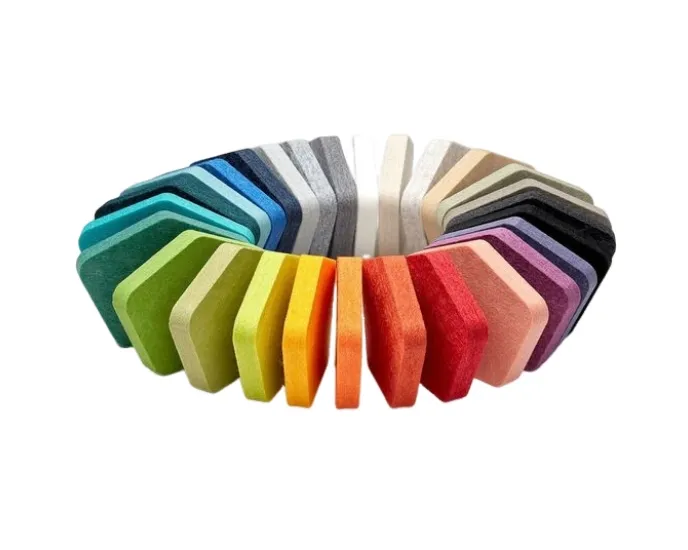
These boards can be integrated into an interior design scheme. They are available in many colors and can be manufactured in custom shapes. Options range from flat panels to three-dimensional or engraved designs.
What are the Benefits and Limitations of Polyester for Acoustic Treatment?
These panels are suitable for a variety of environments where controlling reverberation is a priority.
In open-plan offices, panels are used on walls, as ceiling baffles, or as desk dividers and freestanding screens to reduce ambient chatter and improve focus.
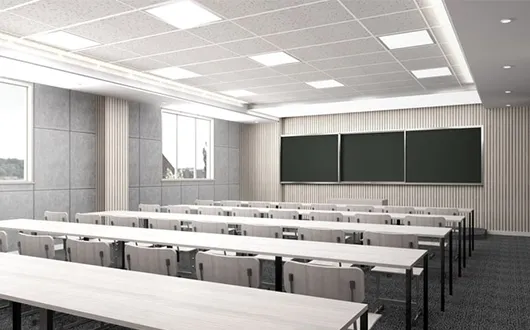
In classrooms, libraries, and auditoriums, these panels help ensure speech is clear and intelligible, which is critical for a learning environment.
Restaurants, hotels, and retail stores use acoustic panels to lower noise levels, creating a more pleasant and comfortable atmosphere for patrons.
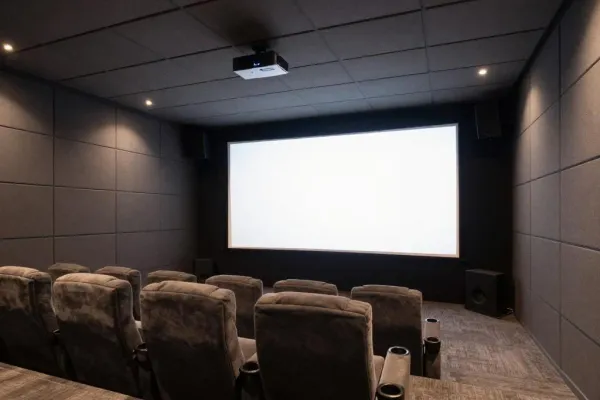
In homes, panels are used in home theaters to create an accurate listening environment or in home offices to reduce distractions.
Recording studios, broadcast facilities, and performance venues require precise acoustic control. Panels are used extensively in these spaces to eliminate unwanted reflections and achieve high-quality audio.
Where Are Polyester Acoustic Boards Commonly Used?
Choosing an acoustic material involves comparing its properties against alternatives. Here is a neutral comparison of common trade-offs.
| Feature | Polyester Acoustic Panels | Fiberglass Acoustic Panels | Acoustic Foam |
| Acoustic Performance | Good NRC, especially for mid-high frequencies. Performance is highly dependent on thickness and installation method. | Excellent NRC, often with better low-frequency absorption at similar thicknesses. | Performance varies greatly with foam density and cell structure. Can be effective but often less so than denser materials. |
| Handling & Safety | Inert material with no airborne fibers. Can be handled without personal protective equipment (PPE). | Requires careful handling (e.g., gloves, masks) during cutting and installation to avoid skin/respiratory irritation from fibers. | Generally safe to handle. Fire ratings vary significantly; many basic foams are not Class A rated without special flame-retardant treatment. |
| Durability | Rigid, tackable, and impact-resistant. Maintains its form over time. | Less rigid; the core material is susceptible to damage if not protected by a frame or durable fabric wrap. | Can be susceptible to crumbling or discoloration over time, especially with direct UV light exposure. Durability varies by foam density. |
| Moisture Resistance | Hydrophobic (does not absorb water), making it inherently resistant to mold and mildew. | While the fibers themselves are resistant, the binders used can sometimes support mold growth if they become damp. | Can absorb and retain moisture, which may lead to mold issues if not properly managed. |
Selecting and installing the right panels involves a few technical considerations.
The subject of this article is the polyester acoustic board, a material designed for managing room acoustics.
Its primary function is to address issues of reverberation and echo by absorbing sound energy. It is best suited for applications where improving speech intelligibility and reducing ambient noise levels are the main objectives.
It is important to recognize its limitations. It is not a soundproofing material and will not effectively block sound transmission between spaces. Its acoustic performance is dependent on its thickness and installation method, with standard panels being less effective for low-frequency noise.
When evaluating this material for a project, the key decision-making criteria should include a review of third-party acoustic test reports (NRC and frequency-specific data), verification of fire safety and VOC emission certifications, and an assessment of the material’s durability relative to the environment in which it will be installed.

 English
  French
  German
  Italian
  Spanish
  Arabic
  Russian
  Dutch
Dutch