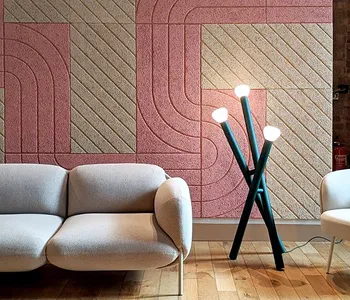
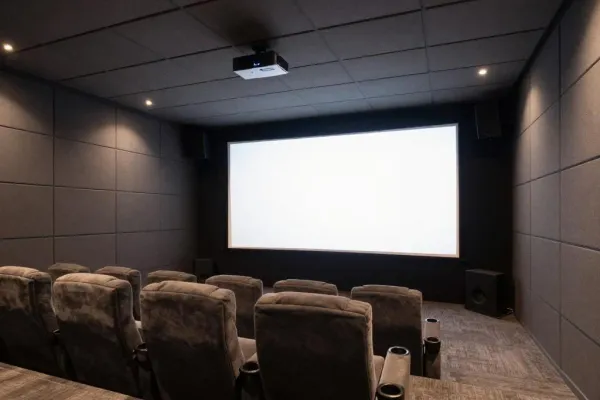
High-Quality Natural Wood Panels Manufacturers and Suppliers In China. We product: Wood Acoustic Panels PET Panels
Avoid your inquiry is delay response, please enter your WhatsApp/Skype along with the message, so we can contact you at the very first time.
We will reply you within 24 hours. If for urgent case, please add WhatsApp/WeChat: +86-13678899682 directly.
Too much noise makes people tired, stressed, and distracted. Now imagine you pay for “premium” acoustic panel products, but the room still sounds bad. That fear stops many projects. The good news? With the right plan, modern acoustic panel systems can fix the problem and protect your budget.
Yes, expensive acoustic panel systems can be worth the investment when they are correctly designed, placed, and specified for the room. Quality acoustic wall panels that absorb sound waves and reduce echo will improve sound quality and comfort, cut complaints, and support business results in offices, schools, hotels, and public buildings.
As a professional manufacturer in China focusing on high-quality PET and wood acoustic panel solutions for global B2B clients, we answer this question every day for distributors, architects, contractors, and brand owners. Let’s walk through it step by step, in clear language, so you can see when acoustic panels are worth the spend—and when cheaper panels aren’t enough.
At a basic level, an acoustic panel is a soft, porous board that helps reduce sound bouncing around a room. Hard floors, glass, and concrete walls reflect sound waves. This creates long echo and a “boomy” feel. When you cover part of those hard surfaces with materials that absorb sound, you get less reflection, lower noise levels, and better clarity.
In simple terms: the panels absorb sound, not block sound. Many people mix up soundproof and “sound absorbing.” Sound insulation or soundproof panels aim to stop noise passing through a wall. An acoustic panel is for sound control inside the room. It deals with background noise, unwanted noise, and noise in a space by soaking up reflections and shortening the reverberation time.
High-quality acoustic panel systems are part of an overall acoustic treatment. They do not magically fix every problem alone, but they are highly effective when planned together with layout, furniture, and ceiling height. In many projects we support as a PET and wood acoustic product manufacturer, just 20–30% of wall area treated with sound absorbing panels is enough to noticeably enhance the acoustic comfort for everyday users.

What does an acoustic panel actually do?
This is one of the biggest acoustic challenges in B2B projects. People ask for “soundproof panels” when they really need acoustic wall treatments to reduce echo and noise reduction inside the room.
For example, a cinema or lecture hall needs strong wall construction to block sound between rooms, plus many acoustic wall panels inside to absorb sound waves and reduce reverberation. If you only buy “cheap foam panels” for the walls, but the wall itself is thin, you will not get the quiet you expect.
So are expensive soundproof panels worth it? It depends on your goal. For cross-room privacy (e.g. hotel rooms), heavy construction is key. For clear speech and pleasant acoustics in a classroom, well-placed acoustic panel systems usually give a better return than over-spending on the partition wall alone.
To decide if acoustic panels are worth the money, you first need to know how they work. Most acoustic panels are made from porous, fibrous cores—PET fiber, mineral wool, glass wool, or special foams. These are made from porous materials. When sound waves hit them, tiny fibers vibrate and turn acoustic energy into a very small amount of heat. That is how panels absorb sound.
Well-designed acoustic panels are typically effective at absorbing mid and high frequencies, where speech and many annoying reflections live. When enough acoustic panel coverage is added, they improve the sound quality of speech, music, and announcements. Users may simply say, “Now the room feels calm and clear.” That’s what we want when we improve the sound quality within a room for offices, schools, and hotels.
Good acoustic panels are designed to work together with the room shape. Panels on the side walls help reduce echo and flutter; ceiling acoustic paneling can help control sound over a wider area. When we design PET and wood acoustic panel layouts for clients, we calculate how many square meters of acoustic wall panels and ceiling acoustic panel units are needed to reach a comfortable acoustic environment without over-treating the space.
Not all panels are created equal. There are many types of acoustic panels, and understanding them is key to judging whether “expensive” options are really worth the investment.
Common categories include:
In our factory, we focus on PET fiber acoustic panels and wood-faced decorative acoustic panels because they are highly effective, stable, and easy to cut for custom designs. These acoustic panels come in various thicknesses and densities. Selecting the right type for your acoustic panel project depends on your budget, fire rating, durability, and design goals.
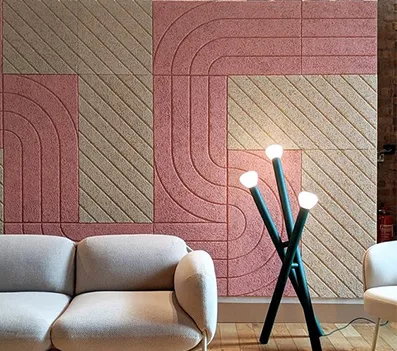
Fiber acoustic panels
Let’s talk about money. From our experience supplying high-quality panels to distributors and contractors, the worth of acoustic panels depends on three main points:
In high-value or heavy-use spaces, panels are worth the investment because they protect your brand image, reduce complaints, and lower retrofit costs later. In a low-risk meeting room, basic PET acoustic panel coverage may be enough. This is why we always say: “Acoustic panels depends on the project.” Or in simple words: expensive acoustic panels might be smart in some rooms and overkill in others.
From a B2B view, the question is not only “are acoustic panels worth it?” but “how much productivity, comfort, and customer satisfaction will I gain?” When you compare that value to the cost per square meter, you see acoustic panels are often one of the most cost-effective upgrades in a fit-out package.
Many buyers now ask us to compare polyester acoustic panels with more traditional acoustic mineral wool or glass wool wall panels. Here is a simple overview:
| Feature | Polyester acoustic panels | Traditional acoustic wall panels |
| Core material | Recycled PET fiber | Mineral wool / glass wool |
| Handling & cutting | Clean, no itch | Dusty, needs care |
| Look | Can be exposed or fabric | Usually needs fabric facing |
| Moisture & impact resistance | Very good | Varies by brand |
Both types of acoustic panels can be good acoustic solutions. But for B2B clients who need fast installation, clean cutting on site, and custom shapes, PET acoustic panel systems give a very strong balance of performance and flexibility. They are also lightweight; many of our PET acoustic panel products are easier to ship and install compared with classic gypsum-backed systems.
We still produce wood-faced acoustic wall panels using PET cores for projects that want the look of timber with stable sound absorption. In many hotel and office designs, architects use PET acoustic panel cores behind slatted wood fronts to enhance the acoustic comfort while keeping a warm, natural feel.
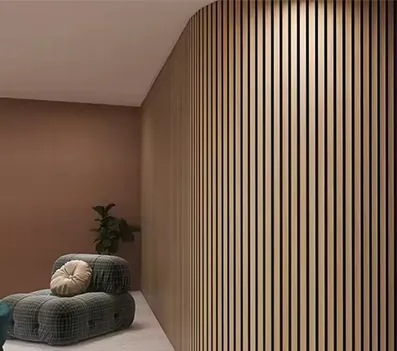
wood slat acoustic panels
Some buyers worry that acoustical products will make interiors look “industrial.” This used to be true of many conventional acoustic solutions. Today, decorative acoustic panels can do both jobs: they absorb sound and look beautiful.
Our PET and wood acoustic panel collections include:
These panels can add color, rhythm, and texture while still being effective at absorbing reflections. When panels can be used as part of the interior concept, not as an afterthought, clients get much more value. This is why many brand owners come to us for OEM/ODM acoustic product development instead of buying only catalog items.
In short, modern acoustic panels are not just tools to reduce noise. They can also carry your design language, logo, or wayfinding. That makes the panels worth more than their raw material cost.
Here is a simple office case to show how acoustic panel investment plays out in practice.
A client came to us with a large open-plan office full of glass, tiles, and metal. Noise levels were high, workers complained about background noise, and managers struggled with noise control for calls. We proposed a package of ceiling clouds and PET acoustic wall panels along corridors and behind workstations.
Key results after installation:
These acoustic panel systems were not the cheapest option. But over time, the client saw fewer staff complaints and less need for ad-hoc “fixes” like extra partitions and rugs. In this kind of project, panels are used as a tool to support productivity and well-being, not just to tick a box on the design spec.
As a manufacturer, we see this pattern again and again: for offices, schools, and public areas, well-planned acoustic panel layouts are clearly worth the investment.
When judging if “expensive” panels are really high-quality panels, you need to look beyond the price tag. Focus on what the panels are made from and how the panels are designed.
Good signs include:
In our factory, our PET acoustic panel cores are tested for fire performance and sound absorption, and our wood surface finishes are checked for color stability and durability. We share lab reports and simple charts so that distributors and contractors can see acoustic panels performance clearly when they quote projects.
When you know what the acoustic panels are made of and how they perform, “expensive vs cheap” becomes an easier business decision, not a guess.
For B2B buyers, the worth of acoustic panels is not just about unit price. It is about lifetime value, design freedom, and trust in the supply chain. Here’s a simple way to think about it:
As you can see, the real question is not only “are expensive soundproof panels worth it?” but “how long will these acoustic panel solutions support my clients and my brand?” For many of our partners, premium acoustic panel lines are their best sellers because they solve real problems and keep customers coming back.
Proper acoustic panel systems are designed to absorb sound waves and turn them into heat. When enough coverage is used, they reduce echo and reduce noise in day-to-day use. Panels might also add style, but their main job is still technical: sound absorption and noise control.
No, a typical acoustic panel will not fully block sound between rooms. It helps with soundproofing and sound absorption inside the room. For cross-room soundproof performance you need solid walls and doors. Panels help manage noise in a space, not full privacy.
Quality PET acoustic panel products are usually low-VOC and stable. Our PET acoustic panel cores are panels are lightweight, easy to cut, and highly effective as interior sound absorbing surfaces when used as part of a full acoustic treatment plan.
In most rooms, acoustic panels are often used on the first reflection points—walls where sound from people or speakers hits first. Panels can be placed behind listeners, along side walls, or overhead as ceiling acoustic panel clouds. Correct layout helps improve the sound quality and control sound more than random placement.
Yes, fabric panels (frames filled with fiber and covered in cloth) are still common traditional acoustic solutions. But many clients now prefer PET acoustic panel boards and wood-faced acoustic panel systems because they combine a cleaner look with strong acoustic properties.
No. Price alone is not a guarantee. Some “designer” acoustic panel products focus more on look than performance. Ask for test data, check how the panels are used in reference projects, and make sure the design really panels absorb sound where you need it. Only then are acoustic panels are worth your investment.
As a manufacturer of PET and wood acoustic panel systems for global B2B clients, we see one clear pattern: acoustic panels come in various forms, and the right choice depends on your project. When you match the acoustic panel type, layout, and budget to the real needs of the room, acoustic panels are often the fastest, cleanest way to reduce sound, lift comfort, and support your brand.
If you are a distributor, architect, contractor, or brand owner planning a project, we can help you select acoustic panel solutions that are truly worth the investment, not just “expensive.”

 English
  French
  German
  Italian
  Spanish
  Arabic
  Russian
  Dutch
Dutch