High-Quality Natural Wood Panels Manufacturers and Suppliers In China. We product: Wood Acoustic Panels PET Panels
Avoid your inquiry is delay response, please enter your WhatsApp/Skype along with the message, so we can contact you at the very first time.
We will reply you within 24 hours. If for urgent case, please add WhatsApp/WeChat: +86-13678899682 directly.
You invest in a big screen and surround sound, but your home theater still sounds flat. Echoes blur dialogue, bass booms, and family movie nights feel noisy instead of immersive. With the right acoustic panels, you can finally turn that room into a true home cinema.
Yes, acoustic panels are one of the simplest and most effective ways to upgrade a home theater. They absorb unwanted sound reflections, reduce echo, and improve sound clarity so your surround sound system can perform at its best. With a few well-placed panels, movies, games, and music feel clearer, louder, and more immersive at comfortable volume.
As a professional manufacturer in China of high-quality PET and wood acoustic panels, we work every day with distributors, importers, architects, interior designers, contractors, and brand owners who are creating a home theater or a full home cinema line of products. Below, I’ll walk you through how a home theater really behaves acoustically, how acoustic panels help, and how to choose the right acoustic panels so your customers get the best sound experience—and you get a system that is easy to sell, design, and install.
In a small or medium home theater, sound bounces off hard surfaces. These sound reflections arrive a split second after the direct sound wave from the speakers. Your brain hears this as echo, harshness, or muddy dialogue. Even a very expensive sound system cannot fix a bad room.
This is where the role of acoustic panels becomes clear. Good acoustic panel products sit on the walls and ceiling, and their job is sound absorption. They absorb sound waves that would otherwise bounce back within the room, especially in the mid and high frequencies where speech lives. When you reduce those reflections, sound clarity improves and your home theater’s acoustic performance moves closer to a commercial cinema.
For that reason, installing acoustic panels is essential if you care about your home theater experience. Even without changing your amps, screens, or speakers, adding acoustic panels can dramatically enhance your home theater. As a factory that supplies high-quality acoustic panels in PET and wood finishes, we see this every day in customer projects across the world.
Think of your home theater as a box of energy. Every time a speaker fires, it sends a sound wave out in all directions. Some energy goes straight to your ears. The rest hits drywall, glass, or furniture and comes back as sound reflections. Without acoustic treatment, this energy keeps bouncing throughout the room, building up into echo and boom.
Acoustic sound panels and other sound panels turn some of that energy into a tiny amount of heat inside the material. Panels are designed with a porous structure that lets the sound wave enter. Friction inside the fibers slows and converts the energy. In practice, you just notice that the room feels quieter, dialogue is easier to follow, and music sounds smoother.
In a good home theater design, acoustic panels help in three main ways:
From a B2B point of view, this matters. If you are a distributor, architect, or contractor, you are not just selling boxes; you are selling a predictable, repeatable sound quality within your home cinema projects. That is exactly what consistent acoustic panel products deliver.
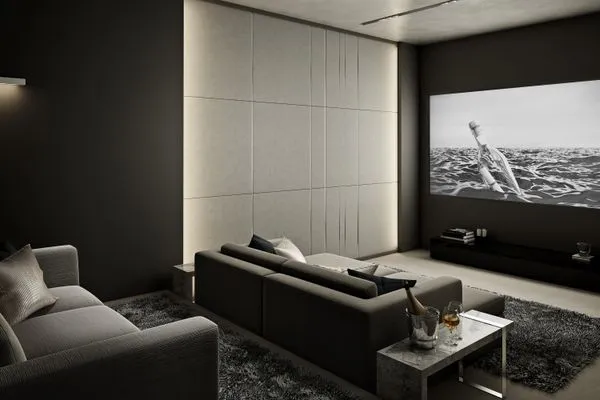
How do acoustic panels work in a home theater sound system?
There are two main types of acoustic tools you normally use in a home theater:
This is the basic type of acoustic strategy you will see in cinema standards and professional studios. Absorption reduces echo; diffusion scatters reflections instead of killing them completely.
Here is a quick comparison of each type of acoustic panel you might specify:
| Type of panels | What it does | Best location |
| Absorption panels | Provide effective sound absorption, reduce echo and ringing | Side walls, back wall, first-reflection points |
| Diffusion panels | Scatter energy for optimal sound spaciousness | Back wall, ceiling behind seating |
| Panels and bass traps | Control low-frequency build-up, tame boomy bass | Corners, rear wall, near subwoofers |
These different type of panels are part of an effective acoustic treatment plan. In a real project, you might mix foam panels for budget jobs, fabric-wrapped panels for premium walls, and PET fabric-wrapped sound panels where fire rating and recyclability matter. For brand owners, we often develop OEM lines that combine PET cores with wood slat faces to achieve both effective sound control and premium decor.
Many people ask, “What number of acoustic panels do I need in my home theater?” The honest answer: the number of panels depends on the dimensions of your home theater, its furnishings, and how loud you listen.
That said, we can give a simple rule that works for many home theater based projects:
| Room Size (m²) | Typical quantity of panels | Example layout |
| 10–15 | 6–8 | Side first reflections + rear wall |
| 15–25 | 8–12 | Sides, rear, light ceiling coverage |
| 25–35 | 12–18 | Sides, rear, ceiling, some corner bass traps |
In small to mid-size rooms, many acoustic panels are not required. Often, 6–10 well-placed acoustic panel modules already improve sound quality a lot. The quantity of panels grows as the room gets bigger or more reflective. We sometimes recommend denser panels for effective coverage in very lively rooms.
Remember, acoustic panels for home projects are usually thinner and lighter than cinema walls, but the goal is the same: achieve the best sound balance between direct audio and controlled reflections. For commercial B2B work, we help partners model the treatment for your home theater layout so they can quote confidently.
If you only change one thing, make it acoustic panel placement. You want panels strategically located where first reflections hit the walls and ceiling. These early paths are where absorption panels should be placed.
A common rule is:
With this placement of panels, you can cover the main problem zones within the room without covering every square centimeter. Panels can be placed behind curtains, in shallow frames, or integrated into furniture. In a serious home theater design, we also mount acoustic panels behind screen walls or inside columns to keep the room clean.
Think about panels in a home theater like lighting: a few fixtures throughout the room in the right spots do more than many cheap lights in random locations. When we help clients treat your home theater, we combine PET and wood products so the functional panels for effective absorption are hidden, while visible panels match the style of the room.
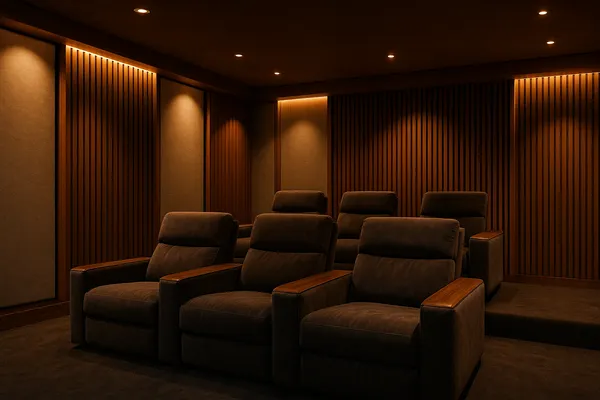
Where should you place acoustic panels in a home theater?
Many owners fear that acoustic panels in a home will make the room look like a studio, not a cozy home theater. That might have been true when only egg-crate foam panels were available. Today, acoustic panels are available in many colors, thicknesses, and wood veneer finishes.
Modern PET and wood products can complement your home style. For example, our PET sound panels can be cut into shapes and covered with fabric, while our wood slat panels are panels are typically designed as decorative walls. In a cinema-style home theater, you can even turn acoustic panels into light boxes or back-lit art.
Your home theater’s decor can actually look more expensive after adding acoustic panels. For B2B clients, this is a big selling point: they can offer an upgrade package that improves sound quality and visual impact at the same time. As a factory, we customize sizes, colors, and edge details so that acoustic panels for your home or your project brand line feel like part of the architecture, not an afterthought.
There is no single “best” acoustic panel for every home theater. The choice depends on budget, fire rating, design, and installation method. Our high-quality acoustic range focuses on two cores: recycled PET and MDF/plywood with veneer.
Our PET acoustic panels come in various densities. Denser panels absorb more energy and work well behind seats. Lighter sound panels are easier to install on ceilings. These panels are typically made from flame-resistant polyester fiber, so they are safe and stable in climate-controlled rooms. For premium rooms, panels are made with wood veneers on the face and PET backing inside.
Wood slat acoustic panels for home theaters hide PET behind decorative slats. In these designs, acoustic panels are designed to both absorb and scatter energy, giving a softer look and feel. Our OEM partners love this because panels come in standard sizes but we can also cut custom modules for their brands. For design-driven projects, appropriate acoustic panels are those that match the room’s style, budget, and installation method.
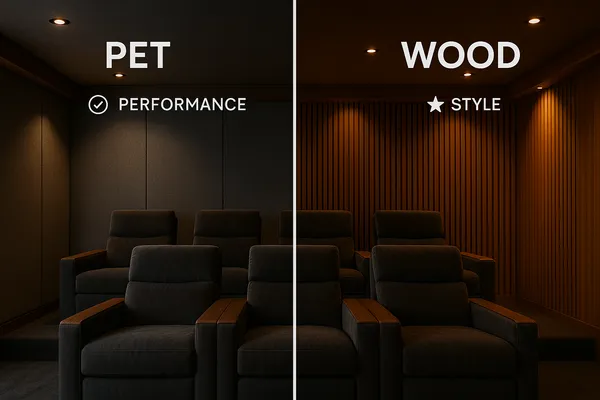
PET vs wood
Let us walk through a simple treatment for your home theater that you can use as a template. This process works for many home theater rooms, from spare bedrooms to dedicated home theater spaces.
In serious installs, proper acoustic planning also looks at home theater design elements like risers, carpets, and drapes. For most homeowners, though, simply installing acoustic panels on side walls and ceiling is enough to get effective sound absorption and effective sound control.
From our experience as a manufacturer, acoustic panels absorb mid and high frequencies very well, while bass is handled by panels for effective low-frequency trapping in corners. When you treat your home theater this way, you are optimizing the acoustic environment step by step instead of guessing. That is what makes creating the ultimate home theater practical instead of overwhelming.
Here is a simplified example from one of our partners. They were creating a home theater showroom to sell project packages. The room had good equipment but without acoustic panels, it sounded harsh and too loud. Customers liked the picture but did not love the sound.
We suggested a simple kit of 10 PET acoustic panel modules and 4 corner traps. After panels are placed on first reflections and corners, the home theater suddenly felt calmer. Dialogue popped out clearly, and the best sound experience came at lower volume, which families appreciated. The installer told us that acoustic panels enhance not only the sound, but also the confidence of buyers.
This kind of home theater based case study is the norm, not the exception. The home theater’s value is not just the hardware. When high-quality acoustic panels are included in the package, upsells become easier and customers talk about the “cinema feeling” they get at home.
For small DIY jobs, some people just buy random foam online. But if you are a distributor, importer, architect, contractor, or brand owner, you need stable supply, tested materials, and consistent colors. That is where a professional manufacturer in China like us adds value.
Our PET and wood acoustic panel lines are built specifically for panels for your home theater, studios, and commercial spaces. Panels are designed to absorb sound in the right range, and panels are typically tested for fire and VOC performance. We support custom printing, CNC cutting, and private label packaging, so you can build your own home theater acoustic panels brand.
Because acoustic panels are typically modular, we help partners plan the number of panels they need for typical room sizes and ship kits that are easy to quote. Whether you sell acoustic panels for home packages or full home cinema solutions, we can bundle PET cores, wood fronts, and acoustic sound panels into an integrated system to enhance your home theater product line.
When you choose the right acoustic panels, you are not just buying boards; you are buying predictable performance, clean décor, and a strong story to tell your clients.
Use this quick checklist when planning acoustic panels in a home or for a client:
Key points to remember:
For many partners, we pre-design room kits so that acoustic panels come in matched sets. These panels can be placed easily by installers, giving consistent sound quality results across multiple project sites.
Are acoustic panels really necessary in a small home theater?
Yes. Even a small home theater with a basic sound system can sound harsh without panels. A few well-placed acoustic panel modules improve sound quality noticeably by cutting flutter and echo, giving you more comfortable volume and clearer dialogue.
What is the difference between PET panels and foam panels?
Both can absorb sound, but PET acoustic panels are denser and more durable than most foam panels. They offer better fire performance, more stable colors, and cleaner edges. Many of our B2B clients use PET sound panels as their main product and reserve foam for entry-level kits.
Where should I put panels in a basic home theater?
Start with first reflections: side walls near the front speakers, then add panels on the rear wall. If possible, add a few acoustic panels on the ceiling above the main seats. This simple placement of panels handles the most critical reflections in almost any home theater.
Can acoustic panels be customized to match my home theater’s decor?
Yes. Modern PET and wood acoustic panel products come in many colors, veneers, and shapes. We often create OEM lines where panels complement your home furniture and lighting instead of fighting it. Custom sizing and printing let you turn sound panels into art.
How do I know how many panels to order?
The number of acoustic panels and overall quantity of panels depends on the dimensions of your home theater and how reflective the surfaces are. As a manufacturer, we help partners size kits by room area so they can quote quickly and still deliver effective acoustic treatment.
Can I install panels myself or do I need a professional?
For most home theater rooms, DIY installation is fine. Our modules acoustic panels come with simple mounting options, and installers can mount acoustic panels with screws or adhesive strips. For high-end commercial cinemas or very large rooms, using a professional designer ensures optimal sound and safety.
To wrap up, here are a few phrases you may hear and how they relate to your home theater:
If you are a distributor, importer, architect, contractor, or brand owner looking to build or scale your home theater product line, we can help you specify and supply custom PET and wood acoustic panels that make every project sound—and look—its best.

 English
  French
  German
  Italian
  Spanish
  Arabic
  Russian
  Dutch
Dutch