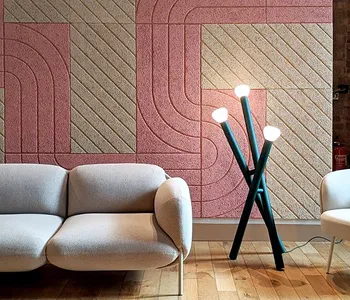
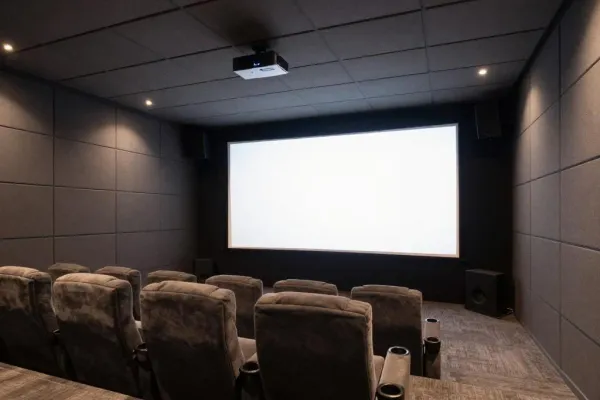
High-Quality Natural Wood Panels Manufacturers and Suppliers In China. We product: Wood Acoustic Panels PET Panels
Avoid your inquiry is delay response, please enter your WhatsApp/Skype along with the message, so we can contact you at the very first time.
We will reply you within 24 hours. If for urgent case, please add WhatsApp/WeChat: +86-13678899682 directly.
You have a beautiful building. A modern office building. A busy restaurant. A welcoming hotel. But there is a hidden problem. The problem is noise. Unwanted sound. This noise pollution is not just a small bother. It is a big problem that costs you money.
Poor building acoustics can make people less productive. It can make them feel stressed. It can give visitors a bad first impression. In healthcare facilities, it can even slow down healing. The sounds in your building have a huge impact on the people inside. This is the science of psychoacoustics.
This article will show you the five most common acoustic challenges in commercial buildings. We will agitate the problem by showing you how bad it can be. Then, we will give you the solution. You will learn how to fix these problems and create better acoustic comfort.
You have a modern open-plan office. It looks great. But it is very loud. You can hear every phone call. Every conversation. Every keyboard click. There are many hard surfaces. Sound bounces off the glass-walled rooms, the concrete floors, and the metal desks. This creates echo, or reverberation. There is no speech privacy.
This is more than just annoying. It is a productivity killer. The data is clear.
| Statistic | The Real Cost to Your Business |
| 69% of workers say noise hurts their focus. | Your team cannot do their best work. Projects take longer. |
| Workers can be 66% less productive. | You are losing hours of work time every day from every worker. |
| 53% of workers have overheard secret information. | This can be a big legal problem for your company. |
The constant background noise from phones, office equipment, and human speech is a huge distraction. It makes it hard to think. This is a major issue in many spaces, from call centers to corporate headquarters. The ambient sound level is simply too high for deep focus.
You must control the sound. You need a mix of strategies. This is called acoustic design.
As a professional manufacturer from China, acoustic panels are our specialty. We offer OEM/ODM services to create custom acoustic panels that fit your office design perfectly.
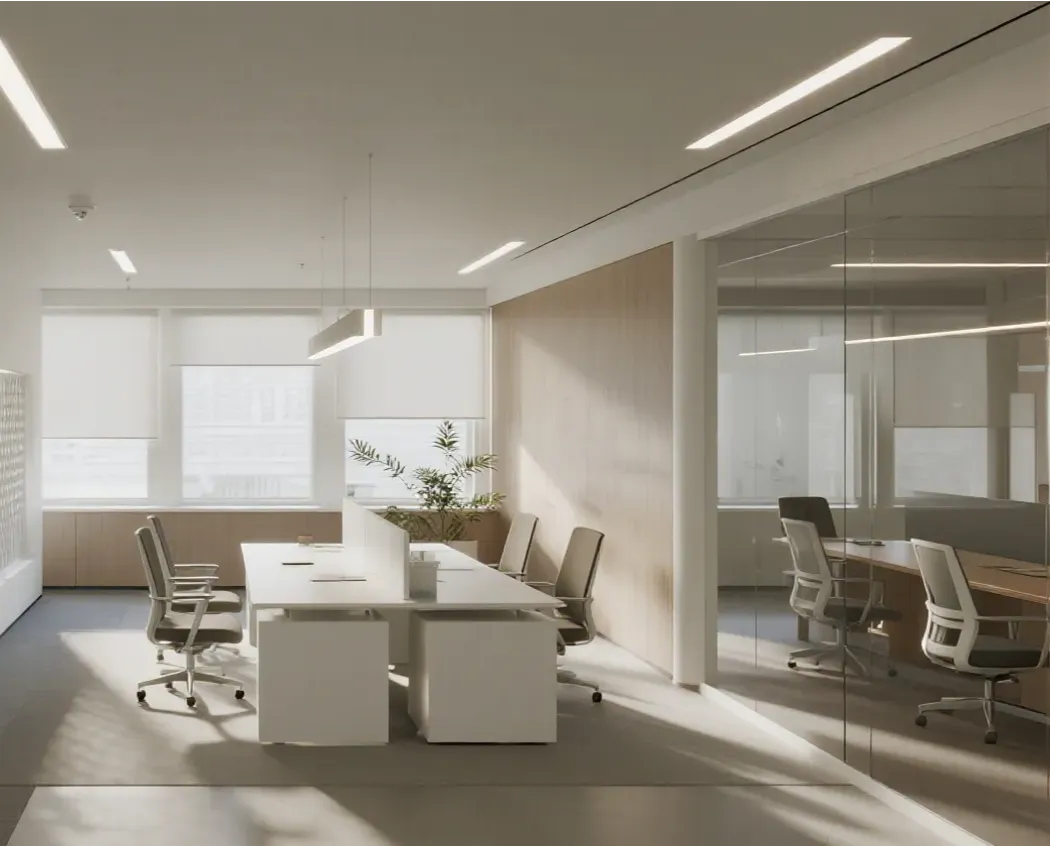
The Open Office Challenge
Your lobby or atrium is the first thing visitors see. But it is a giant echo chamber. High ceilings and hard surfaces like glass, stone, and hardwood floors cause terrible reverberation. The reverberation time is very long. This means sound bounces around for a long time. It makes it hard for people to talk at the reception desk. It feels loud and stressful. The same problem happens in corridors and hallways and stairwells.
A bad first impression can hurt your business. If your lobby is loud and chaotic, visitors will feel uncomfortable. They will think your business is chaotic, too. Look at this real-world example. A company reception hall had a reverberation time of 2.49 seconds. That is very high. It was loud and unpleasant. Speech was very hard to understand. This is a failure of room acoustics.
You must add absorption to these large spaces. The goal is to lower the reverberation time.
In the case of the reception hall, they added acoustic wood wall panels. The reverberation time dropped from 2.49 seconds to just 0.87 seconds. The change was huge. The space felt calm and professional. With our 20,000㎡ factory, we can produce panels for any size project, from a small library to a huge conference center. Our products are CE, FSC, and SGS certified.
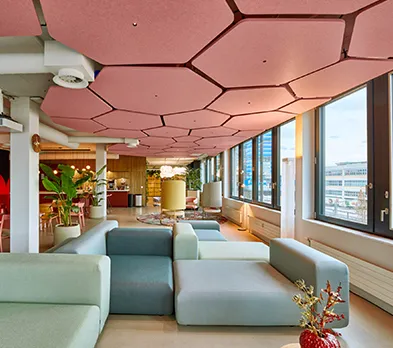
Echo in Lobbies, Atriums, and Hallways
Your conference rooms and meeting rooms are where important decisions are made. But they have sound problems. Glass-walled rooms are very popular, but glass reflects sound. This creates echo inside the room, hurting speech intelligibility. Also, sound leaks out. Secret conversations can be heard outside. Sound from the hallway also leaks in. This is called flanking noise. It travels through gaps in doors and thin walls.
If people on a video call cannot hear you, you look unprofessional. If your private meetings are not private, you have a big security risk. A study by IPSOS found that workers lose an average of 29 minutes per week because of poor sound quality on calls. That is a lot of wasted time. The sound transmission through walls and doors is a major issue.
You need both sound absorption inside the room and sound isolation to stop sound from leaking. This is key for soundproofing.
As a one-stop shop, we can help you with a full solution. Our acoustic wooden slat wall panels are perfect for adding both style and sound absorption to any private office or meeting room.
There is a constant low hum in your building. It never goes away. This is structure-borne noise. It comes from your building’s equipment. The main sources are:
This noise travels through the building envelope. It travels through the steel beams, concrete floors, and even the pipes. It is a very common problem in all multi-use buildings.
This constant low-frequency noise is more than just a hum. The CDC says long-term exposure to noise can raise stress. It can increase heart rate and blood pressure. It makes it hard to concentrate. This is a serious issue for occupant well-being. It is a job for noise control engineering.
You must use vibration control to stop the noise at its source.
This is a very technical problem. You should work with an acoustical consultant or a mechanical engineer. They can do an acoustic survey with a sound level meter. They can find the source of the noise. Then, they can design a solution. Our role is to provide the best sound insulation materials for the job.
You can hear everything from the room next door. You can hear people walking on the floor above you. This is a big problem in hotels, schools, and offices.
There are two types of noise here:
A common path for noise is through the ceiling space. Sound goes up through your acoustic ceiling tiles, travels across the open space (the plenum), and comes down into the next room.
This lack of privacy is a huge problem. In an office, it means you can hear every word from the next room. In a hotel, it means unhappy guests who can hear their neighbors. The Impact Insulation Class (IIC) is a rating for how well a floor blocks impact noise. A low IIC rating means you will hear every footstep from above.
You need to improve the performance of your floors, walls, and ceilings.
At Beien, we make a wide range of products to solve these problems, from polyester fiber panels to decorative wood wall panels. We can create a custom acoustic panels solution for any space, from a classroom to a home theater or a music studio.
You can see that there are many common acoustic challenges in commercial buildings. From open-plan offices to lobbies, noise is a big problem. It hurts people and it hurts your business.
The most important lesson is to think about acoustics early. It is always easier and cheaper to design a quiet building from the start. Work with an architect, an interior designer, and an acoustical consultant. They can help you choose the right materials and designs. They can help you meet building codes for acoustics, like the LEED acoustic credits or the WELL Building Standard.
But even in an existing building, you can make big changes. As we have shown, adding the right acoustic treatment can solve these problems.
At Beien Construction Co., Ltd., we are here to help. We are experts in making the products that create quiet spaces. We have a huge factory, strict quality control, and factory-direct prices. We can ship our PET panels and wood slat panels all over the world.
Do not let noise control your building. Take control of your sound. Create a space where people can feel good and do their best work.

 English
  French
  German
  Italian
  Spanish
  Arabic
  Russian
  Dutch
Dutch