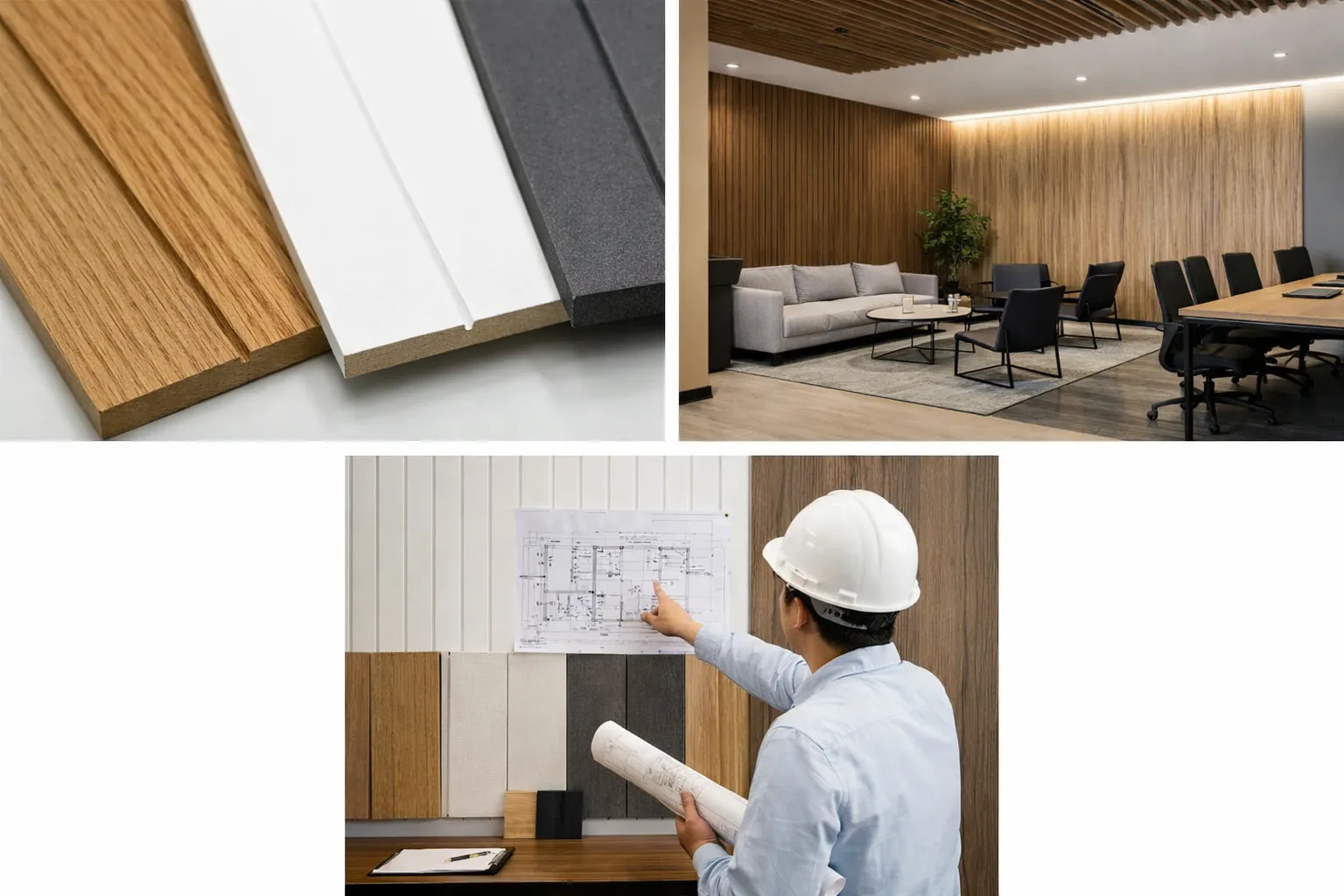
Hochwertige Naturholzpaneele Hersteller und Lieferanten in China. Wir produzieren: Holz-Akustik-Paneele PET-Paneele
Vermeiden Sie, dass Ihre Anfrage verspätet beantwortet wird, geben Sie bitte Ihre WhatsApp/Skype-Nachricht mit an, damit wir Sie sofort kontaktieren können.
Wir werden Ihnen innerhalb von 24 Stunden antworten. Wenn für dringenden Fall, fügen Sie bitte WhatsApp/WeChat: +86-13678899682 direkt.
Plain walls can make a space feel cold, noisy, and forgettable. Worse, the wrong decorative finish can look dated fast or create maintenance headaches. V-groove paneling solves that by adding clean lines, depth, and a more refined finish that works in both residential and commercial interiors.
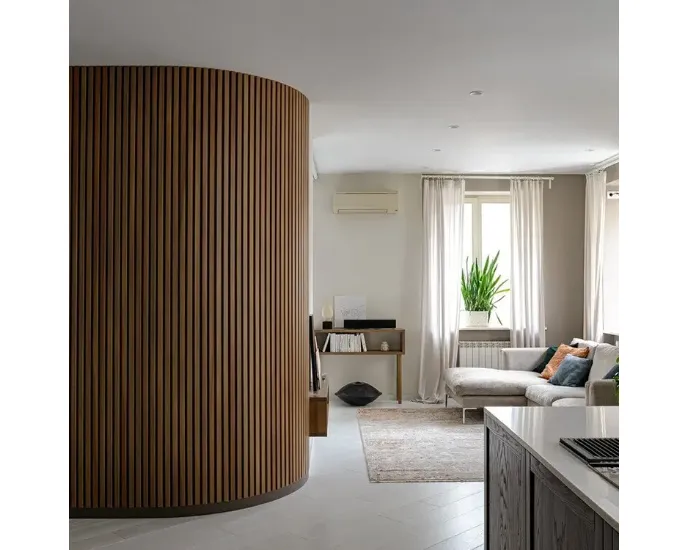
V-groove paneling is a wall or ceiling finish made with boards or panels that feature a v-shaped channel between each section. It adds texture, creates a neat shadow line, and can be made from wood, MDF, PVC, or modern acoustic materials. Compared with shiplap or standard tongue and groove, it often gives a more tailored and architectural look.
V-groove paneling
What is v-groove paneling, exactly?
Why is v-groove paneling popular in modern interior design?
Tongue and groove vs v-groove: what is the real difference?
Shiplap vs v-groove: which style is better?
Are v-groove panels and v-groove planks good for walls or ceilings?
Should you choose wood, mdf, or acoustic panel materials?
How does v-groove work in acoustic and commercial spaces?
What should architects, distributors, and contractors look for?
Is v-groove mdf a smart choice for large projects?
How do you choose the right panel supplier in China?
V-groove paneling is a decorative wall or ceiling finish made from a panel, plank, or board with a small angled cut along the edge. When two pieces meet, that cut forms a visible V-shaped channel. This fine groove is the detail that gives the finished wall its identity. Instead of looking like one plain flat surface, it creates depth, rhythm, and a more crafted appearance.
In practical terms, v-groove paneling is commonly used where designers want clean lines without the heavy look of deep battens or bulky trim. It works on walls or ceilings, feature walls, reception areas, hotel corridors, retail displays, and office lounges. Some products use individual boards, while others come in larger sheet-style panel formats for faster project use.
The visual effect is subtle, but powerful. That narrow line acts like a shadow line, helping a room feel more layered and more intentional. It can look warm and cozy, or sharp and sleek, depending on color, spacing, and finish.
One reason v-groove remains strong in the market is its versatility. It can suit farmhouse, Scandinavian, hospitality, office, retail, school, and public-space projects without feeling locked into one trend. Its simple geometry gives it a timeless quality that many architects and specifiers value.
Another reason is that it helps soften large blank surfaces. A plain wall can feel harsh, especially in modern commercial interiors with glass, concrete, and metal. A v-groove face adds visual structure without making the design too busy. In contemporary interiors, that balance matters. It can soften the room while still supporting a clean, professional style.
From our factory-side experience in China, this is also why many B2B buyers ask for customized cladding and decorative acoustic systems with groove-based patterns. Distributors want something easy to sell. Designers want something elegant. Contractors want something practical. Good paneling can answer all three.
This is one of the most common questions in the market. Tongue and groove refers to the way two pieces connect. One edge has a tongue, and the other has a matching slot, so the pieces interlock. V-groove refers to the visible face detail after assembly. A product can use tongue-and-groove joinery and still show a V-shaped line on the front.
That means the terms are related, but they are not the same. If you are buying for a project, always separate the surface look from the joining method. The joining system affects fit, speed, and sometimes installation. The face profile affects the final style and spacing.
Here is a simple comparison:
| Merkmal | V-Groove | Tongue and Groove |
|---|---|---|
| Main meaning | Visible face profile | Edge connection method |
| Finished look | Visible V line | Can be flush or profiled |
| Design effect | More decorative | More about fit and assembly |
| Am besten für | Feature walls, Decke, architectural finishes | Walls, ceilings, flooring, joinery |
In short, if a client asks for “vs v-groove” comparisons, the right answer is this: one describes appearance, one describes assembly. Some premium products combine both.

Shiplap and v-groove are often grouped together because both create linear wall effects. But the feeling is different. Shiplap usually uses overlapping rabbeted boards, creating a wider reveal and a more casual, sometimes rustic look. V-groove is usually more refined because the joint line is tighter and more controlled.
If the project goal is a clean boutique hotel wall, a premium office meeting room, or an upscale sales center, v-groove often looks more polished. If the goal is a farmhouse or beach-house style, shiplap may feel more relaxed. Neither is wrong. The better option depends on the desired aesthetic, maintenance expectations, and brand image.
For B2B applications, we often tell clients this:
choose shiplap when you want a casual, layered, home-style character
choose v-groove when you want a more architectural finish
choose acoustic groove-based systems when the project also needs sound absorption
That last point matters for commercial spaces. Decorative cladding is helpful, but decorative cladding with acoustic value is better. This is where your internal link to PET-Akustikwandplatten for commercial interiors fits naturally.
Yes. V-groove panels and v-groove planks work well on both ceilings or walls, but the format should match the project. Large-format panel systems usually save labor in hotels, offices, classrooms, and public spaces. Smaller plank systems are useful where designers want more joint rhythm or easier replacement.
For walls, wall paneling with a subtle beveled edge can help hide minor imperfections in walls and make long corridors or reception areas feel more complete. For ceilings, a groove pattern adds line and direction, which can help visually organize open spaces. Some projects run the pattern horizontally, while others use it installed vertically to elongate the wall. Both can work, depending on the room proportions.
A few common use cases include:
lobby feature walls
meeting room finishes
education spaces
apartment amenities
hospitality ceilings
retail display zones
decorative backsplash or joinery accents
It can also be used vertically or horizontally, depending on the visual effect. Vertical lines often feel taller. Horizontal lines often feel wider and calmer.
Material selection changes everything. Traditional Holzvertäfelung brings warmth, grain, and a more natural look. Buyers who want real veneer or natural wood often choose it for upscale hospitality, branded retail, or premium residential work. The tradeoff is that wood can move with moisture, and in some settings it may warp if the specification or installation is poor.
MDF is widely used because it is smooth, stable, easy to machine, and often more cost-effective than solid timber options. Its even face makes it suitable for painted finishes, decorative routing, and standard-size panel programs. MDF is made from wood fibers bonded with resin under pressure, and its smooth face is one reason many wall-panel producers use it for painted systems.
That said, v-groove mdf is not always the answer. In moisture-sensitive areas or premium acoustic projects, many buyers now prefer PET felt-based or composite decorative systems. These can provide sound absorption, lighter weight, and easier handling. PET acoustic panels are often made with recycled content, and some manufacturers publish NRC performance based on ASTM C423 testing.
Here is a practical comparison:
| Material | Am besten für | Main Advantage | Main Watch-Out |
|---|---|---|---|
| Solid wood / veneer | Premium decorative spaces | Warm, natural finish | Cost, movement, finish care |
| MDF | Painted decorative panel systems | Smooth, stable, economical | Moisture limitations |
| PET acoustic material | Offices, schools, public projects | Sound absorption, recycled content | Needs correct thickness/spec |
| PVC | Utility or moisture-prone decorative use | Easy maintenance | Less premium visual depth |
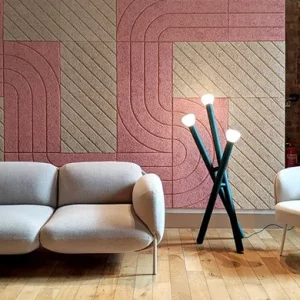
In commercial projects, visual finish alone is no longer enough. Designers now want decorative systems that also help control noise. Open-plan offices, hospitality lounges, libraries, schools, and public service areas all face sound challenges. That is why groove-based decorative systems are increasingly paired with PET felt or acoustic backers. PET felt acoustic products are commonly made with recycled plastic content, and NRC is commonly used to describe how much sound a material absorbs.
This is where our manufacturing experience becomes useful. As a China-based producer of PET and wood acoustic panels, we often help B2B clients adapt decorative styles to performance needs. A project may want the neat line of v-groove but also need better sound comfort. In that case, we can recommend a slotted or groove-inspired acoustic panel solution rather than a purely decorative board.
Betrachten Sie es einmal so:
decorative wall finish improves appearance
acoustic finish improves speech comfort and echo control
a combined system improves both design and function
For architects and commercial buyers, that combination adds real value. It is especially helpful in conference rooms, hotel guest corridors, education spaces, and reception halls where both image and user comfort matter.
A good-looking sample is not enough. Serious buyers need specification depth. An architect usually cares about finish consistency, fire performance, acoustic data, dimensions, and how the panel fits the total interior design language. Distributors and importers care about stable quality, packaging, lead time, and private-label capability. Contractors care about handling, tolerances, fixing methods, and site speed.
Here is a quick project checklist:
Material type: wood veneer, mdf, PET felt, composite
Face profile: flat, slat, fluted, v-shape, micro-groove
Use area: interior wall, ceiling, corridor, lobby, office
Performance: acoustic, fire, moisture, impact resistance
Delivery format: planks, full panel, modular kit
Surface finish: veneer, melamine, paint, film, faux stone, marble look
Fixing: screws, clips, hidden framing, adhesive
OEM/ODM: logo, carton, barcode, custom SKU
This is where factory support matters. We frequently work with clients who need a custom width, a specific felt color, a lighter bead detail, or a different stain tone for brand alignment. That kind of support is difficult when a supplier only sells standard stock.
It can be, especially when the project needs a painted decorative finish at a controlled budget. V-groove mdf works well for feature walls, room makeover programs, showroom fit-outs, and certain branded spaces where appearance matters more than heavy-duty impact performance. Because MDF has a smooth face, it is often chosen where a stable, painted finish is required.
Still, buyers should match the product to the site. MDF is not the same as solid timber or high-performance acoustic PET felt. If a project needs strong moisture resistance, reduced echo, or a more premium natural veneer look, then another material may be a better fit. We often help clients compare samples side by side so they can choose based on real use, not only on unit cost.
A simple buying view looks like this:
| Project Type | Good Material Choice |
|---|---|
| Painted decorative wall feature | V-groove mdf |
| Premium hotel or office veneer finish | Veneered wood acoustic Panel |
| High-traffic education or office acoustic wall | PET felt or wood-acoustic system |
| Fast commercial refresh / makeover | Prefinished modular Verkleidung |
In other words, MDF is smart when the brief is right. It is not “better” than everything else. It is simply the right tool for the right brief.
For global B2B buyers, the best supplier is not always the cheapest one. The right partner should understand product performance, visual consistency, export standards, and customization. This is especially true for acoustic solutions, where appearance and tested performance must work together.
When buyers contact us, they usually ask about these points first:
Can you customize sizes, felt colors, slat widths, and finishes?
Can you support OEM/ODM labeling?
Can you match project samples?
Can you provide acoustic and fire documentation?
Can you supply large-volume orders with stable quality?
Can you help us renovate product lines for our market?
That last question matters more than many people think. Brand owners and importers do not only buy products. They buy reliability, repeatability, and a supply partner who understands market positioning. As a professional manufacturer in China specializing in PET and wood acoustic panels, we work with distributors, designers, contractors, and OEM clients who need more than commodity goods. They need solutions.
Is v-groove paneling the same as tongue and groove?
No. Tongue and groove describes how the pieces join together, while v-groove describes the visible front profile. Some products combine both.
Is v-groove better than shiplap?
It depends on the style target. Shiplap usually looks more casual and farmhouse-inspired. V-groove usually looks more tailored and architectural. For many modern commercial interiors, v-groove feels cleaner.
Can v-groove be used on ceilings?
Yes. It is often used on a ceiling to add rhythm, direction, and texture. It can work in hospitality, residential, retail, and office interiors.
Is MDF good for v-groove wall panels?
It can be. MDF is smooth, easy to finish, and often economical, which makes it suitable for many painted decorative panel applications. But it should be matched to the moisture and performance needs of the project.
Are acoustic groove-style panels better for commercial projects?
Often, yes. Decorative surfaces improve appearance, but acoustic panels also help control echo and speech comfort. In offices, schools, meeting rooms, and public projects, that added function can be a major advantage. PET felt products are commonly marketed with recycled content and NRC-based acoustic data.
What should I ask a manufacturer before placing a bulk order?
Ask about material options, dimensions, tolerances, finish consistency, packaging, lead times, OEM/ODM service, acoustic data, and project customization. For branded buyers, sample matching and export support are also critical.
V-groove paneling uses a visible V-shaped channel to create depth and visual order.
It is different from tongue and groove, which describes the joining method.
Shiplap vs v-groove is mainly a style choice: shiplap feels more casual, v-groove more refined.
V-groove panels and v-groove planks can work on both walls and ceilings.
MDF is practical for many decorative projects, but not every project.
Wood and PET acoustic materials are often better for premium or performance-focused spaces.
For B2B buyers, the best supplier offers customization, stable quality, documentation, and real project support.
In commercial interiors, combining visual finish with acoustic performance often creates the strongest result.

 German
  English
  French
  Italian
  Spanish
  Arabic
  Russian
  Dutch
Dutch