Hochwertige Naturholzpaneele Hersteller und Lieferanten in China. Wir produzieren: Holz-Akustik-Paneele PET-Paneele
Vermeiden Sie, dass Ihre Anfrage verspätet beantwortet wird, geben Sie bitte Ihre WhatsApp/Skype-Nachricht mit an, damit wir Sie sofort kontaktieren können.
Wir werden Ihnen innerhalb von 24 Stunden antworten. Wenn für dringenden Fall, fügen Sie bitte WhatsApp/WeChat: +86-13678899682 direkt.
Noisy rooms waste time. People talk louder, meetings drag on, and complaints grow. Then someone buys an acoustic panel… and later asks, “Will it still work after a few years?” Good question. In this guide, I’ll show what makes panels last—and how to keep your project looking clean and performing well for the long run.
Most acoustic panels last 10–20+ years indoors when you choose the right panel materials, install them correctly, and avoid moisture and physical damage. PET felt and many high-quality architectural panels are known for strong durability, while some foam panels may degrade faster. Regular cleaning and smart placement help your acoustic panel keep stable sound control and appearance.
acoustic panel lifespan durability PET and wood slat acoustic panels
Wir sind ein professioneller Hersteller in China specializing in high-quality PET and wood acoustic panels for global B2B clients—distributors, importers, architects, contractors, and OEM/ODM brands. I’ll share what we see on real projects: what fails early, what lasts, and what protects your investment.
What is the typical lifespan of an acoustic panel?
Which types of acoustic panels last longer—and why?
What key factors affect the lifespan of acoustic panels?
Do PET panels hold up in high-traffic areas?
Do wood slat acoustic panels last decades or not?
Can acoustic panels lose sound absorption over time?
How do environmental factors like humidity and sunlight change durability?
Installation mistakes that shorten lifespan (and how to avoid them)
How to clean and maintain panels so they stay looking good
Long-term value: is acoustic treatment a long-term investment? (Case study + checklist)
A realistic typical lifespan for an acoustic panel in indoor spaces is often 10–20+ years, depending on the panel type, surface finish, and the room environment. Some guides show PET-Filz and premium architectural solutions lasting longer, while basic foam panels can break down earlier.
In my experience working with distributors and project contractors, early replacement usually happens for one of two reasons: appearance (stains, dents, scratches) or installation problems (loose panels, warped edges, damaged corners). The sound control often stays okay, but clients don’t like how the panels look.
Simple rule: an acoustic panel lasts as long as its surface stays intact and its core stays dry. Keep it clean, keep it stable, and you keep performance.
Not all types of acoustic panels are built the same. Here’s a buyer-friendly view of common panel types and expected life in normal indoor use:
| Panel types | Typical lifespan range | Why it lasts (or not) |
|---|---|---|
| PET-Platten (polyester felt) | Often 8–20+ years | Stark Haltbarkeit, impact resistance, stable structure |
| Holzlamellen-Akustikplatten (slat + felt) | Often 10–20+ years | Solid face layer + protected backing; finish matters |
| Stoffumhüllte Paneele | Often 10–20 years | Good performance; fabric care affects appearance |
| Schaumstoffplatten | Often 3–8 years (varies) | Can degrade and crumble in harsh conditions |
If you sell to public projects (schools, offices, airports, commercial interiors), this table helps set expectations. It also helps distributors build the right product mix: long-lasting architectural options for high-visibility spaces, and budget options only where replacement is easy.
%types of acoustic panels lifespan comparison PET wood slat foam
Let’s talk about what actually changes the lifespan of acoustic panels. I group it into five key factors that B2B buyers care about:
Panel materials (PET felt, wood veneer, fabric, foam core)
Installation method (adhesive, clips, rails, screws)
Environmental conditions (humidity, UV, temperature swings)
Physical damage (impacts, scratching, abuse)
Cleaning routine (dust, stains, harsh chemicals)
These factors decide whether acoustic panels last “many years” or become a problem after a short time. Some panels are moisture-resistant to a degree, but they still don’t like high humidity or water exposure at seams.
Quick buyer tip: when your customer says “We need panels for a lobby,” ask one extra question: “Is this a high-touch, high-traffic wall?” If yes, pick PET or protected wood finishes, and plan a maintenance note.
Yes—this is one reason many designers like PET felt. PET felt is often described as durable and impact resistant, which fits hallways, classrooms, co-working areas, and busy offices.
In our export projects, pet panels usually fail early only when:
corners get hit by carts, chairs, or cleaning machines
glue is wrong for the wall surface
the wall is damp behind the panel
someone uses harsh cleaners that discolor the face
If you want long-lasting acoustic performance in public spaces, a simple strategy works: pick thicker PET felt, protect edges, and avoid direct water exposure. That keeps panels looking good and helps them absorb sound effectively for years.
%PET acoustic panel durability for high-traffic areas
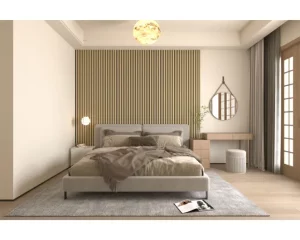
Clients love the look of Holzlamellen-Akustikplatten. They give warmth, rhythm, and strong design value—especially in conference rooms, lobbies, and showrooms. With good care, guides often describe them as a long-term choice that can last many years.
But the truth is: the slat face is still wood-based (veneer/laminate/real wood). So it can scratch. Sunlight can fade finishes. And high moisture can warp panels. That doesn’t mean “don’t use them.” It means place them smartly:
avoid wet zones and humid environments
keep panels away from direct exterior doors where water blows in
use protective finishes when needed
If you do that, slat panels become a strong “long-term investment” product line for distributors and project contractors.
Holz-Akustik-Paneele
Good news: in stable indoor environments, many architectural acoustic panel products keep consistent performance for years. The biggest “performance drop” we see is not the core failing—it’s the surface getting clogged with dust and dirt, or panels being covered by décor, signage, or furniture.
Sound control depends on how panels interact with sound waves. Porous panels help absorb sound and reduce sound reflections that cause echo. If pores get blocked, absorption can drop. That’s why cleaning matters.
A simple way to explain this to end users:
Dirty panels look bad.
Dirty panels can also work less well.
Light cleaning protects both acoustic performance and appearance.
How do environmental factors like humidity and sunlight change durability?
Environmental factors are the silent killers of panel life. The top three are:
High humidity: moisture can soften adhesives, swell wood-based layers, and encourage warping
Sunlight/UV: can fade wood finishes and some fabric colors
Temperature swings: can stress joints, edges, and fasteners over time
If your project includes pools, spas, coastal cities, or kitchens, you should treat it as a special installation environment. Use moisture-resistant options, choose safer mounting systems, and leave proper expansion gaps where needed.
When buyers ask me “How long acoustic panels last in humid areas,” I answer honestly: it lifespan depends more on the room than the panel itself. One smart selection step can protect years of service.
A lot of panels die young because of poor installation. Here are the most common mistakes we see from job sites:
Wall surface not cleaned → adhesive fails
No leveling lines → panels shift, gaps look bad
Fasteners too tight → heavy panels bend or crack at corners
No expansion space for wood → edges buckle
Installing over damp walls → panels warp or smell
Simple fixes:
confirm wall dryness before you mount
follow a clear layout plan (centerline + grid)
use the right clips/rails where future access matters
for wood slat, treat it like finish carpentry—clean cuts, controlled spacing
When panels are properly maintained and installed well, panels can last for many years without drama. That’s what contractors want: predictable outcomes.
Most owners don’t want complicated care. They want simple rules that staff can follow.
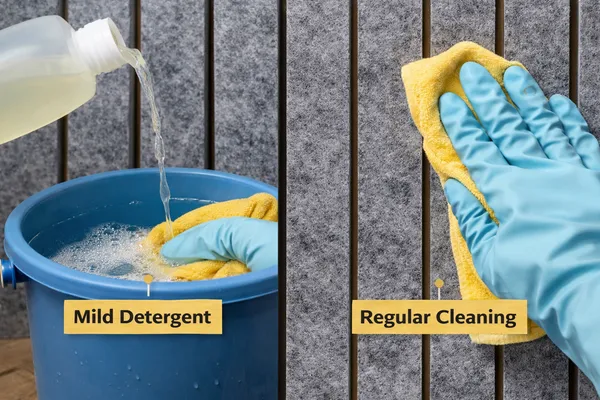
Vacuum gently with a soft brush
Wipe with a damp cloth for light stains
Use a mild detergent when needed
Avoid abrasive sponges and strong chemicals
Many maintenance guides recommend damp cloth + mild soap for typical soils, and they warn to avoid harsh cleaners.
Quote you can use in your project handover:
“Clean a stain early. Use mild, pH-neutral soap. Avoid harsh chemicals and abrasive pads.”
This keeps wall panels looking fresh. It also protects the surface so the panel stays open and porous enough to keep reducing echo.
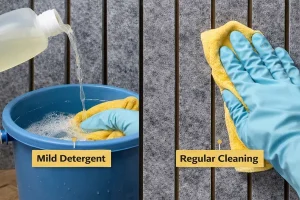
acoustic panel cleaning mild detergent and regular cleaning
Here’s the part buyers really care about: return.
A good acoustic treatment improves speech clarity, reduces fatigue, and supports better work and learning. In offices and public buildings, that means fewer complaints and better space value. This is why architects and developers treat acoustic work as a long-term investment, not a “decor item.”
A contractor installs ceiling panels and wall acoustic panel solutions in conference rooms for a corporate office. Before treatment, staff report strong echo and poor calls. After treatment, the room sounds calmer and clearer. The panels stay clean for years because the contractor chose impact-resistant PET for the lower zone and slat panels for the feature wall—good balance of design and durability.
Result: better room experience + stable appearance = stronger long-term value and easier future sales to the same client group.
Do you need soundproof (block sound) or sound absorption (control echo)?
Are the walls in high-traffic areas?
Is there high humidity or direct sunlight?
Will cleaning staff use chemicals?
Do you need removable panels for access?
If you answer these, you can select the right different acoustic panel solution and avoid early replacement.
How long do acoustic panels last in a normal indoor office?
In many indoor office cases, an acoustic panel can last 10–20+ years when installed correctly and cleaned regularly. Product type matters—PET and wood slat options usually outlast basic foam.
Do acoustic panels last longer than foam panels?
Often yes. Some foam panels can degrade faster, while PET felt and architectural systems are commonly positioned as more durable long-term solutions.
Can acoustic panels lose performance over time?
They can, mostly due to dust and dirt blocking pores, or physical damage. Regular cleaning helps protect acoustic performance.
Are wood slat acoustic panels a long-term investment?
They can be. Well-maintained wood slat systems are often described as long-lasting and valuable for design-focused projects, especially when moisture and sunlight are controlled.
What is the easiest way to extend the life of acoustic panels?
Use good installation, avoid moisture, and follow a simple care plan: vacuum dust and wipe stains with a damp cloth and mild soap.
Do PET panels handle light cleaning with a damp cloth?
Many PET acoustic panel resources say damp-cloth cleaning is generally workable for light cleaning (follow your supplier’s guidance for your exact finish).
A quality acoustic panel often lasts 10–20+ years indoors, but the room and care plan decide the real lifespan.
PET felt options are widely valued for durability and impact resistance in busy spaces.
Foam panels may degrade faster than architectural panels.
Humidity, sunlight, and physical damage are the biggest enemies of lifespan.
Smart installation + regular cleaning is the simplest way to extend the life and protect performance and appearance. Treat acoustic products as a long-term investment: better comfort, better space value, better client satisfaction.
If you tell me the project type (office, school, lobby, auditorium), humidity level, and the zones that get touched most, I can recommend a clear mix of PET + slat + ceiling solutions that balances budget, looks, and long service life for your B2B customers.

 German
  English
  French
  Italian
  Spanish
  Arabic
  Russian
  Dutch
Dutch