ألواح الخشب الطبيعي عالية الجودة مصنعي وموردي ألواح الخشب الطبيعي في الصين. نحن المنتج: الألواح الخشبية الصوتية ألواح الخشب الصوتي ألواح PET
تجنب تأخير الرد على استفسارك، يُرجى إدخال واتساب/سكايب الخاص بك مع الرسالة، حتى نتمكن من الاتصال بك في المرة الأولى.
سنرد عليك في غضون 24 ساعة. إذا كانت الحالة عاجلة، يُرجى إضافة واتساب/وي تشات: +86-13678899682 مباشرة.
Bad panel choices cost money twice. First at purchase. Then again when panels sag, fade, stain, or lose acoustic value too soon. The fix is simple: choose the right acoustic panel material, install it well, and protect it from the conditions that shorten service life.
The typical lifespan of acoustic panels is often around 8 to 20 years in normal indoor conditions, but the real answer depends on material, installation, maintenance, and environment. PET panels often last 8–15+ years, while wood slat acoustic panels commonly last 10–20+ years when maintained properly and protected from excess moisture, UV, and physical damage.
What is the typical lifespan of acoustic panels?
Why does material type matter so much for panel longevity?
How long do PET acoustic panels last in real projects?
How long does a wood slat panel last, and what about MDF?
What factors affect the lifespan of acoustic panels most?
Do UV light, moisture, and HVAC conditions shorten service life?
How can installation and maintenance extend the life of panels?
When should you repair or replace an acoustic panel?
Are acoustic panels a good long-term investment for B2B projects?
How should distributors, architects, and wholesalers choose a supplier?
The short answer is this: الألواح الصوتية can last a long time, but there is no one-size-fits-all number. The lifespan of acoustic panels varies by material, room use, and installation method. In real indoor projects, a practical range is often about 7 to 20 years, and many high-quality products can last longer when used in stable interior environments. BNPANEL’s current buyer guide gives a typical range of 8–20 years across common panel types, while other B2B market summaries often describe a practical 7 to 20 years range for quality panels used indoors.
That range is useful, but it is only a starting point. Foam panels may wear out faster. PET felt panels can be very long-lasting. A wood slat panel may deliver a longer architectural life if the finish, MDF slat structure, felt backing, and indoor conditions are right. In other words, the life expectancy depends on several factors, not just the product name.
Here is a simple lifespan guide:
| نوع اللوحة | Typical Lifespan | Main Risk |
|---|---|---|
| ألواح رغوية | 3–8 years | Crumbling, discoloration |
| ألواح PET | 8–15+ years | UV fade, surface scuffs |
| ألواح مغلفة بالقماش | 10–20 years | Fabric wear, dust load |
| الألواح الصوتية الخشبية الشرائحية الخشبية | 10–20+ years | Finish wear, warp if wet |
These are not promises for every project. They are planning ranges that help B2B buyers compare material classes more realistically.
Material is one of the biggest key factors in acoustic panel durability. Different panels are made from different cores, faces, and backers. That means they react differently to cleaning, impact, UV, humidity, and daily use. A cheap panel may look similar on day one, but it may not age in the same way as a high-quality acoustic product.
For example, a porous PET felt panel behaves differently from a decorative wood slat acoustic panel. PET is lightweight, stable, and often easier to handle. A wood slat panel adds a stronger architectural finish, but it also introduces materials like veneer, slats, and MDF or other substrates, which can react to moisture and temperature differently. This is why acoustic panels last longer when the material matches the space.
Material choice also affects acoustic performance. Panels are not only decorative wall panels. They are performance products. If the acoustic material breaks down, sags, or separates from the substrate, the room may lose acoustic control over time. That is why the longevity of acoustic panels is always both a finish issue and an acoustics issue.
In many indoor commercial spaces, ألواح PET can last 8–15+ years or more. PET systems as made from 100% polyester fiber, lightweight, customizable, and suitable for schools, offices, hotels, and cultural venues. Their current durability guide also places PET panels in the 8–15+ year range in many real projects.
PET panels are popular because they are practical. They are lighter than many traditional systems, easier to mount, and usually more resistant to everyday wear and tear than soft foam products. For schools, offices, restaurants, and public interiors, PET acoustic panels and ألواح امتصاص الصوت can be a cost-effective solution when buyers want good sound control with clean visual design.
That said, PET is not indestructible. Strong UV light, repeated physical damage, or poor cleaning habits can still shorten service life. A panel near a sunny glass wall may fade faster than the same panel used in a shaded meeting room. A panel in a busy public corridor may show more scuffs than one in a quiet office. So yes, PET panels can last a long time, but usage conditions still matter.
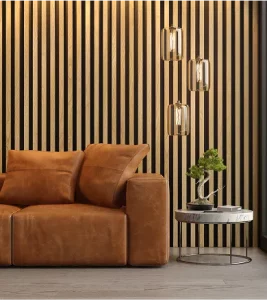
A wood slat panel is often one of the most durable decorative acoustic options for modern interiors. In many projects, wood slat acoustic panels can last 10–20+ years. That longer range depends on good materials, stable indoor conditions, and correct installation.
The most common buyer question is about MDF. Many slat products use MDF as the core or slat base because it gives stable machining and consistent shape. The problem is not MDF itself. The problem is exposure to moisture. If MDF-based slats stay in a wet or high-humidity environment without proper sealing or installation, they may swell, sag, or lose structural integrity. That is why a real wood slat face, good felt backing, and proper edge finishing all matter.
For buyers who want a more decorative project solution, الألواح الصوتية الخشبية and wood slat acoustic panel guides are useful because they explain how slats, backing, and finish work together. A high-quality wood finish can be both aesthetically strong and acoustically useful, but only if the room conditions are appropriate.
Several factors affect the lifespan of an acoustic panel, but four usually matter the most: material quality, installation method, environment, and daily use. If just one of these fails, even quality acoustic panels may not perform the way the buyer expected.
The biggest factors that affect the lifespan are:
A strong high-quality acoustic panel is usually built to last, but “built to last” does not mean “safe in every environment.” A panel in a home office, a home studio, and a busy school corridor may use the same product family and still age very differently. That is why the lifespan of acoustic panels always depends on where and how the panels are used.
Yes. Environmental conditions are a major part of panel longevity. Long exposure to UV light can fade some surfaces over time. High-humidity spaces can stress wood-based systems and weak adhesives. Strong airflow from HVAC outlets can increase dust loading on some surface finishes, especially in public interiors.
Moisture is one of the biggest risk factors. Panels in kitchens, spas, locker areas, or poorly ventilated public spaces may face more degradation over time than the same panels used in normal indoor conditions. If you expect challenging site conditions, it is better to confirm the panel structure, edge detail, substrate, and finish in advance instead of assuming every product behaves the same way.
This is one reason many B2B buyers choose PET-based systems for broader use cases. Polyester-based panels are often more stable in typical interior conditions, while wood slat systems are often selected when the project wants a stronger architectural finish and can control moisture better.
Good installation is one of the easiest ways to extend the life of acoustic panels. A strong product can still fail early if it is mounted on a dirty wall, installed with the wrong adhesive, exposed to moisture before opening, or left unsupported in a large span where it can sag.
Basic maintenance is usually simple. Most acoustic panels need light dust removal, periodic surface checks, and protection from direct impact. Panels should be maintained properly and should not be cleaned with harsh chemicals unless the supplier says it is safe. For wood slat systems, regular dry dusting and occasional careful wiping are often enough. For PET systems, light vacuuming or soft dry cleaning usually works.
A simple maintenance checklist:
| Maintenance Step | Why It Helps |
|---|---|
| Keep panels dry | Reduces swelling, warp, and adhesive stress |
| Remove dust regularly | Protects finish and acoustic appearance |
| Avoid hard impact | Prevents physical damage |
| Check edges and mounts | Catches early loosening |
| Limit direct UV where possible | Reduces fade risk |
A panel does not need constant care, but good maintenance helps it last longer and hold both its look and its acoustic value.
صوتي Panel?Repair or replacement depends on what has failed. If the panel still performs acoustically and only has minor surface dust or a small scuff, basic cleaning may be enough. If the panel has deep stains, deformed edges, delamination, loose fixing points, or visible wear and tear, then repair or replacement may be the better decision.
Here are common replacement signs:
This is why longevity of acoustic treatments should be viewed like any interior finish. Panels are not disposable, but they are not permanent either. If they serve the space well for many years and keep good acoustics, they are doing their job. When they stop doing that, replacement becomes part of responsible facility management.
Yes, in many projects they are a strong long-term investment. The real value of acoustic panels is not only the purchase price. It is the comfort, speech clarity, branding, and usability they bring to the room year after year. If a product lasts 10 years or more in a busy commercial interior, the return on investment can be very good compared with cheap decorative materials that need earlier replacement.
This is also why buyers care about the difference between cheap panels and high-quality acoustic panels. A lower purchase price can disappear quickly if the panel fades early, deforms, or creates replacement costs. In many cases, better durability means better total value, even when the first quote is higher.
A strong supplier helps buyers avoid avoidable problems. For a distributor or wholesaler, the product must stay consistent across batches. For an architect, the panel must meet design and finish expectations. For a contractor, it must arrive on time and install without surprises. For an OEM/ODM buyer, customization, packaging, and documentation matter just as much as the panel itself.
When choosing a supplier, ask these questions:
BNPANEL’s product and news pages show a clear B2B direction: PET acoustic panels, wood acoustic panels, sound absorbing panels, acoustic panel soundproof products, and its own guide on how long acoustic panels last all support the idea that a good supplier should offer both product and application guidance.
A distributor working on office and education projects compared two wall panel options. One was cheaper, but the felt density, finishing quality, and packaging were inconsistent. The other had a higher initial price, but the supplier could control panel dimensions, offer custom colors, and support repeat orders.
The distributor chose the higher-quality panel line. The result was fewer damage claims, fewer installation issues, and better long-term customer satisfaction. In simple terms, the more durable panel produced stronger long-term value. That is often how acoustic products work in real B2B business: the cheapest panel is not always the most cost-effective one over time.
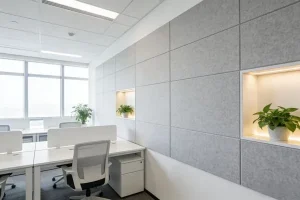
office fit-out with PET acoustic panels
What is the typical lifespan of acoustic panels?
The typical lifespan of acoustic panels is often about 8 to 20 years in real indoor projects, though some buyers use a broader planning range of 7 to 20 years. The final answer depends on material, installation, environment, and maintenance.
How long do wood slat acoustic panels last?
A wood slat acoustic panel often lasts 10 to 20+ years when used in stable indoor conditions and protected from excess moisture and physical damage.
Do PET acoustic panels last a long time?
Yes. PET-based acoustic panels can last 8 to 15+ years or more in many projects. They are often selected because they are lightweight, durable, and practical for commercial interiors.
Can MDF-based wood slat panels warp?
Yes, they can if they face prolonged exposure to moisture or poor environmental control. This is why room condition and correct installation matter for any MDF-based decorative acoustic system.
Do acoustic panels need maintenance?
Yes, but usually only light maintenance. Most acoustic panels need dust removal, visual inspection, and protection from impact, moisture, and harsh cleaning chemicals.
هل الألواح العازلة للصوت تجعل الغرفة عازلة للصوت؟
Not by themselves. Acoustic panels mainly improve in-room acoustics by absorbing reflections and reducing reverberation. They are not the same as full soundproof construction.
The lifespan of acoustic panels varies by material, environment, installation, and maintenance.
A practical planning range is often about 8 to 20 years, though some buyers use a 7 to 20 years estimate.
PET acoustic panels often last 8–15+ years in indoor commercial use.
Wood slat acoustic panels commonly last 10–20+ years when protected from moisture and maintained properly.
MDF-based systems can be durable, but moisture and poor installation can shorten their service life.
UV light, high humidity, physical damage, and poor cleaning can all reduce panel life.
Good installation and light maintenance help acoustic panels last longer.
For B2B buyers, high-quality acoustic panels are usually a better long-term investment than low-cost panels with weak durability.
A strong supplier should offer product consistency, customization, test data, and stable export support.

 Arabic
  English
  French
  German
  Italian
  Spanish
  Russian
  Dutch
Dutch