High-Quality Natural Wood Panels Manufacturers and Suppliers In China. We product: Wood Acoustic Panels PET Panels
Avoid your inquiry is delay response, please enter your WhatsApp/Skype along with the message, so we can contact you at the very first time.
We will reply you within 24 hours. If for urgent case, please add WhatsApp/WeChat: +86-13678899682 directly.
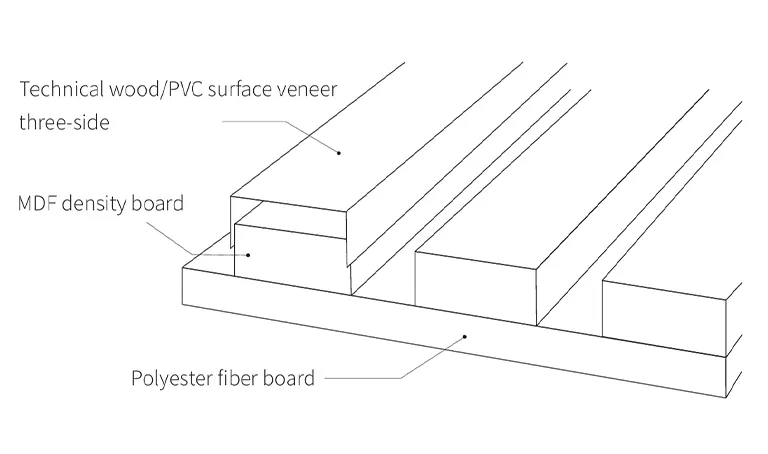
Choosing wood acoustic panels for a commercial project or distribution program is not simply a matter of selecting the most attractive wood color.The surface finish affects the appearance, batch consistency, maintenance requirements and overall positioning of the finished product. For distributors, contractors and project buyers, selecting the right finish is therefore an important part of the sourcing process.BEIEN wood acoustic panels combine acoustic function with decorative design. Their typical structure consists of a PET panel, MDF board and decorative wood-grain surface.
Three main surface options are available for different purchasing needs:
Each option has different advantages. Understanding these differences can help buyers select a more suitable product before moving from samples to bulk production.
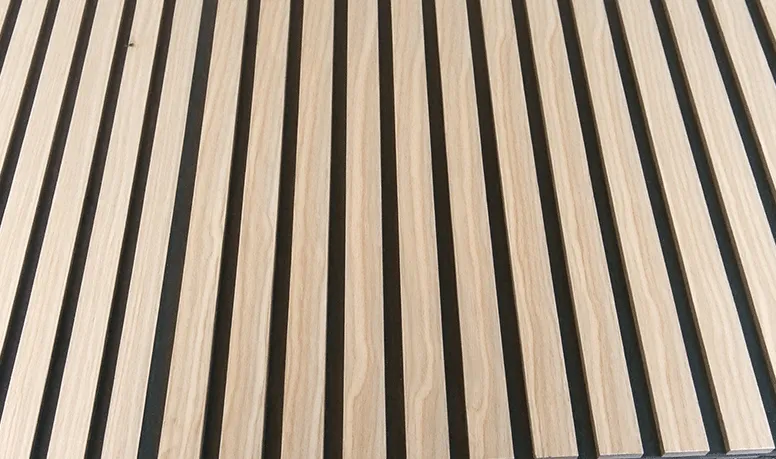
A typical wood acoustic panel combines several materials into one decorative interior product.The PET layer forms part of the acoustic structure, while the MDF provides the rigid slat form. A decorative surface is then applied to create the visible wood appearance.This combination allows the panel to provide both an acoustic function and a linear decorative effect.For professional buyers, however, the visible surface deserves particular attention because it has a major influence on how the final installation looks.A natural wood surface, for example, behaves differently from an engineered veneer or a printed PVC wood-grain finish.The correct choice depends on the project rather than on one finish being universally better than another.
Natural wood veneer is produced by slicing real wood into thin decorative layers.Its main advantage is the natural grain.Because the material comes directly from real timber, each section can display its own grain pattern, tone and texture. This gives natural veneer acoustic panels a warmer and more individual appearance.For architects and designers, this variation can be part of the appeal.
Natural veneer is especially suitable when:
However, the same natural characteristics also need to be considered during bulk procurement.Because the appearance depends on the available raw logs, color and grain can vary between panels and between production batches. Raw material availability can also affect long-term supply consistency.For projects using a large wall area, buyers should therefore review samples and discuss acceptable color and grain variation before confirming production.Natural veneer is best selected because the project values genuine wood character—not simply because it is assumed to be the best option for every application.
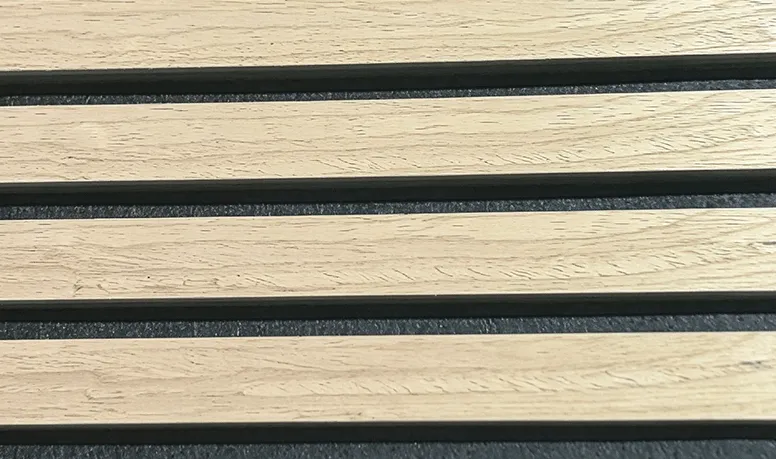
Engineered wood veneer offers a different balance.It is made from fast-growing wood that is processed through dyeing, reconstitution and slicing. This manufacturing process creates a more regular grain and makes color variation easier to control.For large commercial projects, this can be a significant advantage.
When dozens or hundreds of wood acoustic panels are installed on the same wall, even small differences in tone can become more noticeable. Engineered veneer provides a more controlled visual effect across a larger area.
It is particularly suitable for:
Engineered veneer also offers strong cost-effectiveness, making it suitable for projects that need both decorative wood appearance and tighter control over budget and consistency.For distributors, this repeatability can also make it easier to maintain a stable product range across future orders.
The third option is a PVC wood-grain finish.Unlike natural or engineered veneer, PVC uses a printed decorative film to create the wood appearance.
Its key advantages include:
This makes PVC particularly relevant for projects where maintenance and budget are important purchasing considerations.
A PVC finish can be suitable for:
Because the decorative pattern is printed, the appearance can also be more consistent than natural wood grain.However, buyers should distinguish between the properties of the PVC surface layer and the performance of the complete acoustic panel.If a project requires specific fire, moisture or other technical performance, the complete product specification should be confirmed before ordering.
The easiest way to compare the three surfaces is to start with the main project priority.
Choose Natural Wood Veneer When Authenticity Comes First
Natural veneer is the better choice when genuine wood grain, natural variation and material character are important to the design.It is especially appropriate for projects where slight differences between panels are considered part of the natural appearance.
Choose Engineered Wood Veneer When Consistency Matters Most
Engineered veneer is more suitable when the project requires a uniform finish across a large wall area or across multiple rooms.Its regular grain and more controllable color variation make it especially useful for commercial projects and repeat orders.
Choose PVC When Practicality and Cost Control Are Priorities
PVC is suitable when buyers need a wood-look decorative surface that is easy to maintain and more economical.Its printed finish also provides a controlled appearance for large-volume production.For distributors, carrying more than one finish can also make sense.Natural veneer can serve design-focused projects, engineered veneer can support mainstream commercial applications, and PVC can address buyers who prioritize maintenance and budget.
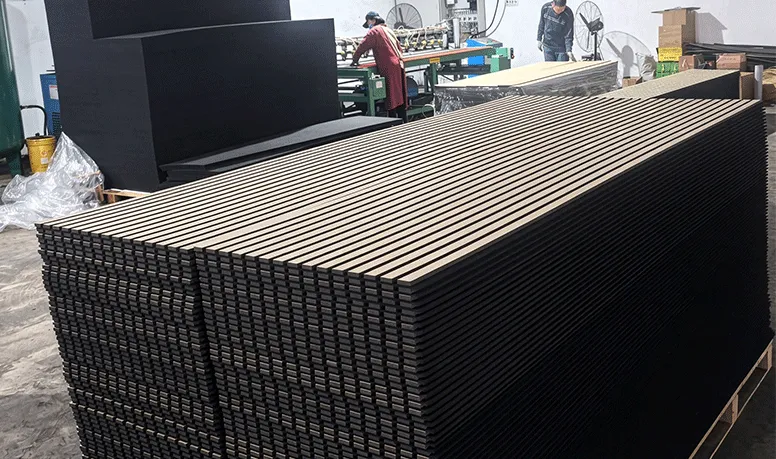
Different markets and projects may require different panel configurations.A distributor may want a specific wood tone for its local market.A contractor may need panels prepared according to project dimensions.An architect may focus on the relationship between the wood finish and the rest of the interior.A private-label buyer may require its own packaging or branding.Customization requirements should therefore be defined before production.
Useful information to provide when requesting a quotation includes:
For customized products, drawings, reference colors or physical samples can also help clarify the expected result.
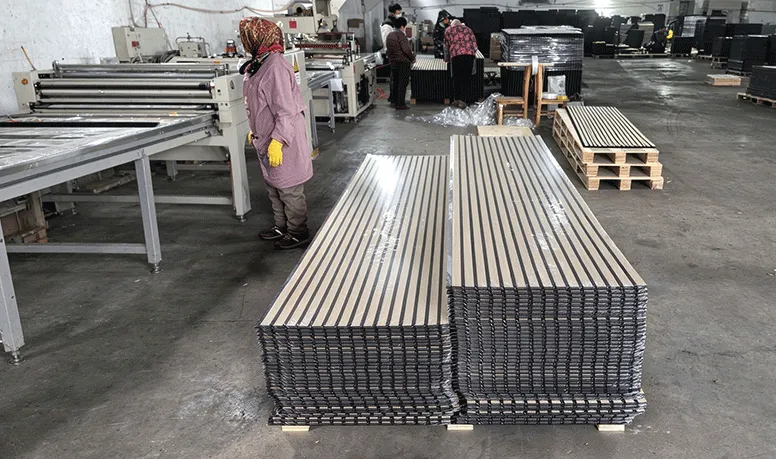
Before placing a bulk order, buyers should confirm several key points with the manufacturer.
1. Surface Type
Decide whether the project needs natural veneer, engineered veneer or PVC.
2. Visual Consistency
Confirm whether natural variation is acceptable or whether a more uniform appearance is required.
3. Quantity
Large projects should be planned as complete production batches where possible.
4. Customization
Confirm dimensions, felt color, decorative surface and any OEM or private-label requirements.
5. Sample Approval
For projects where appearance is critical, approve the finish before bulk production.
6. Documentation
If the project has acoustic, fire, emission or other compliance requirements, confirm which documents apply to the exact product specification being purchased.Clear communication at the quotation and sampling stage helps reduce misunderstandings later in production.
What is the difference between natural and engineered wood veneer?
Natural veneer is sliced from real wood and therefore has natural grain and color variation. Engineered veneer is processed to create a more regular grain and more controllable color, making it better suited to large-area installations requiring greater consistency.
Which finish is better for large commercial projects?
Engineered wood veneer is often more suitable when a large project requires a uniform appearance across many panels. The correct choice still depends on the design requirements.
Is PVC wood-grain finish real wood?
No. PVC finish uses a printed wood-grain film to create a wood-look surface. It is designed to provide a practical, economical and easy-to-clean decorative option.
Which finish is best for premium interior design?
Natural veneer is suitable when authentic wood grain and natural material character are important. However, engineered veneer may be more appropriate for premium projects that require greater visual consistency across large areas.
Can wood acoustic panels be customized for bulk orders?
Customization can be discussed according to the required dimensions, surface finish, felt color, quantity, branding and packaging requirements.

 English
 French
 German
 Italian
 Spanish
 Arabic
 Russian
 Dutch
