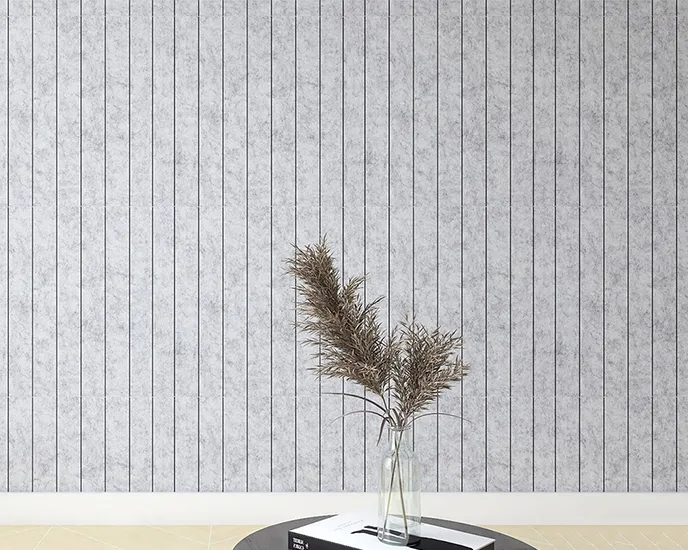
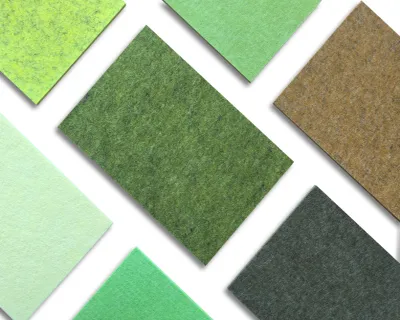
High-Quality Natural Wood Panels Manufacturers and Suppliers In China. We product: Wood Acoustic Panels PET Panels
Avoid your inquiry is delay response, please enter your WhatsApp/Skype along with the message, so we can contact you at the very first time.
We will reply you within 24 hours. If for urgent case, please add WhatsApp/WeChat: +86-13678899682 directly.
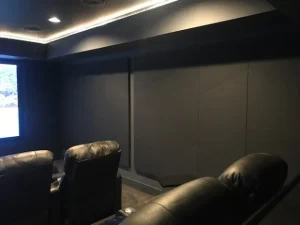
For home theaters and studios, panel choice comes down to two things: how much low-frequency energy the room needs absorbed, and whether the wall needs to read as a finished surface. PET sheet panels handle broadband absorption behind fabric or exposed; wood slat panels combine absorption with a furniture-grade veneer finish for rooms that also function as living spaces.
This guide is written for suppliers specifying panels for residential and light-commercial home theater or studio installs — not for a single homeowner buying one box of foam squares. The specs below reflect what’s currently documented for PET and wood slat product lines, including where the documentation has gaps you’ll need to flag to your own clients.
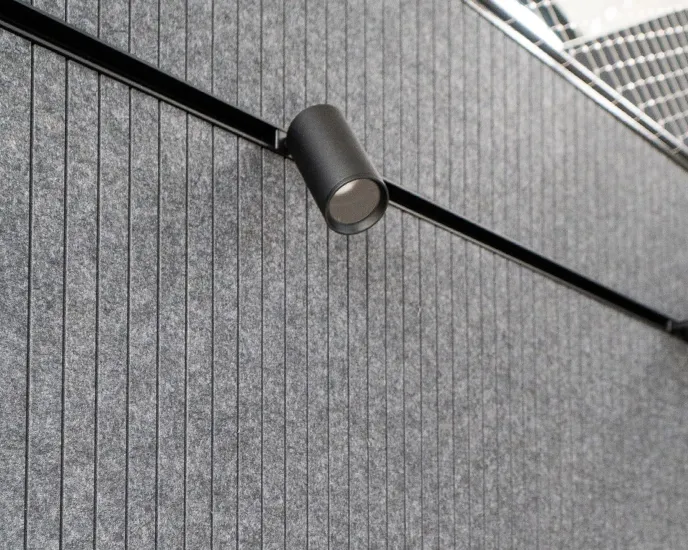
These two rooms have different acoustic goals, and treating them the same is the first mistake most sourcing decisions make.
A home theater is built around a fixed listening position and a subwoofer channel. The priority is controlling reflections off the front wall and side walls near the screen, plus managing low-frequency buildup in corners. A home studio — whether it’s a vocal booth, a mixing room, or a podcast space — needs more even, broadband absorption across the whole room because the listener (or microphone) position changes, and the room needs to sound accurate rather than simply “quiet.”
Ask your client which one they’re outfitting before recommending a panel family. A wood slat panel that looks right in a media room with visible cabinetry may be the wrong call in a studio where the client wants full wall coverage and minimal reflective surface.
Sound absorption generally improves at lower frequencies as material thickness and density increase — this is standard acoustic engineering behavior, not something specific to any one product line. A thin panel controls high-frequency slap echo (dialogue clarity, cymbal ring) reasonably well. Getting meaningful absorption down in the 125–250 Hz range, where movie subwoofer content and studio room modes live, typically requires either a thicker panel or a panel mounted with an air gap behind it.
Common misconception: that any acoustic panel — regardless of thickness — will fix a “boomy” home theater corner. It won’t. Broadband panels on flat wall surfaces primarily address mid- and high-frequency reflections. Low-frequency corner buildup is a separate problem, usually solved with bass trapping in the corners rather than more wall panels. If a client’s real complaint is “the bass is muddy,” more BP-series sheet panels on the side walls won’t resolve it — that’s a placement and room-mode issue, and it’s worth saying so rather than overselling coverage.
Both product families are polyester-fiber based at the acoustic-absorption layer, but they solve different aesthetic problems.
| Parameter | PET Acoustic Panel Sheets | Wood Slat Acoustic Panels |
| Core Material | 100% polyester fiber | Polyester-fiber acoustic backing beneath an MDF slat structure |
| Standard Sheet/Panel Size | 1220 × 2420 mm | 2400 / 2700 / 3000 × 605 mm |
| Thickness Options | 9, 12, 15, 24 mm | 18 or 21 mm |
| Surface | Flat sheet; 40+ standard colors (BP-01–BP-54); Pantone/RAL color matching available | Wood veneer or decorative surface over MDF slats |
| MDF Density (Slat Panels Only) | N/A | Approximately 760–800 kg/m³ |
| Veneer Thickness | N/A | Approximately 0.4–0.5 mm |
| Fire Test Data on File | EN 13501-1:2018, B-s2,d0 — tested only on the 9 mm BN-002 sample | Not currently tested |
| Best Fit | Studios and theaters where the panel can remain exposed as a flat acoustic surface or be concealed behind fabric or slats | Rooms where the panel also serves as a visible wall or ceiling finish |
A note on that table’s fire-test row, because it’s the kind of detail that matters more in a home installation than a commercial one: the B-s2,d0 classification was measured on a 9 mm PET board sample. It does not automatically apply to the 12, 15, or 24 mm PET thicknesses, and there is currently no equivalent EN 13501-1 fire test on file for the wood slat (BN) panel construction. If a client’s local building code or insurer requires a specific fire classification for a home theater installation, confirm the exact thickness and product line against the actual report before quoting it — don’t extend a 9 mm result to a 24 mm panel or a wood-faced assembly.
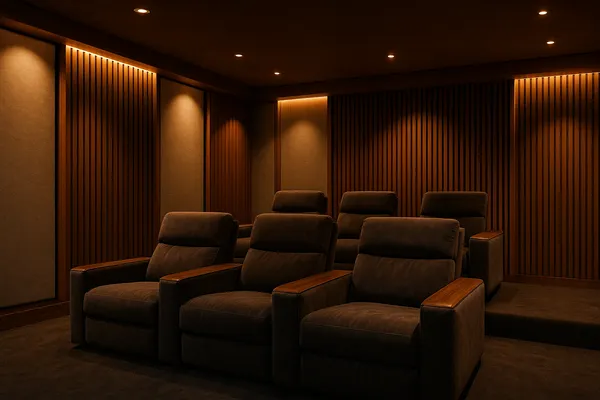
Full wall coverage isn’t usually the goal in either room type. A workable starting sequence:
None of these documents should be presented as covering “all BEIEN panels” in a client-facing spec sheet. The scope matters more in a residential build than most people expect, since homeowners and their contractors are more likely to ask a supplier directly which document applies to which product than a commercial buyer working from a bill of materials.
Two figures worth checking before quoting a client, because BEIEN’s own documentation is inconsistent on both:
Both PET and wood slat lines support OEM/ODM customization — custom colors, dimensions, CNC-cut shapes, labels, and packaging — which is useful when a supplier is matching panels to a specific interior finish rather than offering stock colors only.
Compared with the fabric-wrapped foam and mineral-wool panels that dominate general home-theater retail, PET and wood-veneer panel systems shift the cost structure toward CNC-cut sheet goods and veneer rather than fabric-and-frame assembly, and the finished look reads as an architectural material rather than a visible technical treatment — a distinction that matters more to premium residential clients than to a studio being built purely for function.
There’s no single documented figure for the BEIEN catalog that maps thickness directly to home-theater performance, since NRC data isn’t published for the wood slat line. As a general acoustic principle, thicker panels absorb more at lower frequencies; for a side wall handling dialogue and mid-range reflections, thinner PET sheet options (9–12 mm) are commonly sufficient, while low-frequency-heavy zones benefit from added depth or an air gap behind the panel.
The product line is described as usable on both walls and ceilings, but there’s no published per-panel weight for load calculations, and the CE certificate’s confirmed scope is wall coverings. Get both figures confirmed with the factory before specifying a ceiling installation.
No. The FSC Chain of Custody certificate covers timber products under the wood slat and veneer lines. It isn’t relevant to the 100% polyester-fiber PET sheet panels.
This is currently inconsistent across BEIEN’s own documentation — 50 panels in standard company terms, 100 panels on some product pages. Confirm the number for the specific product and finish before quoting a client on a small residential job.
Not currently. The only fire classification on file (EN 13501-1:2018, B-s2,d0) was tested on a 9 mm PET board sample and does not extend to the wood slat construction. If a project requires a documented fire rating for the wood-faced line, that test doesn’t yet exist and should be flagged to the client rather than implied.

 English
  French
  German
  Italian
  Spanish
  Arabic
  Russian
  Dutch
Dutch